Author Archives: Tim Hall

Rail Ten-Point Plan

The BBC’s “Rail Champion”, Jon Yuill, has a Ten Point Plan for improving things. Here’s my thoughts on his proposals.

1. Better communication

It’s impossible to overstate the need for good communication in times of trouble. You can be on a train, delayed for half-an-hour and no one tells you a thing. Tell us why we are stuck, what’s being done to fix the situation, how long the delay is likely to be. Use the PA system or install scrolling text screens. It’s the same when you’re waiting at the station. Just tell us what’s going on.

Ideal in theory, but it presumes that someone, somewhere, actually does know what’s going on.

Better information would help even when nothing has gone wrong – try arriving at Paddington from the Hammersmith and City line tube platforms, and try and find out the time of the next train to Slough? There’s no information screen showing stops at that end of the station, and by the time you’ve walked the two or three minute’s walk to the concourse end to the main departure board, that fast train on platform 9 might have gone! Reading is just as bad.

2. Common-sense staff

I know platform staff have a hard time and they don’t see us commuters at our best – half asleep and rushing to work or back home again. We do appreciate them, but they must be encouraged to use their common sense and take the initiative. So, for example, when a train is half-an-hour late and everyone’s irritated, just open the ticket barriers and let us out of the station as soon as possible.

This should include maintaining connections as well. I can’t see any purpose in letting a local train that’s got no forward connections at the other end depart fifteen seconds before a dozen passengers from the late-running main-line train can make it over the bridge, leaving them with an hour-long wait until the next one. This happened to me a couple of weeks back.

I’m not convinced that operators always make the best attempts they can to minimise disruption when an incident occurs. That was one thing I noticed on my daily commute a few years back on what’s now South West Trains; incidents that disrupted things occurred at roughly the same frequency, but whenever something went wrong, delays were far worse than before privatisation. Whether this was a result of fragmentation and divided responsibility between the TOC and Railtrack or a result of the TOC cutting back on staff to the bare minimum to cover the timetable, I don’t know.

3. Get integrated

Imagine how good it would be if you could get off the train and cycle to work, or home. But on my line, you can’t bring bikes on board during rush hour. I know that means more space for passengers but you used to be able to put your bike in the guards’ carriage. If that’s not possible, how about decent bike parks at stations. They would be well lit and secure so you know your bike would be there at the end of the day. It’s not just bikes – bus times also need to be integrated with trains.

And I thought you were talking about the dreaded wheel/rail split… Yes, this is a major problem with all trains designed from the late 70s onwards – no room for bikes. Therefore you get cyclists blocking the doors of the passenger coaches.

4. Quiet carriages

Some trains have these already – carriages where mobiles are banned. I don’t want to listen to someone else’s personal conversations, and nor does anyone else on the train. There should also be a fast-food-free carriage. The smell is awful and just creates more litter.

And where there is a quiet coach, can we actually try and enforce it?

5. On-board CCTV

Violence and loutish, yobbish behaviour is often overlooked as a commuter gripe, but it’s real enough and common enough to be a problem. One of the reasons people avoid public transport is the safety threat. Although serious incidents are rare, we have to make sure people can travel without fear of intimidation.

Good idea in principle (we already have on-board CCTV on some buses), but we need to take the expense into account.

6. Air-conditioning

In this day and age, surely it can’t be beyond the wit of rail companies to see that we can all travel comfortably. I was told by a rail company once that each carriage has its own thermostat, but you wouldn’t know it. It’s simple – we need temperature control systems that work.

Bah! Just open the windows! Nothing like a good rake of pressure ventilated Mk1s on a summer’s day with the roar of the class 50 up front reverberating through the train! Sorry, I’m in nostalgia mode again. But seriously – when the train is air-conditioned, like the Thames 166s, can we lock the windows so some idiot doesn’t open them when the air-conditioning is working?

7. Litter bins

The litter bins were withdrawn because of the terrorism threat, but now there’s nowhere to put your rubbish. So it goes on the floor. Like the bigger trains, couldn’t someone come along with a rubbish bag and collect paper coffee cups. As for old newspapers – what about big cages at the end of platforms where people could just throw their old papers as they got off. These could then be recycled.

Has anyone told them that the IRA ceasefire was several years ago? And putting bombs in litter bins isn’t Al Queda’s style?

8. Rapid-response fix-it teams

My idea is to airlift emergency engineering teams by helicopter. Perhaps it’s far-fetched but the point is when something goes wrong and we’re stuck on a train, we have to wait for a beat-up old Transit van to arrive and then the engineers are on foot. Meanwhile, we are all waiting. Think how many millions of pounds this costs in lost working hours and it doesn’t sound so crazy after all.

OK, take a Made Tim Laugh Point. Up to now, the suggestions have been mildly sensible, but this one is not only totally impractical (like where are you going to land these helicopters?), but screamingly funny.

9. Give passengers preference…

…not freight trains. Many times my train is shunted aside so a goods train can get ahead. But what are they doing on the rails at rush-hour times anyway?

I want to see more freight go by rail to get as many heavy lorries off the roads as possible. Barring freight from the tracks at rush-hours is fine in theory, but since most freight travels a long distance, it’s likely to hit the rush-hour at some point in it’s journey whenever it runs. It’s probably not possible to keep all freight off the tracks at peak times, especially when it’s something time-sensitive like mail or fresh tomatoes from Italy. Trainloads of coal for a power-station with several weeks’ supply of the stuff stockpiled might be a different matter.

10. These problems are countrywide

London draws in most commuters and I’m one of them. But commuters up and down the country experience similar frustrations everyday and my simple solutions should applied to benefit as many people as possible.

And not all passengers are commuters. People use rail other business trips, for holidays and leisure travel, to visit friends and relatives, and yes, to send freight.
Posted in Railways | Comments Off

Game Wish 15:GM’s role

This week’s Game Wish from Turn of a Friendly Die

What is your idea of the relationship between GM and player? Is the GM a host, an adversary, an enabler…?

I see the GMs role as a lot of things. Currently my GMing consists of running a couple of on-line (PBeM and PBMB) games, and the occasional one-shot convention-style scenario. In the past I have run a long-running face-to-face campaign.

While it’s possible to have a game without a GM, such a game will have a radically different form than a traditional RPG – it would either need a lot of trust between the players, or a rigidly mechanical system. But I’m digressing a bit here; let’s get back to the subject in hand.

  • Enabler: Certainly, since a traditional style RPG cannot take place without someone willing to GM.
  • Adventure or setting creator: While I do sometimes run published scenarios for one-shot games, all my longer games take place in my own settings. It’s the GM’s job to create a believable world with enough challenging things in it to keep the players interested. I hope I’ve succeeded with Kalyr
  • Player: Especially in on-line games, which are often more story-centric than game-mechanic-centric, I sometimes feels that the GM is as much a player as the rest of the group, with the game world as their character.
  • Adversary? No way! This just isn’t my style.
  • Storyteller? Again, no way! Overly linear railroaded plotlines aren’t my style either. The game may be a story, but it’s a story for the players to tell, as much as the GM.

Posted in Games | Comments Off

Soda Constructor

Thanks to ScottSoda Constructor. I won’t attempt to describe it, just see for yourself.

Posted in Memes | 1 Comment

Fireworks!!

What it says – Fireworks!! From Silflay Hraka

Posted in Memes | Comments Off

Website Torched by Mob

Stuii was right when he wondered how long it would last. It appears that www.thinkofthechildren.co.uk has now been torched by an angry mob, just as Stuii predicted.

Posted in Uncategorized | Comments Off

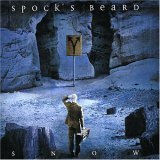
Spock’s Beard – Snow

With their sixth album, Californian prog-rockers Spock’s Beard have done what many prog-rock bands have done at some point in their career, produced a double concept album. In prog-rock history, such beasts have either been their creator’s finest hours, or marked the point where hubris got the better of them. So, is “Snow” a ‘Lamb Lies Down on Broadway’, or is it a ‘Tales from Topographic Oceans’?

For the uninitiated, Spock’s Beard are a 5-piece from San Francisco, comprising of Neil Morse on lead vocals, keyboards and acoustic guitar, Alan Morse on lead guitar, Ryo Okumoto on keyboards, Dave Meros on bass and Nick D’Virgillo on drums. Over the course of the previous five their sound has blended influences of Pink Floyd, Yes, The Beatles, and more obscure English progressive bands like Gentle Giant with that of American bands such as pre-blandout Kansas into a seamless whole; their sometimes lengthy songs feature strong melodies with big sweeping choruses, punctuated by manic instrumental sections. Eschewing modern synths sounds and and samples, they play 70s instruments, with heavy use of Hammond organ and Mellotron.

The concept is a trifle vague; with the central character ‘Snow’ a Tommy-like messaianic figure; but progressive rock isn’t really about the lyrics, it’s about the music. And music-wise, Spock’s Beard deliver.

All these trademark Spock’s Beard elements are present on “Snow”. The songs on both disks run into each other to produce a pair of hour-long pieces, in true concept album fashion. There are some noisy guitar-driven songs, such as heavy “Devil’s Got My Throat”, jazzy instrumental passages like the instrumental break on “Open Wide the Flood Gates”, and even an ELP-style keyboard explosion in the appropriately-titled “Ladies and Gentlemen, Mr Ryo Okumoto on the Keyboards”. The strongest individual song has to be the ‘Comfortably Numb’-style ballad “Solitary Soul”, penultimate number on disk one.

Overall, a strong album even if the two-hour length means there’s a bit of filler there, although I found it took quite a few listens to really get in to. If you like this album, there’s a good chance you will also like their five previous albums.

Posted in Music, Record Reviews | Tagged , | Comments Off

A New 419 Scam Letter

Many of us have received those annoying “419 scam” letters pretending to be the relatives of deposed African dictators wanting to smuggle their ill-gotten gains looted from national treasuries out of the country. However, this one made me laugh out loud!

Posted in Memes | Comments Off

Carnival of the Vanities

Silflay Hraka has started Carnival of the Vanities, linking to the best post in the past week from more than a dozen blogs you might have overlooked.

Posted in Miscellaneous | Comments Off

Greek Gaming Ban – Again

BBC NEWS | Technology | Reprieve for Greek gamers
Now they’ve issued a “clarification” to the police telling them only to prosecute gamblers, and not any other type of gamer.

The new guidelines are being distributed to all police stations in Greece in an effort to reassure internet café owners and tourists.

“The installation and use of games in public or privately owned spaces with no connection to paid services, and their usage, will in no way incur debts by or on behalf of the user, the management or any third party,” say the guidelines.

Is this a Greek Tragedy, or a Greek Farce?

Posted in Games | Comments Off

The Heyday of the Scottish Diesels

This review also appears on BlogCritics, here.

After the end of steam in Britain 1968, a great many British railway photographers either hung up their cameras or diverted their attentions abroad, and it was the best part of a decade before a new generation of photographers began recording the current scene again. This leaves the period from 1968 to about 1975 woefully under-recorded, a great pity, because this was a fascinating time for diesel fans, seeing many surviving operating practices from the steam era, and the last years of some of the unsuccessful and short-lived ‘modernisation plan’ locomotives.

This makes this album all the more welcome. Compiled by David Cross from his father Derek’s extensive collection on 35mm transparencies, this album focuses on Scotland from the mid-sixties to the early seventies. It takes in both the highly scenic parts of the highlands and borders, and the cities and industrial parts of the central belt, and features just about every class of locomotive that operated in Scotland during that era.

We have some wonderfully evocative shots of the scenic West Highland line between Glasgow and Mallaig, many featuring the unreliable and short-lived North British class 29s, such as green D6103 in the rocky Spean gorge, and blue D6129 along the shores of Loch Eil. There’s also a couple of great photographs of the more successful BRCW class 26s on the Kyle of Lochalsh branch, with the Isle of Skye in the background.

In contrast, we have one of the classic urban locations, the line through Princes Street Gardens in Edinburgh, featuring a pair of class 101 DMUs. We have several views of another short-lived unsuccessful locomotive class, the centre-cabbed Clayton class 17s at work on local freight in the central belt.

The book features all four Anglo-Scottish main lines, including several photos of the now-closed Waverley route which crossed the border hills south of Harwick; the barren sparsely-populated terrain is demonstrated by the shot of two class 17s on a very long train of vans at Steele Road. We also have class 45 “Peaks” on the Dumfries route, plenty of English Electric class 40s and 50s over Beattock, and the obligatory “Deltic” on the East Coast route.

Overall, this is a great book for any enthusiast of diesel locomotives, or of any type of train running through spectacularly beautiful scenery.

Heyday of the Scottish Diesels
David Cross
Hardcover (15 August, 2002)
Ian Allan Publishing; ISBN: 0711028699

Posted in Railways | Comments Off