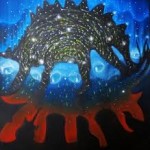
 Trojan Horse are one of those bands who defy easy categorisation. One week they’re playing progressive rock festivals sharing bills with the likes of Mostly Autumn and The Enid, the next week they’re supporting post-punk legends The Fall.
To quote their own bio, the Salford-based quartet aim to drag 70s progressive rock kicking and screaming through all the subsequent decades, and their second full-length album “World Turned Upside Down” sees them do precisely that.
Instrumental opener “Jurapsyche Park” jump-cuts between manic surf guitar and the intricacies of Discipline-era King Crimson to end in a frenetic climax of duelling Hammond organ and abrasive guitar that recalls the live jam at end of Deep Purple’s “Space Trucking”. It manages to pack an awful lot into just over four and a half minutes.
From then on the album explodes in all directions at once. “Sesame” comes over as a strange mash-up between Yes and The Talking Heads. There are brief numbers called “Interlude”, “Centrelude” and “Outerlude”. The equally short “See Me At The Crow Bridge” is one minute twelve seconds of delicate beauty.
The title track starts with a Peter Hammill-style vocal and ends with squalling violin. The largely instrumental Behemoth with it’s warm rippling guitars even recalls mid-70s Rush at one point. Towards the end of the album, the lengthy “Hypocrite’s Hymn” with an extended instrumental workout goes from prog-jazz to avant-noise, and the semi-acoustic folk-prog of “Death And The Mad Queen” would not have sounded out of place on a Decemberists record. The album ends with the hilarious punky “Fire! Fire!” complete with fire engine noises.
Trojan horse put prog-rock, post-punk and free jazz into a blender, and what comes out is as just as bonkers as their live performances. They can be as visceral and pummeling as their stage act when they want to, but on record there’s a lot of variety and musical sophistication too. Unlike lesser bands who attempt derivative pastiches of the sounds of 70s progressive rock or 80s post-punk, Trojan Horse capture the spirit of the things, which is what makes their music sound fresh and exciting.
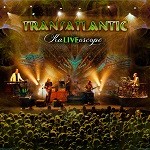 Transatlantic, the Prog-with-a-capital-P supergroup made up from past and present members of Spocks Beard, Dream Theater, Marillion and The Flower Kings, don’t do things by halves. Not that it’s the fashion nowadays, but you won’t catch them releasing a live album as a single disk of edited highlights. Nothing less than a triple CD containing the full three and a half hour show will do.
 After a long gap between 2007′s “Dead Reckoning” and 2012′s “March of Progress”, Surrey-based prog-metallers Threshold are back with another new album, their second since the return of singer Damien Wilson for his third stint in the band.
 The Pineapple Thief are one of those bands within the progressive rock scene who take a modern streamlined approach to their music, focusing on textures, atmospherics and strong melodies rather than complex instrumentation. Their last few albums have taken a zigzagging musical course, with the moments of dance/electronica on “Someone Here Is Missing” and the harder-edged guitar-driven sound of “All The Wars”.
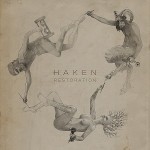 Haken are in the vanguard of the latest generation of progressive rock bands. The six-piece came of age with their acclaimed third album, 2013′s “The Mountain”, on which they moved beyond the obvious influences on earlier records to develop a musical identity of their own.
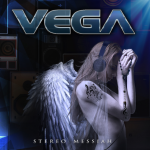 “Stereo Messiah“, the third album by British rockers Vega is a solid piece of work. With a shimmering production from John Mitchell of It Bites, it’s full of big choruses, spiralling guitar breaks and the occasional very 1980s keyboard sound. Frontman Nick Workman provides some classic high register AOR vocals, and Marcus Thurston’s guitar shredding always complements the songs, with a touch of Neal Schon in some of his solos. It does suffer a little from a lack of variety, with many songs sharing very similar tempos and structures; it’s not until the closing power-ballad “Tears Never Dry” that we get any real change of pace. But with tight playing and some strong songwriting, fans of the likes of Def Leppard or Journey should still find a lot to like about this record.
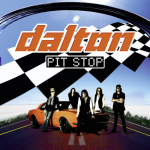 “Pit Stop” by Dalton is far less impressive. Dalton were an 80s hairspray band from Sweden who made a couple of albums and were then “killed off by grunge”. A generation later they’re trying to make a comeback. Unfortunately this album gives a clue as to why they might have failed the first time around. The opening song “Ready or Not” gets of the album off to bad start with some ugly sexist lyrics that should have stayed in the 80s, and the sound of a bunch of blokes who must be in their 50s singing adolescent-themed lyrics about girls and parties is not a pleasant one. Musically it’s very formulaic, and it’s all been done many times before by far better bands. Hair metal is a genre that hasn’t aged well, especially for a band who were also-rans in the first place.
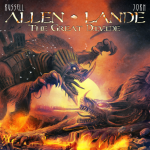 “The Great Divide” by Allen/Lande can best be described as epic melodramatic cheese. But it’s high-quality cheese made with the very finest ingredients. Russell Allen and Jorn Lande are a pair of class acts as vocalists, with Jorn Lande in particular the nearest thing nowadays to the late Ronnie Dio. The songwriting and production is the work of Timo Tolkki, formerly of Finnish power-metallers Stratovarius, who also plays all the guitars, bass and keys.
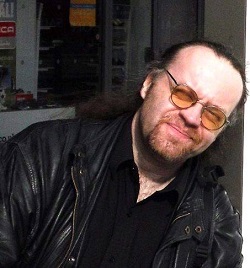 The progressive rock family have lost one of our own.