
Bigelf returned to Britain after a long absence with a headlining appearance at the Resonance festival during the summer. In November they returned to these shores with their first tour since 2010, and drew a sizeable crowd when the tour came to The Garage in London.
As is quite common nowadays there was not one but two support acts. There is value in giving showcases to up-and-coming bands, and giving audiences value for money, But with more that one opening act you do wonder if it might have been better either to have had a longer set for the headliner, or perhaps a slightly earlier finish given that the gig was on a school night. The show began with Jolly, taking a modern approach to progressive rock with echoes of Haken and Muse, melodic in places and heavy in others, with an emphasis on angular riffs.
Bend Sinister were much more old-school, kicking off with a retro 70s rock’n'roll sound, with heavy use of Hammond organ sounds owing a heavy debt to the late Jon Lord. There was a point that sounded like Deep Purple covering Kula Shaker. They lost momentum later on with some rather less impressive ballads, but ended on a higher note with a cover of Supertramp’s “The Logical Song”.
Bigelf have undergone a few lineup changes of late, with frontman Damon Fox and bassist Duffy Snowhill the only members who appeared on the their most recent album. For this tour they’re joined by Damon’s son Baron Fox on drums, plus Porcupine Tree and Fish guitarist John Wesley.
Unlike too many progressive bands who shuffle on, play the songs, and shuffle off again, and you’re lucky if you get a few stereotypical rock shapes, Bigelf understand the art of showmanship.
Their set began with an intro tape of John Williams’ Imperial March from Star Wars, and Damon Fox placing Yoda on top of his Mellotron when he walked on stage. He cuts an dramatic figure on stage, dressed as a circus ringmaster in a top hat, standing between a battered vintage Hammond and a genuine Mellotron, playing one with each hand.
The title of their latest album “Into the Maelstrom” makes a very good description of their live sound, which owes a debt to bands as varied as The Crazy World of Arthur Brown and Queen. Damon’s swirling Hammond is central, giving a strong Uriah Heep feel at times, though Duffy Snowhill’s bass grooves also played an important role. Guitarist John Wesley, the quintessential unassuming sidesman best known for his role in Porcupine Tree, played more a supporting role, but did get the occasional moment in the spotlight.
The setlist drew heavily from “Into the Maelstrom” and the preceding album “Cheat the Gallows”, despite a lot of calls from the audience for the oldie “Disappear”, which prompted the band to tease by playing the opening bars. The anthemic “Money, It’s Pure Evil” turned into a singalong, and the 90 minute set passed in what seemed like no time at all, with the final encore of “Blackball” turning into an extended Doors-esque jam featuring some excellent soloing from Wesley.
This was one of those gigs that prompts the usage of words like “Progtastic”. But with their love of retro 70s sounds and vintage gear, and bombastic theatrical approach to performance, there is nobody else quite like Bigelf.
This review initially appeared in Trebuchet Magazine
 Yet another York-based band (Is there something in the water?), Cloud Atlas is the band put together by Heidi Widdop following the dissolution of Stolen Earth. Their impressive début album is big widescreen rock with an epic scope, with Heidi’s distinctive bluesy vocals setting them apart from many of their obvious peers. But this album’s sound is as much about Martin Ledger’s soaring melodic lead guitar, with strong echoes of Marillion’s Steve Rothery.
 Norway’s Gazpacho have come up with one of the darkest and most sinister-sounding records of 2014. It’s what Talk Talk’s Spirit of Eden might have sounded like if Mark Hollis had spent a lot of time listening to Black Sabbath. Sinister violin-led pastoral soundscapes with are intercut with bursts of hard rock, motifs recur across the album, and there’s even an irruption of accordion-led central European folk at one point. An ambitious album which is by no means an easy listen, but one where you can keep finding new layers after many listens.
 A major step forward for Kavus Torabi’s eight-piece band, and reflects their current live sound far more than any of their previous recordings. It’s a record that takes psychedelia, jazz, hard rock and all kinds of other things, and puts them in a blender to produce something that sounds quite unlike anyone else. Fans of the late, great Frank Zappa should find a lot to like about this record, as should anyone who thinks there should be more bassoons in rock.
 Luna Rossa started out as a side-project from Panic Room emphasising the acoustic side of Anne-Marie Helder’s and Jon Edwards’ music, but seems to have taken on a life of it’s own. Their second album is a logical progression from the first; perhaps not quite as eclectic, but with a slightly clearer musical identity. Luna Rossa still defy easy genre pigeonholing, though the album does show occasional hints of artists as varied as Goldfrapp and Renaissance. There’s some very raw heart-on-sleeve emotion, with the music revolving around and complementing Anne-Marie’s always remarkable vocals.
 This Kickstarter-funded project is Steve Rothery’s first proper solo album in more than three decades as lead guitarist of Marillion. It’s an instrumental album with a band including Panic Room’s Yatim Halimi and Mr So and So’s Dave Foster, Rothery’s lyrical and emotional playing both soars and rocks, the numbers building in intensity from slow-burning beginnings. The whole thing shows just why Rothery is one of the best guitarists of his generation, one of the few players good enough to pull this sort of thing off without descending into self-indulgence.
 Halo Blind is the project that used to be called Parade, led by York-based singer-songwriter, multi-instrumentalist and producer Chris Johnson, currently part of Mostly Autumn. The long-awaited follow-up to 2009′s The Fabric is a little less eclectically-varied than it’s predecessor, but hangs together far more strongly as a coherent album. The blend of indie-rock guitars and progressive rock textures combined with strong songwriting ought to have a wide crossover appeal.
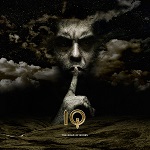 The neo-prog veterans have never been prolific, but never disappoint. This double album sees them not afraid to experiment, with an abrasive industrial-metal edge alongside the more traditional neo-prog sounds. There is still plenty of what ought to be expected from any IQ album; lengthy kaleidoscopic songs, dark and melodramatic vocals and climactic guitar and keyboard solos.
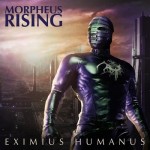 The York twin-guitar rockers raise their game significantly with their second album. It’s an old-school hard rock album recalling the early days of Judas Priest and Iron Maiden, with a focus on songwriting and melody. Si Wright comes into his own as a lead singer with material written to take full advantage of his vocal range.
 The veteran former Led Zeppelin frontman returns with his strongest record for many years. It’s a mix of English rock and folk with African and Middle Eastern sounds, and even the occasional blast of hard rock guitar, but there’s a fire to it that’s been missing from his last few records. It’s still a long way from the swaggering blues-rock of his early career, but like much of his recent output it’s music that suits an artist in his 60s rather than his 20s.
 It’s jazz, Jim, but not as we know it. Twin saxophones meet electronic soundscapes, with shades of Miles Davis meets Pink Floyd. One moment it’s melodic and atmospheric, the next it’s squawking cacophony. It can be a challenging listen at times; this is a record than imports elements of rock into jazz, but takes things in an altogether different direction from jazz-fusion.
 Having taken his acoustic looping guitar thing as far as could go, Matt has made something far more eclectic, combining his loves of post-punk, progressive rock and extreme metal. While there are some delicate acoustic numbers, much of the album is electric, with a full band and and interesting array of guest performers. Proof that you can make an all-instrumental guitar album without it becoming a vehicle for endless soloing.
 The new project from former Breathing Space and Stolen Earth bassist Paul Teasdale is a very interesting blend of progressive rock atmospherics and Britpop-style songwriting. There are strong guest vocal performances by Aleksandra Koziol and Joanne Wallis, but Paul handles the majority of the lead vocals himself, and the soaring melodies prove him to be a fine vocalist as well as a songwriter.
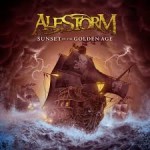 “Scottish Pirate Metal” doesn’t seem like an idea strong enough to last for four albums without the concept wearing thin, but Alestorm seem far from reaching the point of diminishing returns. Like their previous albums, it’s filled with tales of nautical adventure and booze set to music with a strong folk-metal flavour, though “Wooden Leg” is close to punk. It’s all entertaining stuff that doesn’t take itself remotely seriously, which is precisely what metal should be.
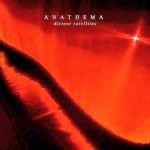 Aside from the occasional dance/electronica touches Anathema continue in a similar vein to last year’s “Weather Systems”. Their emotional widescreen music combines a big sound with a minimalist approach to songwriting, using the power of repetition to create something that’s often more than the sum or it’s parts. The great mystery is why mainstream crossover recognition continues to elude them and they’re still relatively unknown outside of the prog scene.
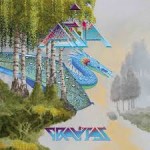 Not many people would have expected a 1980s supergroup made up from 70s prog musicians to still be making albums in 2014. They’re now down to a trio of original members plus young guitarist Sam Coulson, not even born when the band first started. This is really John Wetton’s album; he’s on superb form vocally, with big soaring melodies throughout. It’s a far better album than Yes’ lacklustre effort.
 The Polish black metal band recorded this album just after mainman Nergal was given the all-clear in his battle against cancer. The resulting record is a heavy, intense and deeply spiritual work, which makes Satanism sound like an actual religion. A vastly better album than anything Venom could have imagined, let alone made.
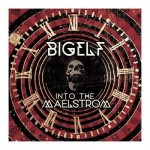 An album where the title is a perfect description of how the music sounds. Bigelf combine the melodic ear of The Beatles, the hand of doom of early Black Sabbath, the theatricality of The Crazy World of Arthur Brown, the musical ambition of 70s King Crimson, and the lack of inhibitions of Queen. This record captures the intensity of their live experience in a way their previous albums never quite managed.
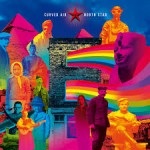 Curved Air reformed a few years back and have been playing the festival circuit for a while, but North Star is their first studio recording since the 1970s. With their quirky but fluid jazz-rock they’ve picked up exactly where they left off decades before, and Sonja Kristina is still on superb form vocally. The only thing that lets it down are some unnecessary covers, though they do demonstrate that they’re better songwriters than Snow Patrol.
 Elbow are one of those mainstream rock bands that owe a huge debt to 70s progressive rock, which is obvious if you listen beyond their hits. Peter Gabriel is clearly an influence on Guy Garvey’s vocals and composition, and Elbow sound like the band Genesis might have become if Hackett had left but Gabriel had stayed. Even though it might have benefited from a solo or two in the right places, it’s still a rich and ambitious record with a great amount of emotional depth.
 EYE are a multinational prog-metal band based in Dubai, with members from the Middle East, India and Eastern Europe, and this impressive work with shades of Anathema, Opeth, Porcupine Tree and Godspeed You Black Emperor is quite remarkable for a début with its mature composition and strong use of dynamics.
 Mike Hale and Ben Ando are running a


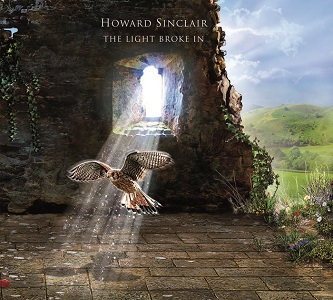 Singer-songwriter Howard Sinclair is running a