Music Blog

All the music-related posts gathered together in one place.

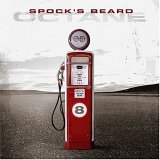
Spock’s Beard, Octane

“Octane”, as the name implies, is neo-proggers Spock’s Beard’s eighth album, and their second without former mainman Neil Morse. “Feel Euphoria“, their first Neil-less opus proved the band were far from a spent force without him. Is Octane as good?

I think the answer has to be yes.

The first half of the album is made up from the seven-song suite “A Flash Before My Eyes”, a superb piece of work. The album opens with a swirl of Mellotron leading us into the classic SB wall of sound; an archetypal rock opera style extended instrumental overture. These seven songs cover the whole range of the Beard’s sound, from atmospheric ballads and Floydian instrumentals though grindingly heavy guitar workouts to the symphonic closing section, “Into the Great Unknowable”. The closing instrumental theme, played on horns and backed by strings has to be the most memorable hook on the album (we’d previously heard it on piano, Mellotron and guitar). The guitar on ‘Surfing Down the Avalanche’ and ‘She is Everything’ is close to being the best I’ve heard from Alan Morse.

After “Flash”, the quality tails off a little in the second half of the album, with a couple of weaker songs teetering on the edge of being filler, although the instrumental ‘NWC’ and the hard-rocking closer ‘As Long as We Ride’ still deliver the goods.

In overall sound it’s maybe a little less ‘proggy’ and closer to mainstream rock; there’s not much in the way of complicated time changes, and no sign of off-the-wall quirky bits recalling Gentle Giant that we heard on their early albums. Neil Morse fans wanting to hear another “Beware of Darkness” will probably be disappointed.

It’s definitely one of those albums that gets better the more you listen to it. On the first few listens I thought the album was a bit patchy. On repeated listens, although some of the later songs still fail to take off, the high points more than make up for the lows. Overall, a good album, not perhaps their best, but far from being the worst either.

Posted in Music, Record Reviews | Tagged | 2 Comments

Normblog’s Songs Poll

Should have mentioned this one a few days ago: The results for Normblog’s The greatest songs of rock ‘n’ roll poll are now up.

Sadly, the only choice of mine to make the top 100 was Pink Floyd’s “Comfortably Numb” at 30. At least it was one higher than anything by The Smiths…

Posted in Music | Comments Off

Yet Another Music Meme

From Perverse Access Memory.

1. What’s the total size of music files on your computer?

Only a few Mb, consisting of a few free downloads. I haven’t ripped any of my extensive CD collection.

2. What is the last CD you bought?

I bought three CDs over the weekend, “Novella” by Renaissance, “Agaetis Byrjun” by Sigur Rós, and Spock’s Beard’s latest, “Octane”, the last of which I’ve yet to listen to.

3. What is the last song you listened to before you read this post?

That would have been the last number from Rammstein’s show on Sunday night. :)

4. Name four songs that you listen to a lot or that mean a lot to you.

I’ve recently listed my top ten all-time favourites; these four are songs I’ve been playing a lot lately.

Mother Nature by Mostly Autumn. I’ve been listening to this band more than just about anyone else over the past few months, this is their best song.
The Return of Pan by The Waterboys. A great song from a decidedly average album.
Bless this Child by Nightwish. One of the all time great intros; A choral chant that builds until it’s suddenly cut through by powerchord guitar.
Hysteria, by Muse. Just about the only ‘fashionable’ British band who I find not only listenable but entertaining; this is the best song from their best album.

5. Which three people are you passing the baton on to and why?

Scott, Steve Jones, Silkenray, selected more-or-less at random.

Posted in Music | 3 Comments

Rammstein – Manchester MEN Arena

On Friday night, my brother phoned up and asked if I was interested in seeing the mad German metallers Rammstein at the Manchester MEN Arena on Sunday night; he’d found out there were still a few tickets left for the show. Having heard reports of the theatricality of their live show, I decided this was a show worth going to.

The support act were the four crazy Finnish cellists Apocalyptica. Accompanied by a live drummer, they tore through their mix of instrumental Metallica covers and original compositions with a tremendous amount of energy. It’s weird how much they made the quiet bit in the middle of ‘Master of Puppets’ sounds like 18th century chamber music. They closed with a manic take on Greig’s ‘Hall of the Mountain King’, a weirdly rock’n'roll version of a classical piece played on classical instruments. Is this the new rock’n'roll?

Rammstein preceded their set with what has to be the longest intro tape I’ve ever heard; something like ten minutes of Krautrock-style drone before the band launched into the opener, ‘Reise Reise’.

The stage resembled the famous inner sleeve of Blue Öyster Cult’s “On Your Feet Or On Your Knees” crossed with the set from an 80s science fiction movie; the backline spread right across the back of the stage, with the drummer on top. Most of the band started the set on top of this backline too before being lowered down on hydraulic lifts to join singer Till Linderman, who spent the first number prowling the stage below on his own.

Rammstein’s music matched the stage set; monstrous walls of guitars leavened by slabs of symphonic keyboards, topped by Till Linderman’s Darth Vader vocals. Sung, of course, almost entirely in German.

If the overwhelmingly heavy music wasn’t enough, Rammstein put on one of the most theatrical shows I’ve seen since Pink Floyd’s ‘The Wall‘ many, many years ago. With jets of flame you could feel the heat from, and enough fireworks for November 5th, spectacular pyrotechnics accompanied just about every song. During ‘Mein Tell’ (otherwise known as ‘that the song about the cannibal’), Linderman wheeled out a metal cauldron in which he trapped lederhosen-clad keyboard player Flake Lorenz, who he then ‘cooked’ by hosing the thing with a flame thrower. In another number Till himself stood beneath a firework, singing while covered in a shower of sparks. Then in set closer ‘Amerika’, Flake, having escaped the cannibal’s cauldron, spent the song playing while trundling round the stage on a Segway. At the same time the moshpit at the front getting covered by red, white and blue tinsel.

Before the show we’d all known Rammstein only by reputation, and hadn’t heard any of their actual songs. We didn’t quite know what to expect, but we certainly weren’t disappointed by this over-the-top performance. Even though it later transpired that he and a mate of his had made the decision to go to the show following a few beers…

Posted in Live Reviews, Music | 7 Comments

Is Classical the new Rock’n'roll

Will classical music be the new rock’n'roll? Martin Kettle, upon reading a new book by South African scholar Peter Van der Merwe, seems to think it just might be.

But at the moment, it’s very much in the doldrums. In the 18th, 19th and into the early 20th centuries, classical music was the most significant music in western culture. But somewhere in the middle of the 20th century, classical music took a dramatic wrong turning:

At the start of the 21st century, we can see what went wrong more clearly. What went wrong was western European modernism. Modernism is a huge, varied and complex phenomenon, and it took on different qualities in different national cultures. But an essential feature, especially as Van der Merwe argues it, was to turn music decisively towards theory – often political theory – and away from its popular roots.

The pioneer figure was Arnold Schoenberg, with his theory of the emancipation of dissonance (which, as Van der Merwe cleverly points out, also implied the suppression of consonance). But it was after Schoenberg’s death, in the period 1955-80, that his ideas achieved the status of holy writ.

The upshot was a deliberate renunciation of popularity. The audience that mattered to modernists (even the many who saw themselves as socialists) ceased to be the general public and increasingly became other composers and the intellectual, often university-based, establishment that claimed to validate the new music, not least through its influence over state patronage. Any failure of the music to become popular was ascribed not to the composer’s lack of communication but the public’s lack of understanding.

Into the void came first Jazz, then Rock, which gave the public what they were no longer getting from classical music. The sorts of people who might been writing symphonies and operas had they been born a century earlier instead gave us some of the rock canon of the past half-century.

But now modernism shows signs of dying out, perhaps allowing a new generation of composers who’s music can resonate with the general public. Perhaps now the time is right?

Classical music’s second coming, if it is to have one, could hardly be better timed. The popular music that once filled the place it vacated seems in turn to have largely burned itself out. Here, too, creativity is at its lowest ebb since the early 50s. The space awaiting good new music of any kind is immense.

As a rock fan, I find I have to reluctantly agree with that paragraph; Rock no longer seems to be doing anything new, and is reduced to endlessly cannibalising it’s own past. While a lot of good music is still being released, it’s no longer evolving or progressing; I haven’t heard anything much in the past few years that could not have been released two decades earlier. The British scene in particular has become extremely hidebound and conservative, a complete contrast to the heady days of the 70s and 80s.

What will happen in music in the next fifty years is probably anyone’s guess.

Update: The Ministry of Information has some thoughts on the matter.

It’s very true that if one looks at the particularly creative bands of that period, namely prog/art rock and neo-prog, they are extremely stale now – that’s the very reason I loathe them. However, that only means it’s the wrong place to look for creativity, not that such creativity is absent everywhere.

Contemporary ‘rock’ music is evolving and progressing, but one has to step away from the tired rehashing of ‘classic’ and neo-prog – I’m not sure Tim meant to say so, but I agree that that branch is dead.

I wasn’t so much thinking of the neo-prog bands, most of whom don’t try to pretend that they’re doing anything new, and have just as much right to exist as trad jazz or rockabilly. And I love IQ’s last album.

I was thinking more of the post-Britpop indie-rock which has effectively become what passes for mainstream rock nowadays, which I believe has now become very boring. So much of it is locked into the four-chord verse-chorus-verse-chorus format with an occasional strummy middle eight that doesn’t quite have the guts to be a proper solo. This might be acceptable if they could come up with some memorable melodies, but many of them are pretty tuneless as well. Indie fans will probably accuse me of missing the point, and insist that the important thing about these bands is the lyrics rather than the ploddingly uninteresting music.

Posted in Music | Comments Off

ProgAID?

A charity record that won’t suck? ProgAID‘s single “All Around The World”, written by Rob Reed of Magenta, will feature a who’s who of modern-day prog rock artists, representing bands such as Magenta, IQ, Karnataka, Shadow Gallery, The Flower Kings and Mostly Autumn.

ProgAID was set-up in the wake of the terrible earthquake and Tsunami disaster that tragically struck on the 26th December 2004. The sheer destruction and loss of human life was of a scale that shook the world. It was therefore decided, that maybe the Progressive Rock Community could do something, even in a small way, to help alleviate some of the suffering endured and therefore help towards the rebuilding of lives and communities.

ProgAID at this point, is focused on this one particular cause, but now that it is up and running, our intention is to stay together and help where ever and whenever countries, communities and people need the support of people who care and want to help.

ALL monies paid to us go direct to the people we are aiming to help and your support is needed and appreciated. We thank you for visiting us and for being aware of situations that we can’t control but can aid to put right.

But will it be 20 minutes long, and will there be mellotrons on it?

Update: According to Jon of Karnataka and The Panic Room, the song will indeed have not only mellotrons, but 12 string guitar played by none other than Anthony Phillips. Progtastic!

Posted in Music | 1 Comment

Top Ten Songs Poll

Today is the deadline for votes in Norm’s 10 best songs poll.

I’m asking you all to send me your ten (10) choices for the greatest songs of rock and pop music. The background to this is that, for his fiftieth birthday, my friend Drew compiled his top 50 of same, and a formidable list it is. Being prone to this kind of thing myself, I am in the process of compiling my own list – of which more in due course. The exercise is what inspired this poll.

Here’s are the votes of the Cheadle Hulme jury:

Blue Öyster Cult: Astronomy Specifically the live version from 1977′s “Some Enchanted Evening”. It’s one of those song for which I can always remember the first time I heard it. Forget the lame cover by Metallica, forget the overplayed ‘Reaper’ or the lumbering ‘Godzilla’. This is why BÖC are one of my favourite bands.

Rainbow: Stargazer. It wasn’t for many years that I realised it was partly a ripoff of ‘Kashmir’. But I still love the song.

Pink Floyd: Comfortably Numb. While everybody thinks of that solo, the entire song is a classic.

Deep Purple: Highway Star. Just turn it up to eleven!

Queensrÿche: Breaking the Silence. Operation Mindcrime is one of those albums where it’s difficult to single out one great song; they’re all great. But this one’s my favourite.

Rush: La Villa Strangiato. ‘An exercise in self-indulgence’ So you have a problem with that?

Marillion: This is the 21st Century. Marillion may be old lags, but they’re not into endlessly recycling their past; this one’s very modern-sounding with it’s loops and samples, and just gets stuck in your head.

Yes: Gates of Delerium I’d be letting my reputation slip if I didn’t include a side-long 70s prog-rock epic. The closing ‘Soon’ section has to be one of the most spine-tingling bits of symphonic rock ever recorded.

Dream Theatre: Disappear. DT are known for amazing chops and endless solos. But this song shows how amazing they can be when they keep it simple. What Radiohead might have sounded like if Thom Yorke could actually sing.

Budgie: Wildfire. Amazing what three Welshmen could do with four chords and a lot of energy. Who needs punk? Brings back memories of barnstorming live performances from the early 80s.

Posted in Music | 3 Comments

2004 music roundup

Scott has posted a list of the 17 shows he’s seen in 2004. I’ve only managed a mere five, although that’s five times the number I saw in 2003. All of them are prog-rock of sorts. Biggest regret was missing Rush. Their tour sold out months in advance, before I knew whether or not I’d still be living in Manchester; the perils of being a contractor. Still, these are the bands I did manage to see:

Best of them was probably the last, two days before Christmas.

(*) The Marillion show was the night before I went on holiday, and I never did get round to writing a review. I’ve linked to the very detailed review from The Ministry of Information instead.

Posted in Music | 1 Comment

Mostly Autumn, Crewe Limelight

I first saw Mostly Autumn a few months back in Manchester, and immediately wanted to see them again; they were that good. Unfortunately I couldn’t make it to any dates on their November “V” tour due to other commitments, so the next opportunity I had was their Christmas gig at the Limelight Club in the old railway town of Crewe.

Before the show, I met up in the bar at Crewe station with an old friend, Crewe resident Sasha, who I haven’t seen for something like a year. An hour or so (and a couple of beers) later, I set off into the windswept and rainy streets of Crewe in search of the venue, the location of which I had the only the vaguest of ideas. Fortunately The Limelight Club turned out to be roughly in the area I though it was, and I managed to locate it without getting lost.

The Limelight is one of those warren-like clubs, with a maze of twisty passages all alike leading to the main concert hall; I suspect the internal layout must have been designed by someone who used to write Dungeons and Dragons adventures; all that was missing was the neo-otyugh by the bar. Unlike some clubs I’ve attended, they do serve decent beer; unfortunately Mostly Autumn don’t do drum solos.

There’s always something special at a packed gig in a small club with a great band, especially when much of the crowd is made up from hard core fans. Tonight was no exception. Mostly Autumn hit the stage at about half-past nine before an expectant crowd, and certainly did not disappoint.

Mostly Autumn sit at the opposite end of the progressive rock spectrum to bands such as Dream Theater or King Crimson; they’re not about complex time signatures and high energy technical virtuosity that blurs into white noise. Instead they’re about atmospheres and melodies, evoking the wide open spaces of the Yorkshire moors, still classed as ‘Progressive’ because their rich sound is nevertheless an order of magnitude more complex that the fashionable three-chord stuff that seems to pass as ‘rock’ nowadays. Pink Floyd’s Richard Wright is a big fan.

Just to get people worried, only five of the seven appeared onstage for the opening number, ‘Return of the King’ from the “Music Inspired by Lord of the Rings” album, with Bryan Josh singing. But missing members Heather Findlay and Angela Goldthorpe made a dramatic entrance at the end of the song, and they stormed straight into ‘Caught in a Fold’. After that they proceeded with song after song with little or no stage announcements. With a short interval, they played well over two hours of superb music, ranging from Floydian atmospherics and soaring epics through Tull-like hard rockers to folk-rock instrumentals showcasing Angela Goldthorpe’s flute playing.

Much like the last show I saw, the setlist drew heavily from the recent albums “Passengers” and “The Last Bright Light”. They still played the highlights from the first two albums, such as ‘Spirit of Autumn Past’, ‘Evergreen’, ‘The Last Climb’ and ‘Heroes Never Die’, with it’s echoplexed guitar reminding me a lot of the late lamented Twelfth Night. An instrumental section in the middle of the set included ‘Shindig’, with Angela’s flute playing what had originally been the violin part. They also played one new song, ‘Heart Life’, presumably from their forthcoming “Storms over Still Water”.

Being two days before Christmas, the band treated us to some special Christmas encores. First was a spine-tingling rendition of the traditional carol ‘Silent Night’, sung solo by Heather. Then came a version of Greg Lake’s ‘I Believe in Father Christmas’, and Slade’s ‘Merry Christmas Everybody, sung by guitarist Liam Davidson (accompanied by most of the crowd), wearing an elf’s hat with Noddy ears. You can hardly accuse them of taking themselves too seriously with that one. They followed that with ‘Fairytale in New York’. Finally, just in case anyone had forgotten they’re not a pub cover band, they closed with the soaring epic ‘Mother Nature’, which has become their signature song, summing up everything that’s great about the band fifteen minutes.

Setlist:
The Return of the King/ Caught in a Fold/ The Dark Before the Dawn/ Something in Between/ Evergreen/ Half the Mountain/ Close your Eyes/ Simple Ways/ Passengers

The Last Climb/ Distant Train/ Answer the Question/ Shrinking Violet/ Heroes Never Die/ The Spirit of Autumn Past/ Out of the Inn/ Shindig/ Never the Rainbow/ Heart Life

Encores
Silent Night/ I Believe in Father Christmas/ Merry Christmas Everybody/ Fairytale of New York/Mother Nature
Posted in Live Reviews, Music | Tagged , | Comments Off

The British Disease

Chad Orzel is not impressed with The Streets.

I mean, why is this clown getting radio airplay, from “alternative” stations, no less? His “songs” marry plodding, uninteresting beats (“Fit But You Know It” would have the most crashingly dull hook of the year, were it not for the existence of Lenny Kravitz’s “Lady”) to obscure and unintersting British slang, and wraps the whole thing in a “Wot you fink about dat?” accent that’s just this side of Dick Van Dyke in “Mary Poppins”.

I have managed to avoid hearing anything by this possibly overrated act, but it does seem symptomatic of the malaise that seems to affect British music at the moment; everything is hopelessly inward- and backward-looking. ‘Indie’ has effectively become what passes for mainstream rock, and it’s become so conservative and unadventurous that almost all bands sound exactly the same. The cloth-eared music-press scribblers are obsessed with lyrics and don’t appear to have any interest in actual music, which is why we get a diet of three-chord slop or the ‘plodding, uninteresting beats’ of The Streets. And the lyrics are always so parochial that there’s no chance of anyone outside of Britain being able to identify with any of it. Radio just plays whatever rubbish the music press drools over. There is better music around, but it’s completely underground, and has trouble finding an audience. The best bands aren’t even on the media’s radar screen.

There will not be a decent music scene in Britain until the last commercial radio DJ is strangled by the last copy of the New Musical Express.

Posted in Music | 2 Comments