Music Blog

All the music-related posts gathered together in one place.

Stormy Weather

I guess it’s appropriate for a rainy bank holiday weekend. My copy of special edition of Mostly Autumn‘s Storms Over Still Water arrived yesterday. Since MA play the sort of music that requires several spins before it can properly be appreciated, I’ll write a full review once I’ve had a chance to listen to it a few times.

Posted in Music | Comments Off

Meme time again

Time for another meme. This one comes via Perverse Access Memory:

List five things that people in your circle of friends or peer group are wild about, but you can’t really understand the fuss over.

Since this blog covers multiple interests that are beyond the ken of “mundanes”, I’ll try and include one from each of them.

  1. Depot layouts: A model railway consisting of a traction maintenance depot, with loads of locomotives, but no coaches or freight wagons. Sorry, but I’m interested in trains, not just locomotives on their own. At one point, for diesel and electric era modelling at any rate, depot layouts had become as bad a cliche as those endless GWR branch termini (half of which were of Ashburton)
  2. Morrissey and The Smiths: A good candidate for the most overrated singer of all time. If this self-obsessed bore was really as good as his fanboys claim he is, he’d have sold a lot more records than he did. At least Roger Waters had some music to back up his miserablist lyrics.
  3. The entire superhero genre: Comics, films, RPGs, the lot. I find the common tropes of the genre so inherently ridiculous I’m unable to suspend disbelief enough to care about the characters or the stories. If people started developing incredible superhuman powers, why do they adopt silly codenames, wear brightly-coloured Spandex costumes with their underpants over their trousers, and Fight Crime! And silliest of all, why do they always have to have secret mundane identities? And why does the presence of vast numbers of superpowered beings have no significant effect on history or culture?
  4. Dice Pools: As used in Storyteller, and the horrid Deadlands. I guess the idea behind dice pools in RPG game mechanics was to create a level playing field between those who could do basic arithmetic in their heads, and those who are functionally innumerate. The problem with too many dice pool mechanics is that the designers themselves don’t seem to understand the probability curves of their own systems, which for me can lead to some very unsatisfactory gaming. When I keep rolling critical failures, I’d actually like to know whether I’m just being unlucky, or whether I’m attempting things my character doesn’t have the skill level for. Or whether the probability curve is so opaque that the GM doesn’t know what target numbers to set.
  5. Football: If I go to the pub at lunchtime with work colleagues, most of the time they spend the entire lunch hour talking about bloody football. I’m sure the number of sad obsessives amongst football fandom exceed the total number of roleplayers, railway modellers and prog-rock fans. And when was the last time serious drunken violence erupted at a model railway exhibition or an RPG convention?

And now I’m supposed to pass the meme on. I’d like to nominate Amadán, except his blog is in limbo. Or Steve “Electric Nose” Jones, but he doesn’t do memes. But I can nominate Scott, Silkenray, and Carl Cravens.

Posted in Games, Memes, Music, Railways, Science Fiction | 9 Comments

Land of the Free, My Ass, part III

More on the difficulties for non-American artists attempting to tour the US. The Ministry of Information links to this entry from David Byrne’s Journal (No permalinks, it’s the April 16th entry)

The tightening of the borders in recent years, while it may be understandable regarding genuinely suspicious individuals, is in fact applied with almost no rhyme or reason — although in fact it may only appear to be without reason. A friend told me over a lunch meeting that a chunk of Pina Bausch’s troupe of dancers, based in Wuppertal, Germany, were denied entry, which effectively scuttled the performances that were booked months ahead of time. A tango group in Buenos Aires told me a week or two ago that they have toured Europe 3 times recently but have been consistently denied U.S. visas, so at this point the U.S. doesn’t even figure into their performance plans. Yale says that some of the new regulations make the applicants pay when they apply, without knowing if they will even get the visa. Needless to say some individual members of many bands and troupes are refused visas, usually at the last minute, which effectively cancels the tour. The promoters in the U.S. have become loath to even book or schedule foreign acts these days, as the odds are just not in their favor. The prospect of spending money on promotion, ads and radio only to have the show cancelled by the INS when the act applies for their visas is discouraging, and financially ruinous to some small promoters — so they eventually just don’t end up taking the risk.

I had earlier suggested that this amounts to economic protectionism, but David Byrne suggests a darker agenda. He goes on to suggest this might be a deliberate ploy to keep the American public ignorant and free of foreign influence and inspiration. I personally think there’s still a very large element of plain old bureaucratic stupidity, but the end result just happens to be awfully convenient for the ideological and cultural agenda of America’s current rulers. Are the cancellations of Blackfield’s US tour and Mostly Autumn’s appearance at Rosfest collateral damage from the US right’s so-called “Culture Wars”?

And in other news, from Silkenray

Habeas Corpus is denied on the grounds that while what the government has been doing is unfair, it isn’t actually unconstitutional… and so we ready to move to England.

Posted in Music | 2 Comments

Fish’s Return to Childhood, Manchester

I had mixed feelings when I heard Fish was going to celebrate the twentieth anniversary of Marillion’s 1985 concept album “Misplaced Childhood” by playing album live in it’s entirety. Although many fans consider it to be their masterpiece, it’s never been one of my favourite Marillion albums; I have always preferred the underrated “Clutching at Straws” and “Fugazi”. And in the 17 years since Fish and Marillion went their separate ways, Fish has built up a solid back catalogue of his own solo work. Would Manchester Academy 2 see a triumphal revisit of past glories for old time’s sake? Or would Fish’s diminished voice fail to do the old material justice, and result in a pale shadow of what had once been?

Support was a female-fronted local band, The Haights, who played 70s-style hard rock with a funky edge. If they’d been Scottish, they might have been an early version of the band Frozen Gold from Iain Banks’ novel “Espediair Street”. They played a short but entertaining set, making up in enthusiasm what they lacked in experience.

The hall was packed by the time Fish took to the stage, launching straight into the highly-critical-of-America anthem ‘Big Wedge’. This managed to pack a punch even without the horn section from the original recording. His version on the second line, with “I’d just cleared immigration JFK-K-K” isn’t going to win him any friends in the Red States! This tour the band consisted of a returned Frank Usher on guitar, Steve Vantsis on bass, Tony Turrell on keys, John Tonks on drums, and a second guitarist and backing singer whose names I didn’t catch. Not quite as tight as the last time I saw Fish, back in 1999, but good enough.

The first half of the set was a greatest hits of his solo material, with most of the favourites, including ‘Credo’, ‘Brother 52′, ‘Goldfish and Clowns’ and ‘Family Business’. Fish’s voice held up most of the time, but did go ragged on one or two occasions, which made me wonder whether it would hold out for the whole show.

There was supposed to have been a ten-minute interval, but since things were running a few minutes late, the band remained on stage while Fish engaged in some banter with members of the audience. He told us how much he both loves and hates the film “Still Crazy” (about a 70s band on a comeback tour), because so much seems true to his own career. He keeps seeing “signs”, he told us. Behind the venue is a small park, and he saw a magpie that afternoon. This was A Sign, he told us! Of what?

The second half of the show was what many of the punters had really come for, the complete “Misplaced Childhood”. This was the point when the crowd really erupted. Large sections of the audience were singing along to Fish’s impenetrable and deeply personal lyrics. (My brother likened them to obsessive Morrisey fans; Ouch!) If Fish’s voice had been slightly shaky earlier on, he recovered his strength now, from the eerie ‘Pseudo Silk Kimono’, through the hit singles ‘Kayleigh’ and ‘Lavender’, the dark and twisted ‘Bitter Suite’ and the anthemic ‘Heart of Lothian’. The band made a good job of reproducing Marillion’s complex music, with Frank Usher making a credible stab at Steve Rothery’s guitar parts.

Call be a heretic, but I’ve always felt the first side of the original LP contained all the best moments, and the second side dragged a little. So it was tonight; although it still has it’s moments I think I’d rather have heard Fish’s later epic, ‘Plague of Ghosts’.

Having already overrun the official curfew, there was time for just one encore. I was expecting Fish’s traditional encore, ‘The Company’, but the big man decided to go right back to the dawn of time and treat the audience to a rousing version of Marillion’s very first single, ‘Market Square Heroes’. Are you following me?

Overall, a good show, if not quite a great one. Fish’s voice will never be what it was twenty years ago, but it was far from the disaster I feared it might be. The band continue on tour in England (but surprisingly not London, or Scotland), then to south America before returning for some more European dates in the summer.

Official Fish Website www.the-company.com

Posted in Live Reviews, Music | Tagged | 30 Comments

Land of the Free, My Ass: Part II

I have decided (following advice) to remove this post and the associated comments – people had been posting potentially libellous things concerning a situation I know little or nothing about. 

Move along, there’s nothing to see…

Posted in Music | 6 Comments

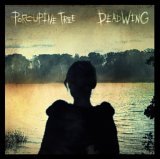
Porcupine Tree, Deadwing

There are two camps in the British progressive rock scene. In one corner are those unashamedly retro bands that seek to recreate the sounds of the halcyon days of the early 70s before the dark ages of punk. In the other corner stand those bands who combine the spirit of that era with a more streamlined, modern sound. Steve Wilson’s Porcupine Tree are definitely in the latter camp.

I read a review of Deadwing in The Times that described Porcupine Tree as ‘now sounding like a regular indie band’, which made me fear the worst, as the last thing Britain needs is yet another generic indie band. But my fears proved unfounded; this album is far more metal than indie. Deadwing’s predecessor, “In Absentia” was notably heavier than earlier PT albums, and this one takes things still further in that direction. Wilson’s work with Scandinavian death-metallers Opeth has rubbed off; indeed, Opeth’s Mikael Akerfeldt contributes some guitar, as does King Crimson’s Adrian Belew. But it’s not all thrashing guitar riffs; there are also some decidedly non-metal ballads and plenty of Floydian textures to offset the heavier parts.

The nine-minute opening title track starts as the band mean to go on, with it’s powerful guitar riff and driving bass line, and the instrumental breaks contrast Wilson’s liquid guitar solo with guest player Adrian Belew’s distinctive angular style. The production is clean and crisp, as you’d expect from Steven Wilson. High spot of the album is the kaleidoscopic twelve-minute epic ‘Arriving Somewhere (but not here)’, which manages to go through all the musical styles of the album in a single track; spacey atmospheric intro, gentle ballad building to the fluid guitar solo, then a thrashing death-metal segment, before it all drops away for an acoustic flamenco solo. Heaviest track is the US single, ‘Shallow’, with it’s Zeppelin-style riff. The most indie-sounding songs are probably the excellent bass-driven ‘Halo’, the UK single, the piano-led ballad ‘Lazarus’, which doesn’t do a lot for me, although Coldplay fans will probably love it, and “Start of Something Beautiful”, with the beautiful piano solo towards the end.

Overall, this album reminds me very much of the last couple of Marillion albums; if you liked “Anoraknophobia” and “Marbles”, or indeed, Porcupine Tree’s own “In Absentia”, I can definitely recommend “Deadwing”.

(This review also appears on Blogcritics)

Posted in Music, Record Reviews | Tagged | 4 Comments

Asia/Barclay James Harvest, Manchester Academy

There are so many 70s bands on the road with just one or two original members nowadays that the dividing line between an original band and a tribute act is getting just a little blurred. To take a random example, is a Thin Lizzy fronted by Jon Sykes really worthy of the name?

Both Barclay James Harvest and Asia are down to just one original member, bassist and vocalist Les Holroyd in the case of BJH, and ex-Buggles keyboardist Geoff Downes in the case of Asia. (To confuse things further, there are now two competing BJHs on the gig circuit!) Are they really ‘genuine’ bands? And how much does it really matter anyway? Manchester Academy 2 on Friday night was the place to find out.

Dare were the first of the three bands on the bill, playing a brief 30 minute set to warm up the audience for the double headliners. The set started with an awful muddy sound mix, although thankfully it got better after the first couple of numbers. To be honest, Dare never really rose about the level of a pub-rock band, which probably explains why they’ve never had much success even though they’ve been around for years. Nothing spectacularly bad about them; the playing was competent, but with one or two exceptions, most of the AOR-ish songs were rather ordinary.

I wasn’t quite sure what to expect from BJH. I’m only familiar with one of their albums, the live one recorded in Berlin twenty years ago. Sadly they played all of one song from it. The numbers they did play, which I gather was a mix of some songs from their 70s heyday and some much never material was more guitar-driven than I expected. In an interview Les Holroyd had stated that the setlist concentrates on songs he had written, which confirmed the impression I was getting; this was not so much Barclay James Harvest, as Les Holroyd plus a bunch of anonymous session musos. They were musically competent, I have to say, especially the guitarist. They just didn’t seem that tight as a band, and too much of the material sounded the same, and came over flat and uninspired. The biggest single flaw was Les’ vocals, desperately weak in places.

Disaster struck towards the second half of the set. Just as the show began to show a few signs of life, the power went out on stage; no amps, no mikes, no keyboards, nothing. After a few embarrassed minutes, they got the sound back, only for the power to fail a second time after about a minute of song intro. A much longer pause followed before the problems were finally fixed, and BJH were finally able to complete a now somewhat truncated set. But by now it was too late; they’d completely lost momentum, and any atmosphere had fizzled out. They’re going to have nightmares about this show for months.

And so to the headliners. Asia have a strange history; a supergroup accused by some of having been put together by the record company, who nevertheless produced one classic album. Then the original supergroup dissipated following a disappointing second album. In most cases, that would simply have been the end of the story. In Asia’s case, the least well-known band member recruited a bunch of relative unknowns, and carried on.

Asia’s current lineup is Geoff Downes on keys (Formerly of The Buggles, and then Yes), John Payne on bass and vocals, Chris Slade (who’s played with Tom Jones, Manfred Mann’s Earth Band, Uriah Heep and AC/DC) on drums, and Guthrie Govan on guitar.

Asia opened with barnstorming versions of “Wildest Dreams” and “Here Comes the Feeling” from that classic 23 year old debut. Asia had the tightness and unity of purpose that BJH had lacked; this was clearly a band, not a bunch of random musos on stage. But all four of them nevertheless have amazing chops. Frontman John Payne is very much the visual focus now, and someone not knowing their history would assume that he, not Geoff Downes, was the founder member of the band. His voice is a little more gravelly than that of John Wetton, but he’s nevertheless made the older songs his own. Guthrie Govan cuts a frail-looking figure on stage, but there’s nothing frail about his guitar playing, some of which is just amazing. And Chris Slade drumming is just monstrous.

The set naturally drew heavily from that first album, with I think six of the eight on it songs being played. Quite a bit came from their most recent effort, “Silent Nation”, which I have yet to hear. John said that they’ve given up on album titles beginning and ending with the letter ‘A’ (Asia, Alpha, Astra, Aqua etc.) because they’ve run out of usable words; “Angina” or “Asthma” would not have worked! In the middle of the show they played an acoustic set, with some incredible duelling flamenco licks from John and Guthrie. And Chris Slade even managed to play a drum solo which wasn’t boring! The only weak spot was the semi-instrumental version of The Buggles’ big hit, “Video Killed the Radio Star” in Geoff’s keyboard solo. That didn’t really work; if they are to include it in the set at all, perhaps they should rework it as a rock number and get John Payne to sing it.

The finished as they began, with “Only Time Will Tell”, and the encore “Heat of the Moment”.

Overall, Asia put on a great show, clearly well-rehearsed and professional, although still very much enjoying themselves. The fact that they only have one original member left is only an incidental detail; the current lineup has very much gelled as a band, and were firing on all cylinders. But when it comes to Barclay James Harvest, I’m afraid I can’t really say the same thing. To describe them as one has-been backed by anonymous sidesmen sounds cruel, but it’s pretty close to the truth. A genuine tribute band would probably have put on a better show.

Official Asia web site www.asiaworld.org
Posted in Live Reviews, Music | Tagged | Comments Off

Difficult Second Album Syndrome

The popular meme is that the second album is the hardest one for a band to make. It’s said that they have umpteen years to write the first one, and then must write the second from scratch in the space of a few months.

I’ve always been sceptical of this meme; looking at most of the great bands in rock history; those who have successful multi-album careers, in almost all cases the second album is stronger than the debut. Compare Led Zeppelin II with their first one, for example.

I think the survival of the meme is a consequence of the media’s and record industry’s habit of over-hyping bands of limited talent. Most of them only have one album’s worth of ideas. Their first album contains not only all they can do, but all they will ever be capable of. Their second merely proves this, and in most cases there’s never a third; the record company drops them, and they all get jobs as accountants.

I have long believed the music press do this on purpose; since they depend on breaking new ‘talent’ rather the writing about established artists who have better things to do that talk to some talentless hack. So they deliberately hype bands they know will have no staying power, and will safely fade away to make way for whoever they hype next week

Posted in Music | 1 Comment

The Mars Volta: Frances the Mute

The Mars Volta’s debut, “Deloused in the Comatorium” was one of the most amazing albums I’d heard for years. It somehow managed to combine the raw energy of punk with the complexity of full-blown prog-rock to produce something that completely transcended genre boundaries.

The followup pushes things even further. All the ingredients from “Deloused” are still here; soaring vocals, frenetic instrumental sections, incomprehensible song titles like “Cygnus…Vismund Cygnus” and “Plant a nail in the navel stream”. But they’ve added more; now alongside the machinegun drums and Frippesque guitars we have string sections and mariachi trumpets.

The 75-minute running time is split into just five tracks, with lyrics as strange as anything by Jon Anderson or Pete Sinfield, but an order of magnitude darker; twisted and disturbing, they’re not the things audiences are going to sing along with. But this album’s not really about the lyrics, it’s about the music.

And what music! This disc is far varied that their debut. There’s “The Widow”, at seven minutes the shortest track on the album, strongly bluesy in a way that recall’s Muse’s version of “Feeling Good”. Elsewhere we get fleeting glimpses of the improvisational King Crimsons of the mid 70s and mid 90s, flashes of psychedelic-era Pink Floyd and blasts of anarchic sax and sci-fi noises that recall Hawkwind’s “Space Ritual”. Some might label the lengthy instumental sections of the epic “Cassandra Geminni” as self-indulgent, but I just can’t agree; there’s a hypnotic quality about them, and the quiet bits break up into instrumental anarchy just before the overstay their welcome.

Overall, a superb album, and proof that “Difficult second album syndrome” simply doesn’t happen to great bands.

Posted in Music, Record Reviews | Tagged | Comments Off

Blogging is like Punk Rock?

A post on Harry’s Place compares the world of Blogging with the world of punk rock in the 70s.

In the late Seventies fanzines printed diagrams showing readers how to hold down three chords followed by an exhortation to go out and form a new band. The equivalent now is established bloggers pointing commenters in the direction of the Blogger Template and challenging them to do better if they don’t like what they see.

The growing number and diversity of blogs today does remind me of the inky, enthusiastically scribbled fanzines sold in record shops 25 years ago. That same DIY spirit mutated into an explosion of independent record labels which provided a way for new bands to bypass the approval of satin-bomber jacketed A & R men who had, until then, been the gatekeepers to record pressing plants.

Commenter Effra , though, begs to differ:

Yes, I too have often been struck by the similarity between blogs and punk music:

(1) Almost no girls or non-whites are fans. The performers aren’t very gifted and the music is technically backward (blog design versus MSM).

(2) It isn’t genuinely popular. (A recent chart of Britain’s Top 100 selling singles found not one punk track among them– not even ‘Anarchy in the UK’.

(3) It appeals chiefly to middle class teenage boys who fancy a bit of prolier-than-thou, licit bedroom rebellion: rude words (gobbing in print), vandalism and body-surfing (DOS attacks, spamming etc).

(4) For years after the brief craze has fizzled out, those same boys– now thick-waisted middle aged meejah nostalgics– fondly hark back to their little bit of revolution, and go on churning out books and documentaries about it as if it had been a major social trend.

(5) Disco and glam rock– the real mass tastes in music in the 1970s– get stigmatised by these aficionados in the same manner as the dreaded Mainstream Media are put down by bloggers.

Punk was for the Nathan Barleys of 1975, and Joe Strummer was a public school toff.

I find myself nodding in agreement with ‘effra’. I’ve always thought the influence of punk rock has been overstated, both musically and culturally. All it really achieved was to get up the noses of the cultural elites and frighten a few over-excitable Daily Mail readers. What influence there was on music was as much negative as positive. Just like too many bloggers it was deeply reactionary; a puritanical insistence that you weren’t allowed to use more than three chords, and any displays of instrumental ability were self-indulgent and decadent.

Punk burned itself out within the space of a couple of years; by the mid 80s corporate rock was back with a vengeance, only far blander and less ambitious than anything from the wrongly-maligned early 70s. I suspect the real reason punk is overstated is simple demographics; the height of punk corresponded with peak of the British baby boom, a decade or so later than the American one. Just like America’s boomers, this generation thinks that history revolves around them.

The ultimate irony is that today, it’s the prog-rockers who are the do-it-yourself artists, releasing self-financed records on obscure independent labels. And the music being release by major record companies is a sort of watered-down sanitised version of punk.

Time will tell if blogging will go the same way. Will the talented writers in the blog world end up working for the MSM they once despised? Will the effect of blogging be to make the MSM blander, afraid to have a strong opinion on anything lest they suffer the fate of Dan Rather?

Posted in Music | Comments Off