 Nobody really expected this tour. A couple of years ago Robert Fripp announced his retirement from music, burned out after a protracted legal dispute with his former record company over royalties. So it was a very pleasant surprise to see the announcement that he was putting together a new incarnation of King Crimson. Even more of a surprise was the news that unlike previous King Crimsons of the 70s, 80s and 90s, this one would would be performing music from right across their career. It was to be an interesting lineup, a seven-piece band including saxophonist Mel Collins alongside bass virtuoso Tony Levin, and no fewer than three drummers. What wasn’t a surprise was the speed at which many of the gigs sold out.
I wasn’t planning on reviewing this gig; just to enjoy the music without having to think about what to write about it. But then then a major broadsheet newspaper sent a too-cool-for-school NME type who filled his review with clichéd references to Spinal Tap, baby boomer fans and a “vermillian gash of sheer cosmic hogwash” that made him wish he was stoned. Somebody needs to set the record straight.
Let’s start with the presentation. The stage setup wasn’t that of a traditional rock band, with three drum kits at the front of the stage and the other four musicians on a raised platform behind them. Neither was there much of a light show. But King Crimson have never been a traditional rock band. Robert Fripp eschewed guitar hero poses by remaining seated on the far right-hand side of the stage, and the show proceeding without a single word to the audience, simply letting the music speak for itself. The iconic cover art from their first album adorning the body of Jakko Jakszyk’s guitar was a nice touch, though.
The two hour show began with the rock symphony that is “Larks Tongues in Aspic”. The early part of the set featured more recent material, some of it completely new, largely instrumental and showcasing the complex interplay between the three drummers alongside Mel Collins’ squalling sax as well as some abrasive guitar soundscapes. This was as much experimental jazz or avant-garde classical music as it was rock, and was thrilling in its sheer energy and intensity.
The second half of the show took us back to their best known work from the 1970s, when Jakko Jakszyk came into his own as a singer, easily doing justice to material originally sung by Greg Lake and John Wetton. “Easy Money” was loud and metallic, Bill Rieflin switched from drums to keys for the soaring Mellotron-drenched “Epitaph”, the first song of the evening to feature Pete Sinfield’s poetic lyrics that so enrage those who have fixed ideas of what rock lyrics should be.
They continued with “The Letters” and an astonishing “Sailor’s Tale” from the sometimes overlooked 1971 album “Islands”. The main set ended with two of their defining songs, “21st Century Schizoid Man” including a spectacular drum solo from Gavin Harrison and lyrics that sound even more prophetic now than in 1969, and finally the majestic and peerless “Starless”. After some well-deserved standing ovations, they came back for encores finishing with the stately magnificence of “In the Court of the Crimson King”.
“Prog-rock” is too narrow a label to define King Crimson’s music, even if their début album formed the template for so many lesser prog bands. Even “Rock” itself is too narrow; this is a band who demonstrate they’re capable of playing full-blown jazz when they want to. Indeed, some of the most exciting moments were in the first half of the show, with the crowd-pleasing favourites towards the end feeling like a victory lap. There was a lot to take in, so much so that you can see why many people were prepared to see them two, three, or even four or five times on the tour. Whatever genre it may or may nor be, everyone in that room with the sole exception of that one cynical hack who just didn’t get it knew they had just witnessed something quite extraordinary.


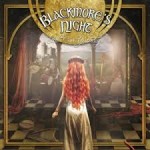 It’s a sobering thought that Richie Blackmore has been a part of Blackmore’s Night for longer than he was with Deep Purple, and has recorded more studio albums with Candice Night than with any other singer.
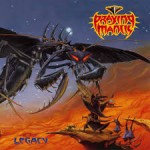 Some may remember Praying Mantis from the New Wave of British Heavy Metal in the early 1980s. Led by the Troy brothers, Chris and Tino, they never managed the success of the likes of Iron Maiden or Saxon, and like many of their peers they faded away after a couple of years.
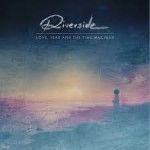 With their blend of atmospherics, emotional depth and superb musicianship, Riverside are one of the best bands to have come out of Poland in recent years. Their last album, 2013′s “Shrine Of New Generation Slaves” was a major step forward for them, with a dense hard rock sound with strong echoes of 70s Deep Purple.
 Motörhead are a British institution. Their name and logo have become so iconic that high street department stores sell their t-shirts to people who probably can’t name a single song with the possible exception of “Ace of Spades”. But after Lemmy’s recent health issues saw a tour cancelled not once but twice, and one or two lacklustre recent festival appearances, there have been doubts as to whether Lemmy is quite as indestructible as we thought, or that they are still the primal force they once were.
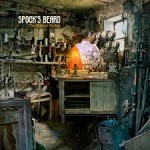 Since their emergence in the mid-1990s when the genre was at its lowest ebb, Spock’s Beard have become elder statesmen of the third wave of progressive rock. With their twelfth album “The Oblivion Particle”, the second to feature Ted Leonard on lead vocals, they show no signs of running out of ideas.


 Though sometimes labelled as “post-rock” or the catch-all “alternative”, the instrumental four-piece The Fierce and the Dead are happy to describe themselves as a progressive rock band.