Tag Archives: Album Review

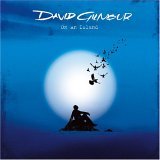
David Gilmour – On An Island

Gilmour’s third solo album sees the Pink Floyd guitarist in mellow chill-out mode. It took me a while to really get into this one; at first, a lot of it sounded like the sort of material that I’d class as filler if it appeared on a Mostly Autumn disk. But Gilmour hasn’t quite descended into Eric Clapton pipe-and-slippers mode yet, and repeated plays reveal a lot more depth. Nothing really catches fire, but the album does turn into something of a slow-burner.

In places there’s a strong feel of “Meddle” thirty five years ago, and ultimately the only real clunker is the lumpen blues jam “This Heaven”. Naturally there’s plenty of Gilmour’s signature guitar playing throughout, although anyone expecting a new ‘Comfortably Numb’ might have to look elsewhere. On the instrumental “Red Sky at Night”, Gilmour demonstrates that he can play the saxophone as well as the guitar. He’s managed to recruit an impressive list of guest appearances, including David Crosby and Graham Nash, Phil Manzenera, Richard Wright, Jools Holland, Georgie Fame, Robert Wyatt and Guy Pratt. Overall, while this isn’t an ‘instant’ album, listen to it half a dozen times and it will start to get under your skin.

Posted in Music, Record Reviews | Tagged | Comments Off

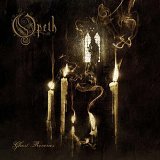
Opeth – Ghost Reveries

Sweden’s Opeth are a band of contrasts. Half their music is extreme death metal, all piledriver riffs and growling ‘Cookie Monster’ vocals. But the other half is mellow progressive rock influenced by the likes of Pink Floyd and Camel.

The band’s two previous albums, “Deliverance” and “Damnation” sounded like the work of two completely different bands. Actually recorded together, though released several months apart, “Deliverance” was uncompromisingly heavy, while “Damnation” showed the band’s lighter side, all ‘clean’ vocals, plenty of Mellotron, and not a powerchord in sight.

“Ghost Reveries” takes the approach of the earlier “Blackwater Park” and mixes the contrasting styles on one album, and in many cases even combines them within individual songs. It actually works quite well; one moment there will be mountainous riffs or complex heavy guitar passages topped with growling death vocals, then it will drop away to a quiet acoustic section with clean vocals or a bluesy solo.

They’ve expanded to a five-piece with the addition of keyboard player Per Wiberg, who plays a lot of Mellotron, as well as electric piano and organ. No cheesy synths here! His playing is mainly adding atmospheres and textures rather than widdly soloing, but he certainly adds a new dimension to their sound.

Overall, a good album, though I would have preferred a bit less of the Cookie Monster. In one or two places Mikael Akerfeldt sings clean vocals on heavier sections; those work well, and I wish he’s done more of the vocals like that.

Posted in Music, Record Reviews | Tagged | 5 Comments

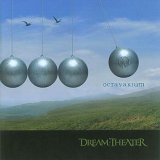
Dream Theater – Octavarium

Octovarium is the New Jersey progressive metal band’s eighth release. Although I’d been a fan since hearing 1994′s “Awake”, I’ve had trouble getting into the last couple of releases. I’ve come to the reluctant conclusion that the band had peaked with 1999′s magnificent concept album “Scenes From a Memory”, and it was all downhill from there.

Octovarium, though, is a significant improvement on it’s rather mediocre predecessor, 2003′s “Train of Though”. The complex, widdly, and sometimes self-indulgent instrumental sections are still very much present, but this time it appears in the context of some actual songs.

They’ve been accused of ripping off Muse in one or two places; I can’t hear that much of a resemblance myself. Saying that, the piano-led ballad “The Answer Lies Within” skirts the edge of Coldplay territory, and “I Walk Beside You” sounds more like U2 than U2, with James Labrie doing an uncanny impersonation of Bono. The rest of the album is much better; songs like “These Walls” and “Sacrificed Sons” typify the sort of epic progressive rock that made the band’s name in the first place, while opener “Root of All Evil” and “Panic Attack” show the darker and more metallic side of their music. The awesome musicianship is evident all the way through; although DT might not be the best progressive rock band in the world, they’re certainly the band with the best chops.

The album closes with the sort of 24 minute monster that only a prog band would attempt. The quiet opening section does sound a little too much like “Shine on You Crazy Diamond” for it’s own good, but it develops into a well-structured epic. There’s a frenetic instrumental passage, not so much a solo as all four instrumentalists going at it hammer-and-tongs with intertwining guitar, bass and keyboard lines. Finally the song ends with a majestic orchestral climax.

Overall verdict; not their best, but far from their worst. They may have peaked, but there’s plenty of music left in them, though it’s one of those albums you need to spin many times before you can fully appreciate it.

Posted in Music, Record Reviews | Tagged | 3 Comments

Closterkeller – Nero

Nero

Female fronted Goth-metal band Closterkeller are a major act in their native Poland. They’re little known in the wider world, since most of their albums are sung in Polish. However, with their latest album, Nero, they’re released an international version with the vocal tracks re-recorded in English. This might just expose their music to a wider audience.

While some of the earlier Polish-only albums had a quite punky feel, “Nero” has a far richer multi-layered sound. Parts of the album are very metal orientated, heavier and more riff-based than older work. The closest comparison is probably to doom-metal bands like Paradise Lost or Anathema. But they’re by no means a straight metal band; the heavier songs are balanced by plenty of atmospheric material that sounds close to progressive rock. The keyboard-dominated title track in particular reminds me very much of Tangerine Dream.

Checking the liner notes for the past two albums, “Cyan” and “Graphite”, I see they’ve gone though a lot of lineup changes; indeed the only constant factor is vocalist Anja Orthodox, her powerful yet beautiful vocals defining Closterkeller’s sound. I was worried they’d lose something sung in English; but her strong Polish accent somehow gives the music an exotic appeal rather than merely sounding comical. After all, Vampires have Eastern European accents.

This review of mine originally appeared on Blogcritics some time ago, but never got posted here. That needs to be corrected

Posted in Music, Record Reviews | Tagged | Comments Off

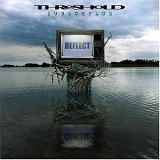
Threshold – Subsurface

This release by the British six-piece progressive metal band actually came out last year, but I missed picking it up when it first appeared.

It’s another solid release, immaculately produced by Richard West and Karl Groom. All the trademark Threshold sounds are here; piledriver riffs, atmospheric interludes, time changes, anthemic choruses and fluid soloing. There are even some widdly synth solos. The overall sound is not unlike that of the heavier side of Dream Theater, only with DTs sometimes self-indulgent widdling reigned in a little.

The only real weakness is that it sounds too much like other recent Threshold releases; it’s all nicely done, but it doesn’t really break any new ground for the band. If you’ve liked their previous releases, you’ll probably like this one too. If you haven’t heard any Threshold at all, this one makes as good an introduction to the band as any.

Posted in Music, Record Reviews | Tagged | Comments Off

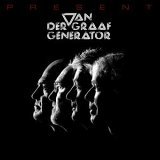
Van der Graaf Generator – Present

Buy this album from Amazon UK

After a 25 year absence, VDGG are back with a new album. They were one of the seminal 70s progressive rock bands, a bit too leftfield for mainstream success, although Peter Hammill’s distinctive vocal style influenced artists as varied as Johnny Rotten and Fish.

According to the sleeve notes, the four members of the band, Peter Hammill, Guy Evans, Hugh Banton and David Jackson, kept meeting at the funerals of former roadies. They decided that if they were going to have the much talked-about reunion, it would have to be while all four members were still alive.

It’s a double album, and the two discs are very different. The relatively short first disc, with a running time of about the length of a vinyl LP, contains six numbers. The album kicks off with the classic VDGG sax-and-organ sound of “Every Bloody Emperor”, with caustic lyrics that suggest Hammill is not a terribly great fan of Bush and Blair.

Yes and every bloody emperor’s got his hands up history’s skirt
as he poses for posterity over the fresh-dug dirt
Yes and every bloody emperor with his sickly rictus grin
talks his way out of nearly everything but the lie within
because every bloody emperor thinks his right to rule divine
so he’ll go spinning and spinning and spinning into his own decline

Other high spots on the first disc are the Hammond-heavy blues of “Nutter Alert” with some great playing by Hugh Banton, and the splendid instrumental “Boleas Panic”, with some equally great soloing from David Jackson. If this disc has any faults, it’s that it’s too front-loaded, as these first three numbers are by far the strongest on the whole album.

The hour-long second disc is entirely instrumental, largely made up from improvised jazz-rock jams, dominated by David Jackson’s sax playing. Much of the playing is frenetic and angular, with a few quieter reflective passages. This is difficult to sit down and listen to, but it works quite well as background music while you’re doing something else.

The whole thing, like all of VDGG, cannot by any stretch of the imagination be filed under ‘easy listening’. But, like a lot of ‘difficult’ music it’s ultimately rewarding if you persevere with it.

Posted in Music, Record Reviews | Tagged | Comments Off

Mostly Autumn, Storms Over Still Water

When I returned from work on Friday, there was a package waiting at home for me. It contained my Limited Subscriber Edition of Mostly Autumn’s new album, which I’d ordered a few months ago. Mostly Autumn have followed the lead set by Marillion a few years back, persuading fans to preorder the next album before it’s been recorded; thus relying on their fan base rather than an advance from a cynical record company to pay for the recording costs.
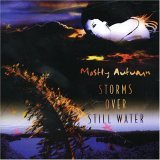
Mostly Autumn are a York-based seven-piece inspired by the currently unfashionable classic rock bands of the 70s. Early albums were full of echoes of Pink Floyd, Renaissance, Uriah Heep, Jethro Tull, Deep Purple and Fairport Convention. Later on they fused these influences into their own unique sound, combining celtic atmospherics with soaring symphonic rock. This is the sort of music that requires multiple listens before it can properly be appreciated. Unfortunately any album of theirs runs a serious risk of being dismissed by mainstream critics who will attempt to appraise it on a single listen, even if they don’t reject it out of hand as being totally out of touch with contemporary musical fashions.

Storms Over Still Water, MA’s fifth “Proper” work, is very much an album of two halves. The first half is made up of short, fairly commercial rock numbers in the vein of 2003′s “Passengers”. But the second half contains longer sweeping pieces in the style of the high points of their earlier work. The actual sound is a little different this time; unlike the sparser productions of some earlier albums, this time there’s a big, full sound which probably needs an expensive stereo to do it full justice.

I don’t normally do track-by-track reviews, but this time I’ll make an exception:

Out of the Green Sky: Liam Davidson’s slide guitar leads into a heavy guitar-driven opener. Bryan Josh’s vocals on the verse are rather low in the mix, which makes a dramatic contrast with Heather Findlay’s soaring vocal on the chorus.

Broken Glass: A lighter, poppier song with a big 80s style multi-tracked guitar hook, although the vocal melody is a bit weak. Ties with Ghost in Dreamland for the weakest song on the album.

Ghost in Dreamland: Another rather lightweight poppy number, which, like the previous song, doesn’t do an awful lot for me. Probably the nearest thing the album has to filler.

Heart Life: This bluesy ballad has been in the live set since the end of last year, so I’d heard the song before. The acoustic verse recalls a faint echo of the band’s older celtic folk sound, but with a much rockier chorus. A great vocal performance from Heather on this one, and an equally great solo from Bryan at the end. For me, this is the standout song from the first half of the album.

The End of the World: Possibly the strangest song on the album, with a lyric that seems a homage to the whimsical but dark stories Peter Gabriel used to tell in between songs. It uses the contrasting vocal styles of the two lead singers to great effect.

Black Rain: MA rock out with the heaviest song they’ve ever performed. I’ve heard the riff being described as a bit like Oasis, but it reminds me more of Uriah Heep at their best. Another superb vocal from Heather and some wonderful guitar heroics from Bryan. They should really put this one out as a single; it would show up The Darkness for the poseurs they are.

Coming to…: An instrumental that doesn’t quite work. Builds up from a repetitive guitar riff and marching keyboards, but abruptly stops before it reaches a climax. When I first heard it, I thought there was a fault on my CD. But no, it’s meant to end like that.

Candle in the Sky: The first of three lengthy epics. The beginning section is reminiscent of parts of Dark Side of the Moon, with Bryan’s vocals sounding very Dave Gilmour. The song leads into a bizarre Bon Jovi-like singalong middle section, and finally an chill-out atmospheric playout. The individual parts are good, but I’m not sure whether the thing works as a whole.

Carpe Diem: A symphonic rock classic. In some ways it resembles the much earlier ‘The Gap is Too Wide’ from 1999s “Spirit of Autumn Past” Built upon a simple repetitive piano figure from Iain Jennings, it starts with a beautiful vocal section from Heather, and builds into an extended soaring solo from Bryan. I love the interplay between the guitar and the backing vocals. The band have done this sort of thing before, but never to such effect.

Storms over Still Water: The title track is vaguely similar in arrangement to the previous track; opening with an atmospheric vocal section, sung (I think) by both Heather and Angela Gordon, a heavier middle section sung by Bryan, and another extended solo at the end. Another good one, even if it doesn’t quite reach the heights of the track before.

Tomorrow: The closing number is another short instrumental, building up from a simple guitar riff overlaid with walls of keyboards to build a big symphonic wall of sound. A fine way to end the album.

Overall, this is a superb album, and a logical progression from what’s gone before. It builds on the strengths of “Passengers”, but also includes some soaring epics, the one thing Passengers lacked. Missing almost completely this time is any sign of the old celtic folky feel; maybe elements of this will reappear next time around?

One thing that stands out here is Bryan Josh’s guitar playing. If “Passengers” showed a tremendous advance in Heather Findlay’s vocals, this one shows just as big an improvement in Bryan’s lead guitar. Before he was a competent journeyman player; now in places he’s showing the potential to be a Steve Rothery or a Dave Gilmour. The production gives him a big overdriven sound that suits his playing well. But if Bryan Josh and Heather Findlay share the spotlight, the unsung hero is Iain Jennings, whose keyboard playing never takes centre stage, but fills out the sound all the way through the album.

The album isn’t quite perfect; I’d like to have a heard little more of Angela Gordon’s flute playing, which is seriously underused this time around. Also some of the arrangements still show some rough edges; several songs don’t seem to have proper endings, but just seem to stop.

But these are quibbles; the albums great strengths overwhelm these relatively minor faults. If you liked any earlier Mostly Autumn album, you will not be disappointed in this one.
Posted in Music, Record Reviews | Tagged | 2 Comments

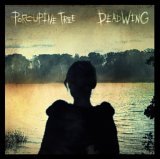
Porcupine Tree, Deadwing

There are two camps in the British progressive rock scene. In one corner are those unashamedly retro bands that seek to recreate the sounds of the halcyon days of the early 70s before the dark ages of punk. In the other corner stand those bands who combine the spirit of that era with a more streamlined, modern sound. Steve Wilson’s Porcupine Tree are definitely in the latter camp.

I read a review of Deadwing in The Times that described Porcupine Tree as ‘now sounding like a regular indie band’, which made me fear the worst, as the last thing Britain needs is yet another generic indie band. But my fears proved unfounded; this album is far more metal than indie. Deadwing’s predecessor, “In Absentia” was notably heavier than earlier PT albums, and this one takes things still further in that direction. Wilson’s work with Scandinavian death-metallers Opeth has rubbed off; indeed, Opeth’s Mikael Akerfeldt contributes some guitar, as does King Crimson’s Adrian Belew. But it’s not all thrashing guitar riffs; there are also some decidedly non-metal ballads and plenty of Floydian textures to offset the heavier parts.

The nine-minute opening title track starts as the band mean to go on, with it’s powerful guitar riff and driving bass line, and the instrumental breaks contrast Wilson’s liquid guitar solo with guest player Adrian Belew’s distinctive angular style. The production is clean and crisp, as you’d expect from Steven Wilson. High spot of the album is the kaleidoscopic twelve-minute epic ‘Arriving Somewhere (but not here)’, which manages to go through all the musical styles of the album in a single track; spacey atmospheric intro, gentle ballad building to the fluid guitar solo, then a thrashing death-metal segment, before it all drops away for an acoustic flamenco solo. Heaviest track is the US single, ‘Shallow’, with it’s Zeppelin-style riff. The most indie-sounding songs are probably the excellent bass-driven ‘Halo’, the UK single, the piano-led ballad ‘Lazarus’, which doesn’t do a lot for me, although Coldplay fans will probably love it, and “Start of Something Beautiful”, with the beautiful piano solo towards the end.

Overall, this album reminds me very much of the last couple of Marillion albums; if you liked “Anoraknophobia” and “Marbles”, or indeed, Porcupine Tree’s own “In Absentia”, I can definitely recommend “Deadwing”.

(This review also appears on Blogcritics)

Posted in Music, Record Reviews | Tagged | 4 Comments

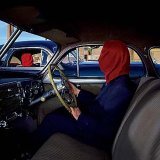
The Mars Volta: Frances the Mute

The Mars Volta’s debut, “Deloused in the Comatorium” was one of the most amazing albums I’d heard for years. It somehow managed to combine the raw energy of punk with the complexity of full-blown prog-rock to produce something that completely transcended genre boundaries.

The followup pushes things even further. All the ingredients from “Deloused” are still here; soaring vocals, frenetic instrumental sections, incomprehensible song titles like “Cygnus…Vismund Cygnus” and “Plant a nail in the navel stream”. But they’ve added more; now alongside the machinegun drums and Frippesque guitars we have string sections and mariachi trumpets.

The 75-minute running time is split into just five tracks, with lyrics as strange as anything by Jon Anderson or Pete Sinfield, but an order of magnitude darker; twisted and disturbing, they’re not the things audiences are going to sing along with. But this album’s not really about the lyrics, it’s about the music.

And what music! This disc is far varied that their debut. There’s “The Widow”, at seven minutes the shortest track on the album, strongly bluesy in a way that recall’s Muse’s version of “Feeling Good”. Elsewhere we get fleeting glimpses of the improvisational King Crimsons of the mid 70s and mid 90s, flashes of psychedelic-era Pink Floyd and blasts of anarchic sax and sci-fi noises that recall Hawkwind’s “Space Ritual”. Some might label the lengthy instumental sections of the epic “Cassandra Geminni” as self-indulgent, but I just can’t agree; there’s a hypnotic quality about them, and the quiet bits break up into instrumental anarchy just before the overstay their welcome.

Overall, a superb album, and proof that “Difficult second album syndrome” simply doesn’t happen to great bands.

Posted in Music, Record Reviews | Tagged | Comments Off

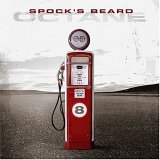
Spock’s Beard, Octane

“Octane”, as the name implies, is neo-proggers Spock’s Beard’s eighth album, and their second without former mainman Neil Morse. “Feel Euphoria“, their first Neil-less opus proved the band were far from a spent force without him. Is Octane as good?

I think the answer has to be yes.

The first half of the album is made up from the seven-song suite “A Flash Before My Eyes”, a superb piece of work. The album opens with a swirl of Mellotron leading us into the classic SB wall of sound; an archetypal rock opera style extended instrumental overture. These seven songs cover the whole range of the Beard’s sound, from atmospheric ballads and Floydian instrumentals though grindingly heavy guitar workouts to the symphonic closing section, “Into the Great Unknowable”. The closing instrumental theme, played on horns and backed by strings has to be the most memorable hook on the album (we’d previously heard it on piano, Mellotron and guitar). The guitar on ‘Surfing Down the Avalanche’ and ‘She is Everything’ is close to being the best I’ve heard from Alan Morse.

After “Flash”, the quality tails off a little in the second half of the album, with a couple of weaker songs teetering on the edge of being filler, although the instrumental ‘NWC’ and the hard-rocking closer ‘As Long as We Ride’ still deliver the goods.

In overall sound it’s maybe a little less ‘proggy’ and closer to mainstream rock; there’s not much in the way of complicated time changes, and no sign of off-the-wall quirky bits recalling Gentle Giant that we heard on their early albums. Neil Morse fans wanting to hear another “Beware of Darkness” will probably be disappointed.

It’s definitely one of those albums that gets better the more you listen to it. On the first few listens I thought the album was a bit patchy. On repeated listens, although some of the later songs still fail to take off, the high points more than make up for the lows. Overall, a good album, not perhaps their best, but far from being the worst either.

Posted in Music, Record Reviews | Tagged | 2 Comments