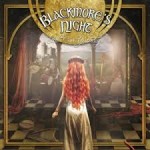
 It’s a sobering thought that Richie Blackmore has been a part of Blackmore’s Night for longer than he was with Deep Purple, and has recorded more studio albums with Candice Night than with any other singer.
Steeped in the strange world of American renaissance fayres, the semi-acoustic project actually had had about as much in common with actual renaissance music as Dungeons and Dragons has with medieval history. The first couple of albums did have their moments, with songs that displayed a sublime beauty, but there were others that badly failed a saving roll against cheese. After the first few records they reached the point of diminishing returns; making a vaguely folk-flavoured pop-rock that was neither quite one thing or the other.
“All Our Yesterdays” starts out as more of the same. A couple of early numbers come over as a poor man’s Mostly Autumn, the same mix of celtic folk and rock elements, but with none of their atmospherics or emotional depth. For example, the instrumental rocked-up Celtic jig “Allan yn n fan” resembles Mostly Autumn’s “Out of the Inn”, only nowhere near as good, while the ballad “Long Long Time” is a reminder that Candice Night isn’t in the same league as either Olivia Sparnenn or Heather Findlay as a singer.
The instrumental “Darker than Black” is rather better, especially when Ritchie Blackmore lets rip on the Stratocaster and demonstrates he’s still got it as a guitarist, recalling the instrumentals that graced late-period Rainbow albums. The other instrumental, “Queen’s Lament” isn’t as effective, Blackmore noodling about on acoustic guitar without ever going anywhere.
The album then goes completely off the rails with some ill-chosen covers. The version of Mike Oldfield’s “Moonlight Shadow” is completely unnecessary, and their take on Sonny and Cher’s “I Got You Babe” is utterly horrible.
But even worse is to come. “Where Are We Going From Here” reworks a number from their own back catalogue, and attempts to turn what had been a beautiful ballad into a uptempo rocker, but only succeeds in cruelly exposing Candice Night’s limitations as a vocalist, who ends up murdering her own song. Which is a shame, because Candice does have a decent voice when she stays within her comfort zone.
Things do pick up slightly with the spirited folk-rock of “Will ‘o the Wisp”, one of the few songs that actually comes to life, but that’s thin pickings for what is ultimately a very disappointing record. It’s hard to believe this tepid album is the work of the musician who created “Burn” and “Stargazer”.
Listening to this album it’s very difficult to escape the conclusion that after eighteen years and ten albums Blackmore’s Night has run its course. Perhaps the time is right for Ritchie to do something completely different; there have been suggestions of some rock-orientated gigs in the near future. One thing is for sure, if Blackmore isn’t a spent force and still has anything to say, the evidence here suggests he needs a new project in which to say it.
 Some may remember Praying Mantis from the New Wave of British Heavy Metal in the early 1980s. Led by the Troy brothers, Chris and Tino, they never managed the success of the likes of Iron Maiden or Saxon, and like many of their peers they faded away after a couple of years.
 With their blend of atmospherics, emotional depth and superb musicianship, Riverside are one of the best bands to have come out of Poland in recent years. Their last album, 2013′s “Shrine Of New Generation Slaves” was a major step forward for them, with a dense hard rock sound with strong echoes of 70s Deep Purple.
 Motörhead are a British institution. Their name and logo have become so iconic that high street department stores sell their t-shirts to people who probably can’t name a single song with the possible exception of “Ace of Spades”. But after Lemmy’s recent health issues saw a tour cancelled not once but twice, and one or two lacklustre recent festival appearances, there have been doubts as to whether Lemmy is quite as indestructible as we thought, or that they are still the primal force they once were.
 Since their emergence in the mid-1990s when the genre was at its lowest ebb, Spock’s Beard have become elder statesmen of the third wave of progressive rock. With their twelfth album “The Oblivion Particle”, the second to feature Ted Leonard on lead vocals, they show no signs of running out of ideas.
 Though sometimes labelled as “post-rock” or the catch-all “alternative”, the instrumental four-piece The Fierce and the Dead are happy to describe themselves as a progressive rock band.
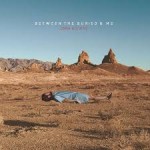 “Coma Ecliptic”, the seventh album by Between the Buried and Me can only be described a progressive metal monster.
 Sweden has long been known as a centre of cutting-edge European metal, but it’s not quite as strongly associated with blues-based hard rock. But that’s what Swedish power trio Kamchatka do, and on the evidence of their sixth album, “Long Road Made of Gold”, they’ve very good at it.
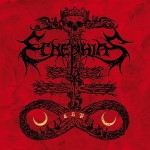 Italian occult metallers Ecnephias are a band with one foot in the metal camp and one foot in the gothic rock camp. Their self-titled album has echoes of The Sisters of Mercy as well as more metal sounds, the overall effect recalling mid-period Paradise Lost. Instrumentally it’s a great record, with strong dynamics, plenty of light and shade, and some impressively fluid guitar work. But it’s the vocals that let it down. They’re not good at judging when to use death-style growls and when to use clean vocals, frequently using growls on the parts which aren’t especially heavy, which doesn’t quite work. You’re left with a feeling that this would have been a stronger record had they used clean vocals more extensively. Still, when it all comes together, it can be excellent, as evidenced by the spiralling gothic “Nyctophilia” and “Vipra Negra” towards the end of the album.
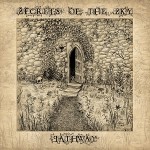 California’s Secrets of the Sky brew up a monstrous wall of sound with the album “Pathway”. The eleven-track album contains six actual songs interspersed with brief snippets of sound effects that go from crashing waves and thunderstorms to ominous footsteps. With no choruses or solos the songs instead take the form of dense soundscapes of layered guitars, doom-laden drums and washes of keys. Unlike Ecnephias they get the vocals dead right, evil-sounding growls for the heavy parts and clean vocals for the reflective, atmospheric moments. The end result is an intense and in places very heavy record where even the lighter parts can sound truly menacing.
 Norwegian black metallers Crest of Darkness pull absolutely no punches on this four track EP, consisting of three originals plus one cover. The three original numbers, “Evil Messiah”, “Armageddon” and “Abandoned by God” are all piledrivingly heavy; in-your-face screamed vocals married to monstrous old-school metal guitars, often more than one great riff in one song, and the cover of Alice Cooper’s “Sick Things” is splendidly demented.
 We’ve had Viking Metal and Pirate Metal, now Goblin Metal is a thing. With song titles like “Snax & Violence”, “We Need A Gimmick” and “Full Body Xplosion” and a guest appearance from Andrew WK this is a band who don’t take themselves too seriously. Although vocalist Scorpion’s goblin-style vocals do wear a bit thin after a while, the varied, inventive and sometimes off-the wall instrumentation suggests they’re something more than a one-joke band, and they clearly sound as though their having great fun.
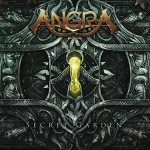 And finally, something for those who can’t abide contemporary cookie monsters and insist on proper singing. veteran Brazilian power-metallers are back with an album filled with galloping hard rockers and epic power ballads, with big riffs, soaring melodies, jaw-dropping guitar soloing and occasional prog atmospherics. Former Rhapsody of Fire frontman Fabio Lione is on fine form on vocals, and the album also features guest appearances from Doro Pesch and Epica’s Simone Simons. It’s all very old-school, but very well done, with a polished production and enough solid songwriting that there’s no room for any filler.
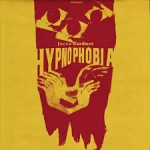 Hypnophobia is the latest album from Dutch multi-instrumentalist and singer-songwriter Jacco Gardner. It features an array of vintage instruments including a Wurlitzer electric piano, a vintage Steinway, Mellotron and harpsichord, and even an