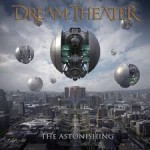
 Dream Theater are a band who strongly divide opinions. For some they’re the epitome of progressive metal, with levels of instrumental virtuosity that render them without peers. For others, they’re all emotionless technical showboating, too many notes and not enough soul. The truth is probably somewhere between the two, but there’s no denying they’re one of the genre-defining bands of their generation.
They’ve been coasting a little in recent years, releasing albums that have their moments but don’t quite reach the heights of the 1990s work that made their reputation. Their last great record was 2002′s “Six Degrees of Inner Turbulence”, and their thirteenth studio effort, like that one, is also a double album.
The Astonishing is a sprawling ambitious concept album with a science-fantasy storyline that includes The Map and a vast cast of character with names like Emperor Nafarys and Faythe. The concept and music owe as much to musical theatre as to progressive rock. Unfortunately what could have been their 2112 turns out a lot more like their version of Kiss’ “The Elder”. Except The Elder didn’t go on for two and a quarter hours.
It starts strongly with the instrumental Dystopian Overture, but it soon becomes clear that they’ve spread themselves far too thin, and there just isn’t enough worthwhile music here to fill a double album. There is very little that stands out strongly, and there’s too much mediocre filler, often with melodies Graham Kendrick would have rejected as too banal.
The problem with this record isn’t too much unrestrained instrumental virtuosity. If anything, the opposite is true; a few tasteless irruptions of widdly-woo might have livened up some of the dull bits. The biggest problem with this album, aside from the sheer amount of filler, is that there’s far too much of James LaBrie, and he’s never been one of the world’s most expressive singers. Not only that, the sheer portentousness of the whole thing gets wearing after a while, eventually leaving you with the feeling that only metal bands with enough of a sense of humour to include undead unicorms should be making science-fantasy concept albums.
It does have its moments, such as “A New Beginning” towards the end of disk one with its inventive spiralling solo from John Petrucci. The album does leave the impression that there might be a worthwhile 50-minute album in there struggling to get out. But the listener has to wade through a lot of forgettable dross to find enough diamonds in the rough.
Dream Theater remain a hugely important band in the history of progressive rock, but sadly this record adds little to their legacy. Anyone new to the band would do better to give this album a miss and instead go for one of the classic earlier ones instead.
 At the end of the 1970s, three village idiots from the north-east of England began meddling with forces they didn’t understand, and unleashed an entity into the world which they could not control.
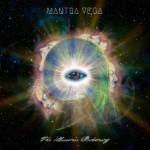 Mantra Vega is a collaboration between former Mostly Autumn vocalist Heather Findlay and Sound of Contract keys man Dave Kerzner, with a supporting cast made up largely from members Heather’s own band, including Roger Waters’ guitarist Dave Kilminster, one-time Seahorse Stuart Fletcher, and two members shared with the current incarnation of Mostly Autumn, drummer Alex Cromarty and guitarist Chris Johnson.
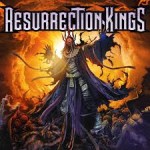 Resurrection Kings are a band put together by Frontiers Records around one-time Dio guitarist Craig Goldie and vocalist Chas West, who had worked with Foreigner amongst others. They’re rounded out with the addition of fellow Dio alumnus Vinnie Appice on drums and former Dokken and Quiet Riot bassist Sean McNabb.
 As any fan of the bands regularly covered on this site ought to know, there is a vast amount of excellent music that doesn’t have the benefit of major label publicity campaigns, and is the wrong genres to be covered by the fashionable media. Which means that many great records fly completely under the radar of everyone who doesn’t follow their particular scene.
 The genre of symphonic goth-metal featuring classically-trained female vocalists is getting increasingly crowded these days. The latest addition to the scene is Italy’s
  It was extremely hard to choose just one single record as album of the year. Even after I had begun publishing the first few instalments of this rundown I hadn’t been able to make the final decision of which record out of at least three was the best of them all. Karnataka and Amorphis in particular have both made astonishingly good records this year.
 The Kickstarter-funded unplugged album reworks favourites from the band’s first three albums into radically different forms, resulting in a beautiful record than emphasises Anne-Marie Helder’s remarkable vocal talent. Though it crosses the streams with the acoustic side-project Luna Rossa to some extent it’s still got more of a Panic Room vibe. It’s not entirely acoustic, since new guitarist Dave Foster cuts loose on electric a few times. There are a couple of new songs too, the classic Anne-Marie Helder ballad “Rain & Tears & Burgundy”, and “Denial”, the first time Panic Room have ever recorded a blues number.
 A live recording of last year’s “Dressed in Voices”, an album regarded by many as their career defining masterpiece. Unlike their other recent live albums this one’s a single disk of the Dressed in Voices set rather than the whole show (Do we really need yet another live version of “Evergreen” or “Heroes”? I don’t think so). But like those other live albums it does capture the power and intensity of the Mostly Autumn’s live performances, the big sound of the seven-piece band at full tilt.
 Matt Stevens’ four-piece instrumental noise merchants could be described as a sort of punk version of King Crimson. Their latest EP sees a move away from the garage-rock feel of their last record. “Spooky Action”. Magnet is darker and denser, with more of a focus on the post-rock and electronica side of their music. Like all of their records, it has feet in many camps, defies simple categorisation, and makes a rewarding listen for anyone who wants to get out of their musical comfort zones.
 A taster from the forthcoming album “The Illusion’s Reckoning”, three songs with a strong 70s classic rock vibe with echoes of Fleetwood Mac and Led Zeppelin. The lead song in particular is lovely, with Heather Findlay playing to her strengths as a vocalist, and features a short but very effective guitar break from Dave Kilminster.
 The band formerly know as Mermaid Kiss return with a new singer in the shape of Maria Milewska and a new name. The four-track suite “The River” was originally slated to be part of a full-length album, but has mow been spun off as a separate EP on its own. It’s largely acoustic, piano and acoustic guitar based songs with woodwind and strings for colour, plus some touches of electronica, and Maria Milewska proves to be excellent singer. Highlights are the woodwinds meet trip-hop instrumental “The Undertow” and the gorgeously atmospheric closing number “Rivergirl”, but the whole EP is excellent.
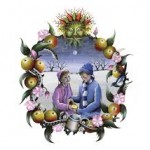 This intermediate release filling the gap before their next full-length album eschews ambitious multi-part epics in favour of more straightforward songwriting. But most of the things we’ve come to expect from Big Big Train are present; big soaring melodies and rich layered arrangements that evoke the spirit of 70s pastoral progressive rock with lyrics steeped in English landscapes and history. The largely instrumental keyboard-heavy “Mudlarks” ticks a lot of classic prog-rock boxes, but with the woodwinds, violins and 12-string guitars there’s also an element of 70s electric folk-rock. It’s all delightfully retro in its use of vintage guitars and keyboard sounds, but that’s always been a major part of their appeal.
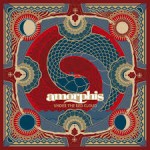 What is it about Scandinavia and metal? A disproportionate number of the most imaginative and innovative metal of recent years has come from Sweden, Norway and especially Finland. Amorphis hail from the last of those nations, and have delivered a quite remarkable record which cannot be pigeonholed in any of metal’s narrow subgenres. There are moments of death metal, folk metal and gothic rock, and the occasional nod to 70s classic rock. It can be piledrivingly heavy at times, but always hugely melodic, with melodies that owe as much to the twin guitars as the vocals. Like the best metal bands they demonstrates superb use of dynamics. Many songs combine clear vocals with death growls, often using one style on the verse and the other on the chorus. As a contemporary metal album this record is absolutely state of the art.
 Karnataka’s fifth studio album is a very different beast from 2007′s “The Gathering Light”, as much so as that album was from “Delicate Flame of Desire”. But the three were the products of three very different bands. The newest incarnation of Karnataka with Hayley Griffiths on vocals and Cagri Tozluoglu on keys have come up with a huge-sounding record with more than a hint of European symphonic metal about it, with recurring lyrical themes of adultery and betrayal. The early part of the album is filled with hook-laden potential singles. Then it closes with the twenty-minute title track which combines evocative celtic soundscapes with massive symphonic rock crescendos and features a guest appearance from Troy Donockley. With this record Karnataka managed to take on the likes of Nightwish and beat them at their own game, which is no mean achievement.
 It been four years since the Yorkshire guitarist and singer-songwriter released her début album, but the follow-up not only proved to be well worth the wait, but is a very different sort of record. With a “Southern Gothic” theme it’s heavier, darker and far more song-focussed, with elements of grunge and progressive rock. There’s more emphasis on memorable riffs than on extended guitar wig-outs; she takes a less-is-more approach to soloing. Hard rockers alternate with delicate acoustic numbers, and the album closes with the ambitious kaleidoscopic epic “Walk on Land”.
 The self-titled solo album by the Pineapple Thief mainman is a thing of beauty, with echoes of Guy Garvey, recent Anathema and Steven Wilson at his less bombastic. It’s an album of soaring atmospheric soundscapes, often semi-acoustic but always hugely melodic, with arrangements varying from acoustic minimalism to richly layered. It takes one unexpected sharp left turn early on with the disco-funk of “The Odds”, but the gorgeously dreamy “Born in Delusion” and “Familiar Patterns” are far more representative of the album. Quite different in mood to The Pineapple Thief, but a very enjoyable record.
 The Norwegian six-piece pick up where they left off with last year’s “Demon”. The vibe resembles late period Talk Talk crossed with Storm Corrosion, sinister atmospheric soundscapes making prominent use of violin and the occasional irruptions of central European folk motifs. But be careful when you play it. The sound resembling modem noises at the very end of “Molok Rising” is a code which may destroy the universe.
 Lonely Robot is the project from John Mitchell of It Bites, Arena and Frost* fame, with a all-star supporting cast including Nick Beggs, Go West’s Peter Cox, Marillion’s Steve Hogarth, Heather Findlay and Kim Seviour. The end result is a varied but hugely impressive album. It goes from dense guitar-heavy industrial prog-metal to gorgeous ballads to uptempo 80s-style pop-rock, with imaginative arrangements that frequently veer off in unexpected directions.
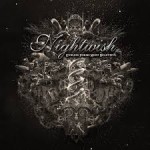 The latest release by the Finnish masters of symphonic metal marks the studio début of lead singer Floor Jansen, and is also the first to feature celtic folk multi-instrumentalist Troy Donockley as a full member of the band. It’s rather heavier than their previous “Imaginaerum“, thought the straight-up metal numbers end up less interesting than the soaring ballads and folk-rock workouts. It might have done without the spoken word parts from the odious Richard Dawkins, though at least he’s talking about evolutionary biology here.
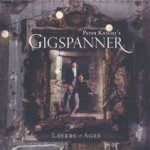 Gigspanner are an acoustic trio led by former Steeleye Span fiddle player Peter Knight, and Layers of Ages sees imaginative arrangements of traditional folk numbers. Though not an instrumental record, Knight’s evocative and lyrical violin playing is the heart of the sound, full of melody and emotion. Much like contemporary jazz, some modern folk has a lot of appeal for fans of progressive rock wanting to venture out of their comfort zone, and this record is a very good place to start.
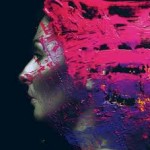 Steven Wilson’s third release following the dissolution of Porcupine Tree is an ambitious concept album about isolation that’s drawn comparisons with Pink Floyd’s “The Wall” and Marillion’s “Brave”. He reins in the wind-driven jazz-rock elements in favour of more guitar-centred sound that’s closer to the spirit of Porcupine Tree than earlier solo releases, going from stripped-back minimalism that evokes XTC to dense layered prog-metal workouts. It’s perhaps not quite as consistently strong as “The Raven That Refused to Sing”, but nevertheless contains many powerful moments.