Record Reviews Blog

Album, EP and DVD reviews, with an emphasis on the UK progressive rock scene.

The Mars Volta: Frances the Mute

The Mars Volta’s debut, “Deloused in the Comatorium” was one of the most amazing albums I’d heard for years. It somehow managed to combine the raw energy of punk with the complexity of full-blown prog-rock to produce something that completely transcended genre boundaries.

The followup pushes things even further. All the ingredients from “Deloused” are still here; soaring vocals, frenetic instrumental sections, incomprehensible song titles like “Cygnus…Vismund Cygnus” and “Plant a nail in the navel stream”. But they’ve added more; now alongside the machinegun drums and Frippesque guitars we have string sections and mariachi trumpets.

The 75-minute running time is split into just five tracks, with lyrics as strange as anything by Jon Anderson or Pete Sinfield, but an order of magnitude darker; twisted and disturbing, they’re not the things audiences are going to sing along with. But this album’s not really about the lyrics, it’s about the music.

And what music! This disc is far varied that their debut. There’s “The Widow”, at seven minutes the shortest track on the album, strongly bluesy in a way that recall’s Muse’s version of “Feeling Good”. Elsewhere we get fleeting glimpses of the improvisational King Crimsons of the mid 70s and mid 90s, flashes of psychedelic-era Pink Floyd and blasts of anarchic sax and sci-fi noises that recall Hawkwind’s “Space Ritual”. Some might label the lengthy instumental sections of the epic “Cassandra Geminni” as self-indulgent, but I just can’t agree; there’s a hypnotic quality about them, and the quiet bits break up into instrumental anarchy just before the overstay their welcome.

Overall, a superb album, and proof that “Difficult second album syndrome” simply doesn’t happen to great bands.
Posted in Music, Record Reviews | Tagged | Comments Off

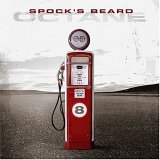
Spock’s Beard, Octane

“Octane”, as the name implies, is neo-proggers Spock’s Beard’s eighth album, and their second without former mainman Neil Morse. “Feel Euphoria“, their first Neil-less opus proved the band were far from a spent force without him. Is Octane as good?

I think the answer has to be yes.

The first half of the album is made up from the seven-song suite “A Flash Before My Eyes”, a superb piece of work. The album opens with a swirl of Mellotron leading us into the classic SB wall of sound; an archetypal rock opera style extended instrumental overture. These seven songs cover the whole range of the Beard’s sound, from atmospheric ballads and Floydian instrumentals though grindingly heavy guitar workouts to the symphonic closing section, “Into the Great Unknowable”. The closing instrumental theme, played on horns and backed by strings has to be the most memorable hook on the album (we’d previously heard it on piano, Mellotron and guitar). The guitar on ‘Surfing Down the Avalanche’ and ‘She is Everything’ is close to being the best I’ve heard from Alan Morse.

After “Flash”, the quality tails off a little in the second half of the album, with a couple of weaker songs teetering on the edge of being filler, although the instrumental ‘NWC’ and the hard-rocking closer ‘As Long as We Ride’ still deliver the goods.

In overall sound it’s maybe a little less ‘proggy’ and closer to mainstream rock; there’s not much in the way of complicated time changes, and no sign of off-the-wall quirky bits recalling Gentle Giant that we heard on their early albums. Neil Morse fans wanting to hear another “Beware of Darkness” will probably be disappointed.

It’s definitely one of those albums that gets better the more you listen to it. On the first few listens I thought the album was a bit patchy. On repeated listens, although some of the later songs still fail to take off, the high points more than make up for the lows. Overall, a good album, not perhaps their best, but far from being the worst either.

Posted in Music, Record Reviews | Tagged | 2 Comments

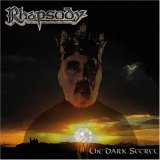
Rhapsody – The Dark Secret

When an album begins with the spoken words of none other than Christopher Lee reciting words like these, it can mean only one thing:

It was a good time for all creatures of the earth. But fate decreed that the Dark Prophecy of a Demonknight could bring a tragic end to this peace, scarring their lives forever. Only one person could cross the darklands surrounding Hargor and venture deep into the caves of Dar-Kunor

His is a name the world will never forget.

He is Dargor

Yes, it’s Rhapsody! Luca Turlulli’s prolific Italian five piece have the market cornered in Operatic Dungeons and Dragons Pomp Metal. “The Dark Secret” is another slab of the trademark sound, a hybrid of power metal and Hollywood film score, the shredding guitars accompanied with choirs and orchestras to make a huge epic wall of sound. It’s way over the top, and totally beyond parody; the sort of stuff which makes The Darkness look po-faced and serious. The sound alternates between speed metal, big operatic choruses, and atmospheric cinematic soundscapes. I guarantee you will either love this, or run screaming from the room in terror.

With just five tracks and a total running time of 29 minutes, this is a really a taster for their forthcoming full-length album.

Interesting The last track, “Non Ho Sonno” (sung in Italian) isn’t actually performed by Rhapsody themselves, but by a band called Goblin (of whom I know little), but with additional production by Rhapsody’s Luca Turilli and Alex Staropoli.

The Dark Secret is fully compatible with the d20 licence, but you could probably convert it to GURPS if you really wanted to :)

Posted in Music, Record Reviews | Tagged | 2 Comments

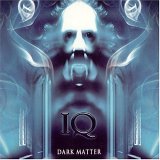
IQ – Dark Matter

Unlike their contemporaries Marillion, IQ have never moved their sound very far away from the 80s British neo-prog template of Gabriel-era Genesis crossed with mid-70s Pink Floyd. What makes them worth a listen is Peter Nicholls’ distinctive melodies, and the fact that while what they do isn’t terribly original, they do it very well indeed.

Dark Matter, the band’s eighth studio album, doesn’t really break any new ground, merely honing their sound to near perfection. On first listening, it has the feel of their early albums, a sound dominated by layers of swirling keyboards and guitar topped by Nicholl’s vaguely menacing vocals and darkly obscure lyrics. What’s improved from their early work is far better arrangements that leave some of their older material sounding vaguely half-formed by comparison.

Keyboardist Martin Orford shines on this album right from the very beginning, the synthesised orchestral intro that heralds the 11 minute opener “Sacred Sound”, and the dramatic church organ in the middle section. If that wasn’t enough it follows straight into swirling mellotron backing the guitar solo. Then there’s the wonderful organ work on the ballad “Red Dust Shadow”.

Meanwhile, the more aggressive “You Never Will” is Peter Nicholls at his darkest.

Now as the shadows fall on Allhallows Eve
We spin our tangled web, learn to deceive
I keep on hoping that you’ll do something real
Give in to influence but you never will

“Born Brilliant” instrumentation recalls Pink Floyd’s “Welcome to the Machine”, but the lyrics are something else. It’s a matter of opinion who they’re supposed to be about.

My catalogue of failures
Is etched upon my lips
The baggage that I carry
Would sink a thousand ships
My motives are uncertain
Intentions not altogether pure
So don’t you want me beside you
Just like it was before

The album closes with the 24 minute epic “Harvest of Souls”. Even though some of the instrumentation sounds just a little too like “Foxtrot” era Genesis for their own good, it’s still is the standout song of the album, a perfectly structured six-part epic. Each section flows seamlessly into the next, and contains some of Nicholl’s best melodies. There’s one short instrumental passage that’s is such a direct lift from the “Apocalypse 9/8″ section of “Supper’s Ready” I’m sure it’s a deliberate quotation.

This is an album that gets better and better with each listen. On the first couple of listens it was clearly a vast improvement on the slightly disappointing predecessor “Seventh House”. After a few more spins I’m beginning to think this might just be the best album IQ have ever made.

Posted in Music, Record Reviews | Tagged , | 2 Comments

Marillion – Marbles

Note: The version of the album I’m reviewing is the double album that’s only available direct from the band’s website, www.marillion.com. The version available by normal retail outlets is a single album, with four songs missing.

Ever since “Script for a Jesters Tear” many, many years ago, the release of a new Marillion album has been an eagerly awaited event. I’ve followed them through the trauma of having to replace their charismatic original frontman, through the lows of “Holidays in Eden” and “Dotcom” to the highs of “Brave” and “Anoraknophobia”. Since I’ve found their best work takes quite a few listens before you can really appreciate them, I’ve left it a couple of weeks before attempting to review it. After all, if the band too more than two years to write and record it, surely I can spend a couple of weeks listening to it?

Marillion have never been a band to stick with a successful formula. It’s said that each album is a reaction to the one before; after the commercial “Holidays in Eden” came the complex, dark and intense “Brave”, in turn followed by the mellow and reflective “Afraid of Sunlight”. I felt the last release, “Anoraknophobia” was a major return to form following a couple of disappointing releases. Others felt it was too much a departure from their traditional sound, and their were some vicious flamewars on one mailing list between those that loved the new album with its use of drum loop and dub rhythms, and those that hated it.

“Marbles” attempts to satisfy both camps, and I think it succeeds. The opener, “The Invisible Man” sounds like the best of the most experimental bits of “Anoraknophobia” condensed into about thirteen minutes; the first sections of dub rhythms and atmospheric soundscapes slowly build in intensity before everything drops away to a gentle Floydian section of piano and bluesy guitar, which then leads into to a big wall-of-sound climax.

In complete contrast, the Grendel-length “Ocean Cloud”, dedicated to ocean rower Don Allum, is closer in feel to the sound of much earlier albums. This is perhaps the standout song of the album, and easily the best lengthy epic the band have done.

All though the album I keep hearing echoes of earlier albums; it might be a keyboard fill, or a brief vocal melody, or just a fragment of overall sound. But it’s far from a retread of the band’s past. They’ve put bits of quite different albums into a blender and come up with new combinations. The hit single (yes, it was a Top Ten single in Britain!) “You’ve Gone” is a good example of this; it combines elements of “Anoraknophobia” such as the drum loops with the reflective sound of “Afraid of Sunlight”.

On several songs we see a welcome return of Steve Rothery’s trademark soaring guitar sound, drenched in sustain. And compared with some recent albums, this one is full of solos. The guitar work on the album closer, the epic ballad “Neverland” is classic Rothery stuff. But he demonstrates he can play more than one style; there’s a beautiful acoustic solo in “Angelina”, and some very Floydian blues-style playing elsewhere on the album. There’s even some slide guitar on “Don’t Hurt Yourself”, a song that starts out sounding like Pink Floyd’s dreamy “Pillow of Dreams” before launching into an uptempo rocker.

Seldom is a double album completely devoid of filler; I don’t particularly care for the Radiohead-lite of songs like “The Damage”. But that’s a minor quibble; there is enough great music here to compensate for one or two weak songs.

Posted in Music, Record Reviews | Tagged | Comments Off

Anathema – A Natural Disaster

If the ficticious Ümläüt were a real band, they would sound like Anathema.

Anathema started out in the mid-90s as straight Doom-Metal band, sounding like a slowed-down Black Sabbath with tortured, grunting vocals. However, after original vocalist Darren White left and rhythm guitarist Vincent Cavanagh stepped up to the mike, the band began to change. Clean vocals replaced the grunting, and over the next few albums their sound acquired an atmospheric, Floydian edge, although with a strong Goth flavour. Their evolution culminated in the superb albums “Alternative 4″ and “Judgement”, the latter of which completely blew me away when I first heard it. Unlike many bands they’ve never been content to find a successful formula which they repeated album after album, each has been a progression on what’s gone before.

However, with their last album, “A Fine Day to Exit”, I felt they’d taken a wrong turn, and the indie-flavoured album sounded too much like a poor man’s Radiohead (admittedly it was still vastly better than Radiohead’s post-”OK Computer” self-indulgent noodlings). While it did improve on repeated listenings, for me at least, it didn’t reach the peaks of it’s two predecessors. Therefore I approached this new disk with trepidation. Was “A Fine Day” a temporary blip, or did it represent the point when the band “Jumped the Shark”?

The opener, “Harmonium” begins with simple synth chords and a murmured, repeated vocal figure, making me fear the worst. Was this to be their “Kid A”? But no, two and half minutes into the song twin metal guitars come crashing in, the heaviest thing they’ve played for several albums. The metal crunch which was largely missing from the last release is back.

After repeated listens, this album is up there with “Alternative 4″ and “Judgement”, with it’s blend of metal, goth, and progressive rock. It’s not a clone of those albums, though, retaining some of the Radioheadesque bits of “A Fine Day”. A step sideways, perhaps, rather than a step backwards.

Like many great albums, it’s hugely varied, from the heaviness of the opener, “Harmonium”, “Are you there”, with it’s big synth chords and gently chiming guitar, to the very punky “Pulled Under at 2000 metres a second”, with it’s vocal line recalling Pink Floyd’s “Sheep”. My favourite is probably the ballad “Flying” featuring the albums only real guitar solo. Finally there’s the ten-minute instrumental closing track, “Violence”, which begins with a gentle classical style piano figure before giving way to thrashing guitars, playing the same chords as the initial piano figure. After the guitars build to a crescendo and fade out, we’re left gentle and emotional solo piano again.

Anathema are one of those bands that deserve far greater success than they’ve so far achieved. Will this be their breakthrough album?

Posted in Music, Record Reviews | Comments Off

The Darkness – Permission to Land

The New Musical Express thinks The Darkness should be destroyed, as the antithesis of everything the NME stands for. Of course I’d rather keep The Darkness, and let the NME be destroyed instead.

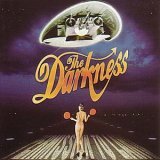
The Darkness play full-blooded rock anthems of the kind we haven’t heard from a new band in years, with songs titles like “Get Your Hands Off My Woman” and “Love on the Rocks with No Ice”, and gratuitously sexist cover (What’s wrong with being sexy, as Nigel Tufnel would say) Imagine a rawer version of Thin Lizzy crossed with the heavier end of Slade’s glam-rock, with a bit of Spinal Tap’s self-parody thrown in for good measure.

It’s not quite perfect; singer Justin Hawkins overdoes the falsetto vocals just a bit, and the guitar solos could be a a little bit widdlier, after all, cock-rock is supposed to have ejeculatory guitar solos! Still, at just 38 minutes, the album doesn’t doesn’t overstay it’s welcome, and certainly isn’t burdened with filler.

Posted in Music, Record Reviews | Tagged | 68 Comments

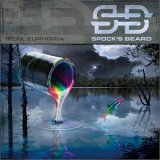
Spock’s Beard – Feel Euphoria

Feel Euphoria is the seventh album by San Francisco-based prog-rockers Spock’s Beard, and the first without the former bandleader, vocalist, and songwriter Neil Morse. Over the past few years they’ve built up a reputation as one of the best bands in their genre, fusing influences from 70s English progressive bands like Yes and Gentle Giant with some more streamlined American sounds. Their often lengthy songs frequently climaxed with a massive wall of sound, featuring not one, but sometimes two of that magnificent prog-rock instrument, the mighty mellotron.

Many people, myself included, felt it would be hard for them carry on following the Neil’s departure, to “follow a spiritual path”, much like Geoff Mann of Twelfth Night a generation before.

But anyone that wrote off the band has been proved wrong. “Feel Euphoria”, which sees drummer Nick D’Virgilio takes over lead vocal duties (Just like that other, much bigger prog-rock band you all know of) proves the Beard are far from finished.

All four band members, drummer and now singer D’Virgilio, guitarist Alan Morse (brother of Neil), bassist Dave Meros and keyboardist Ryo Okumoto contribute to the songwriting, and they’ve also brought in a couple of songwriting collaborators in the shape of Stan Ausmus and John Beogehold. They’ve pushed the boundaries a little rather than attempt a simple pastiche of Neil Morse’s writing style, which probably wouldn’t have worked, but there are enough elements of their old sound to keep existing fans on board. The music still sounds very much like Spock’s beard. The musicianship is good as ever, some of Dave Meros’ basslines are amazing. However, unlike too many of their neo-prog brethren, they keep things focussed and don’t go widdling off into endless noodling jams.

The opening hard rocker, “Onomatopoeia” might make you think they’ve gone metal, while the title track, with its dub bassline, reminds me of Marillion’s “Quartz” until it breaks out into an ELP-like keyboard extravaganza. The lengthy “A Guy Names Sid” comes over as an amalgam of the best bits of the Beard’s sound from past albums, from the epic guitar climaxes to the multi-part vocal harmonies, including an a cappella section. The real highlight of the album is the haunting “Ghosts of Autumn”, whose haunting melody is in danger of giving power-ballads a good name.

f you’re already a Spock’s Beard fan, you’ve probably got this album already, of course. If you’re not already a fan, go out and get it, then buy the previous six!

Posted in Music, Record Reviews | Tagged | Comments Off

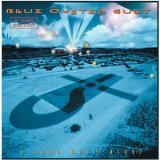
Blue Öyster Cult – A Long Day’s Night

Blue Öyster Cult are one of many 70s bands living in ‘reduced circumstances’, playing small clubs in cities where they once played enormodomes. While fads and fashions have passed on to newer and younger bands, these acts still can still rock the house.

With only three hit singles, but a very strong back catalogue of albums, BÖC aren’t one of those bands that have played the same set for the past 20 years, with many different songs rotating in and out of the set from the set from tour to tour. This live set, recorded in Chicago in June 2002, spans the band’s entire 30 year career, from two numbers from their eponymous 1971 debut, to “Dance on Stilts” from their last studio opus, “Curse of the Hidden Mirror”.

The album opens with a slightly messy version of “Stairway to the Stars”, spoiled by some rather over-busy drumming from Bobby Rondinelli, but subsequent numbers are much better as the band get into their stride. High spots are “Quicklime Girl”, an oldie recently brought into the set, “Harvest Moon”, the standout song from their 1998 comeback album “Heaven Forbid”, “Perfect Water”, much heaver than the studio version on “Club Ninja”, and an excellent version of the band’s best song, “Astronomy”, with an extended solo from Buck Dharma. The album ends, of course, with the compulsory and overexposed hits “Godzilla” and “Don’t Fear the Reaper”, the former broken up with unnecessary solos (bass solos? Gaaak! Buck’s guitar solos are worth listening to because he’s one of rock’s great guitarists, but I can’t listen to drum solos unless they’re by someone in Neil Peart’s or Carl Palmer’s league. And the bass guitar is not a solo instrument, period)

Overall, this isn’t quite a classic live album in the class of 1977′s “Some Enchanted Evening”. But it’s a good record of a hardworking band who still rock out and outperform many people half their age. I’ve already got tickets for their British tour next month!

Posted in Music, Record Reviews | Tagged | Comments Off

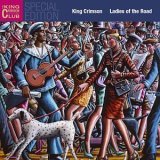
King Crimson – Ladies of the Road

I wasn’t really a fan of the 1971/2 version of King Crimson. The previous incarnation of the band, featuring Greg Lake and Ian McDonald, had produced the Mellotron-drenched classic “In the Court of the Crimson King”, while the later 1973/4 band with Bill Bruford and John Wetton came up a trio of classic albums full of frantic improvisation. In between these two lineups came the two rather directionless studio albums recorded with a revolving cast of musicians, “Lizard” and “Islands”, both of which I find pretty much unlistenable.

With this live release, “Ladies of the Road”, perhaps it’s time to reassess this version of the band. Recorded on the 1971/2 world tour, it sees Robert Fripp joined by saxophonist Mel Collins, Boz Burrell on bass and vocals, and Ian Wallace on drums. With the Mellotron that had earlier defined their sound pushed into the background, the focus here is on Fripp’s guitar and Collin’s sax.

Unlike every other King Crimson live release (of which there have been a great many), this isn’t a record of any single show; instead it’s a compilation of the best takes from a whole tour. Indeed, the lack of any mention as to which songs where recorded where suggests that Fripp has spliced together some numbers from bits recorded on different nights; a technique used a lot by the late Frank Zappa.

Disk One features a set that draws heavily from “Islands” and “Lizard”, but the powerful live version of songs like “The Letters”, “Formentera Lady” and “Cirkus” are vastly superior to their studio counterparts. We still get a couple of songs from the Greg Lake incarnation, “Pictures of a City”, and of course, “21st Century Schizoid Man”. I’m not sure of the blues jam version of “In the Court of the Crimson King”, perhaps it’s just as well it’s but 46 seconds long.

Disk Two is an extended “Up yours!” to all those the music journalists that hate solos. It’s a 45 minute epic version of “21st Century Schizoid man” created by knitting together the middle solo sections from eleven different live takes to form a seamless and relentless sax and guitar solo.

Fripp was to disband this version of King Crimson at the conclusion of the tour; while this album highlights some very energetic playing, the American blues/jazz direction the other three were heading in was at odds with Fripp’s own chosen course. A year later, a new, radically different King Crimson was to appear, but that’s another story entirely.

Oh, and the song “Ladies of the Road” isn’t actually on the album.

Posted in Music, Record Reviews | Tagged | Comments Off