 The way Oasis typically get the blame for the every unimaginative lumpen guitar band that followed in their wake means their place in music history has tended to overshadow their actual music. Indeed, there’s a widespread view that 90s Britpop was one of the worst things that ever happened to British popular music. All of which makes it hard to judge the actual records, especially when you listen to them outside the context of the time and place of the original release.
So, twenty years after its original release, how well does their first album stand up?
There was something about them besides that rock’n'roll swagger that appealed so much to a certain kind of music journalist. Noel Gallagher did have an ear for a good pop tune, even if he sometimes tended to steal rather than write his own. The rhythm section is solid, and the album is more than a couple of hits and a load of filler. The album does have its notable strengths.
But Noel’s stream-of-consciousness gibberish lyrics just sound ridiculous; at least Jon Anderson of Yes sounded profound. Noel just sounds as if he’s never read a book in his life, and all he can do is string together clichés. The way he established a laddish anti-intellectualism as a representation of working-class authenticity cannot possibly be a good thing.
As for his brother Liam, I’ve never quite understood why the press at the time thought he was ever one of rock’s great frontmen. His voice starts getting irritating after a bit, and his attempts to replicate Johnny Rotten’s vocal tics sound ridiculous. Anyone who thought he was one of the greatest really needed to get out more.
But there are worse vocalists than Liam, and the weakest link of all is Noel’s extremely limited lead guitar playing. He does his best on “Live Forever” with a solo containing every single note he knows and making the most of his limited technique. But a song like “Slide Away” is the sort of thing that might have been transformed had Oasis had a half-decent lead guitarist. As it is, with Noel’s rudimentary instrumental skills it comes over as a sort of lobotomised Lyrnyrd Skynyrd. And that’s one of the best tracks on the the album.
This was an album that combined the mainstream and the alternative by taking the least interesting parts of both, resulting in something too bombastic to be indie, but lacking the musical sophistication of rock or the raw energy of punk. Oasis’ success demonstrated that large scale success in rock’n'roll is as much about being in the right place at the right time as it is about depth of talent. And the extent to which enough money thrown at PR can propel the most average of bands into superstardom.
While it was still enjoyable record at the time of release, even considered a game-changer by some, two decades on it has stood the test of time rather less than Kula Shaker’s first album.
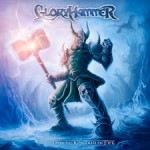 A concept album describing how the bold hero Angus McFife saved the city of Dundee from the evil sorcerer Zargothrax and his horde of undead unicorns?
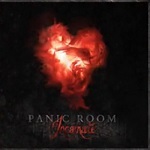 Panic Room had something of a troubled 2013. Several years hard work paid off with a growing reputation and audience for their powerful and sophisticated mix of rock, folk, jazz and metal. Then their year began with the departure of the lead guitarist, founder member Paul Davies. While Morpheus Rising’s Pete Harwood did a sterling job standing in on their already-booked tour, his commitments to his own band ruled out any longer-term involvement. So they initially announced that they’d be writing their fourth album as a four-piece. Then around the time the band were ready to enter the studio they announced the recruitment of Adam O’Sullivan, bringing the band back up to full strength.
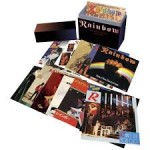 The Rainbow Singles Box set is a reissue of all the singles released by Rainbow from the years 1975 to 1986 on nineteen CDs in reproductions of the sleeves of the original 7″ singles. Over that period the band went through many lineups and changes in style, with the mercurial guitarist Ritchie Blackmore the sole constant factor.
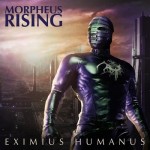 “Eximius Humanus” is the second album by York-based metal/hard rock five-piece Morpheus Rising, funded through a successful Kickstarter campaign.
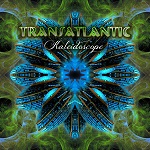 There are many bands within the progressive rock scene who take a modernised streamlined approach to the genre, stripping out the fabled self-indulgent excesses to make their music relevant for a new generation of listeners.
 Somehow I don’t think many regular readers of this blog will be surprised at my album of the year. When I get comments asking what Panic Room would have to do to get a bad review, and get members of the band quoting those comments to me, I’m probably guilty as charged of being a fanboy. So don’t just take my word for it. There are many, many other people who agree that this is a stunningly beautiful work.
 Fish’s first album for six years is an ambitious, raw and passionate record that combines many of the best elements of his later work. Lyrically it takes us from the trenches of World War One to the intensely personal, and yet again demonstrates Fish is one of the most underrated lyricists in rock. Musically it’s goes from celtic atmospherics and acoustic balladry to out-and-out rock’n'roll, with a stripped-down production that manages to capture the energy of a live performance. This is the best thing he’s done for a long, long time.
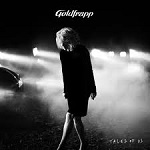 This record is a thing of beauty. It’s a stripped-down acoustic record that has more in common with the likes of Odin Dragonfly than their earlier electro-glam. Arrangements made up largely of acoustic guitar and strings emphasise the beguiling melodies of the songs and beauty of Alison Goldfrapp’s voice, which reminds me strongly of Anne-Marie Helder in places. More mainstream, perhaps, than most of the other records in this list, but it’s still a great record.
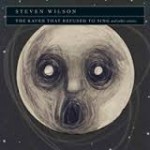 Steven Wilson’s second album to feature the virtuoso band from “Grace for Drowning”, this is a far more focussed and concise record than its sprawling predecessor. It’s still the spirit of early 70s King Crimson reinvented for modern audiences, with a strong jazz flavour, plenty of Mellotron, and space for the soloists to work their magic. There are plenty of people who are still missing Porcupine Tree, but on the evidence of this record his new band is more than a fair trade.
![[Redacted]](http://www.kalyr.co.uk/weblog/wp-content/uploads/2013/10/Redacted-150x150.jpg) Also Eden have significantly raised their game with this, their second album since Rich Harding took over as lead vocalist. Despite occasional echoes of Tangerine Dream, Porcupine Tree and even Trespass-era Genesis in the album’s quieter moments, this is a harder-edged and more rock-orientated record than their previous work. The result is powerful yet richly layered record, with Simon Rogers’ inventive guitar playing at the centre of the sound, and Rich Harding’s lyrics moving from the political to the personal.
Also Eden have significantly raised their game with this, their second album since Rich Harding took over as lead vocalist. Despite occasional echoes of Tangerine Dream, Porcupine Tree and even Trespass-era Genesis in the album’s quieter moments, this is a harder-edged and more rock-orientated record than their previous work. The result is powerful yet richly layered record, with Simon Rogers’ inventive guitar playing at the centre of the sound, and Rich Harding’s lyrics moving from the political to the personal.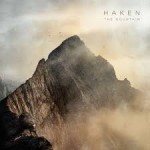 Haken are another band to step up to the next level with their third album. Previous albums had displayed some obvious influences, most notably Dream Theater and Zappa. But here, aside from a couple of nods to Gentle Giant, most noticeably on the completely bonkers “Cockroach King”, they develop a sound that’s all their own. There are metal riffs, church-like vocal harmonies, deep and complex arrangements and recurring motifs, resulting in a record that both progressive in every sense of the word, and very contemporary sounding at the same time.
 It was indeed a surprise when Mostly Autumn’s keyboard player released a solo album with very little fanfare early in the year. It’s a concept album with lyrics by vocalist Mark Chatterton, and guest appearances from Mostly Autumn’s Liam Davison amongst others. With its mix of hard rock and atmospheric ballads with touches of electronica it has many familiar ingredients, but it’s all put together in a different way and avoids sounding anything like a repeat of Iain’s earlier work. The way it seamlessly blends a lot of different styles demonstrates his skills as a composer and arranger. A dark surprise indeed, but a very pleasant one.
 Ihsahn’s last couple of albums have been ideal for anyone missing Opeth from the time before Mikael Akerfeldt abandoned the cookie monster. But this album sees Ihsahn leave Black Metal behind, setting course for far stranger waters. There are still moments of ambitious prog-metal especially on the first half of the record, but this album also takes in avant garde noise, with storms of clattering percussion and passages of spooky atmospherics. It’s by no means an easy listen, but it does show how the more experimental end of metal can be far more progressive than many an act labelled as “prog”.
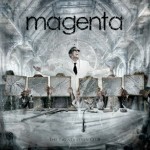 When it comes to old-school neo-prog, Magenta are still one of the best bands in the business. They’ve never denied their strong Yes influence. There are some very Steve Howe like phrases from guitarist Chris Fry, and Christina Booth often sings in similar register to Jon Anderson. although her performances have a lot more emotional depth. Their sixth album takes a position midway between the dark intensity of “Metamorphosis†and the commercial Magenta-lite of “Chameleonâ€. As a distillation of a lot of what’s good about Magenta’s music it makes a very good starting point for new listeners.
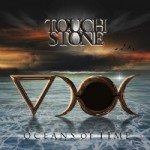 Touchstone’s fourth album sees something of a change of direction, with vocalist Kim Seviour and guitarist Adam Hodgson taking on a bigger share of the writing. The result is an album with a greater emphasis on songwriting rather than prog-metal instrumental workouts, and a rawer stripped-down sound with a lot more light and shade that gives Kim’s vocals space to breathe without being swamped by the instrumentation. With their most mature album to date they deserve to win themselves a much larger audience with this release.
 The second half of English Electric follows in a similar vein to the first, with their very evocative and very English brand of pastoral progressive rock. The storytelling lyrical focus shifts to northern England and the twentieth century with tales of railwaymen, coal miners and shipbuilders, and it all sounds far more authentic than much 80s-style neo-prog.
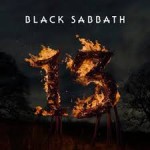 Neither quite the masterpiece some hoped for nor the trainwreck some feared, the reunion of Ozzy Osborne, Tony Iommi and Geezer Butler still delivers a very solid piece of work that proves they still have something to say after all these years. If this does prove to be their final album, it’s a worthy addition to their legacy.
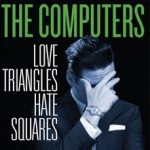 The best no-nonsense old-fashioned rock and roll record I’ve heard all year, by a band who sound as as though they have one foot in 1958 and one in 2013, full of short and punchy tunes that hit you right between the eyes. The end result somehow ends up reminding me of some aspects of very early Blue Öyster Cult.
 An evocative and atmospheric album from multi-instrumentalist and vocalist Robin Armstrong. Though there are guest appearances from Matt Stevens and Nick D’Virgilio amongst others, Robin plays most of the instrumentation from guitars to drums to keys. The haunting title track is a standout, perhaps one of the songs of the year, and there’s a lot to like across the rest of the album.
 Matt Stevens and his band in full electric mode mixing progressive rock, post-punk, indie/alternative and metal resulting in the instrumental record of the year. Narrow genre definitions cannot contain this record; it’s the sort of thing that ought to have a huge crossover appeal way beyond the narrow confines of the Prog world.
 A powerful combination of grungy guitar riffs with progressive rock textures and melodies, sounding like what you might get if you combined Black Sabbath with Spock’s Beard. The end result is a record with a very contemporary feel despite its use of organic 70s sounds, old-school progressive rock reinvented for the 21st Century.
 The long-awaited début from Luke Machin’s band combines some stunning instrumental virtuosity with a very mature approach to composition. Their complex and ambitious songs are a seamless blend of metal, jazz and rock into, with great use of dynamics and an ear for a good melody. This is the sound of a band from whom we can probably expect great things over the coming years.
 The fruit of a successful Pledge Music project, Mr So and So’s fourth album is by far their most impressive to date. It’s a hugely varied record with some strong songwriting that uses their distinctive dual male/female lead vocals to great effect, and the harder-edged guitar-driven sound strongly captures the power and energy of their live performances.
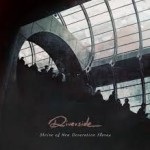 Riverside have always been one of Poland’s finest bands, and with the combination of 70s Deep Purple style hard rock riffs and Porcupine Tree style atmospherics they have delivered what might be their best album to date. They may wear their influences on their sleeves to some extent, but they have more than enough creativity of there own to be any kind of pastiche.
 A solo album from Touchstone’s keyboard player, aided and abetted by a strong supporting cast including Touchstone guitarist Adam Hodgson and former Mostly Autumn vocalist Heather Findlay. It’s a concept album with a Gerry Anderson flavour, with music reminiscent of Touchstone’s early days, plus the occasional excursion into disco-pop.
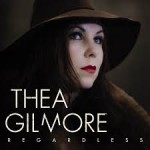 An album of Americana-tinged songs with stripped-down arrangements that emphasise the fragile beauty of the Thea Gilmore’s heartfelt vocals, enhanced this time by a string section to add some extra colour.