
I find it impossible to read this poster for the Bospop festival in The Netherlands and not think “If only Jools Holland was to invite a few of the bands he’s sharing a bill with on Sunday to appear on Later“.
One can only hope.
I find it impossible to read this poster for the Bospop festival in The Netherlands and not think “If only Jools Holland was to invite a few of the bands he’s sharing a bill with on Sunday to appear on Later“.
One can only hope.
 Chantel McGregor at the 2014 Cambridge Rock Festival, which prominently features female artists
The Guardian have run their fourth piece in as many weeks bemoaning the fact that the lineups of major festivals are too male-dominated.
Unfortunately while it does raise some valid points it ends with this awful paragraph that seems deliberately calculated to provoke a defensive reaction from male rock fans, especially when the proposed “solution” had been to add commercial pop acts like Taylor Swift or Katy Perry to the bill.
In a world where women are deconstructing pop music, club culture is booming with some of the most innovative sounds in years, and a new generation of hip-hop and rap stars are heralding a socio-political cultural revolution in America, the white, male rockist notion of what a music festival headliner should be begins to feel hopelessly archaic.
The use of the dated 1980s term “rockist” does rather imply the author didn’t actually like rock at all, and the whole thing smacked of Social Justice Warrior-style invasion of other people’s spaces. One of the authors did later clarify that that wasn’t what she meant and she did love rock after all, but by then the comments were swarmed with bellicose sexists. I even had to ask the moderators to remove one of my own comments that recommended and namechecked a female artist because I didn’t want her to become the subject of online harassment.
While there is undoubtably sexism across all levels in the music business, I still think one big problem is the way a very small number of gatekeepers get to filter all the music mainstream audiences get to hear. The problem is not just that those gatekeepers are disproportionately white and male but that so few people have a disproportionate amount of power.
Previous articles have spoken of “elite tastemakers” numbering as few as fifteen record label executives, radio programmers and magazine editors who get to decide almost everything Joe and Johanna public get to hear.
Commenter “Cathartic” writes of the influence of gatekeepers in metal, using the Download festival referenced in the piece as an example.
There are numerous metal bands with females in that are less commercially successful, which disproves the idea that women just like to watch, but its almost certain that if festivals gave newer acts (both male and female) more of a chance many would develop the fanbase needed to justify headline slots.
Its a Chicken/Egg situation largely. Download is extremely conservative about its line ups, most of the headliners and main stage acts are basically older American and British bands that have been around for decades, and they are not known for given the European bands a slot. The latest roadrunner signing will take preference over an established European band regardless of commercial appeal. 10 years later that band will have enough mid-afternoon slots that they would have to be really bad not to have turned that exposure into sales.
However elsewhere in Europe, Nightwish and Within Temptation are two examples of female fronted bands that will land headline slots in hard rock/metal festivals. Both would pull off a senior slot at download as well these days. Both those bands can pull off UK arena tours now, but it was Bloodstock that has pioneered these types of bands in the UK first. There is the audience out there.
There are plenty of female musicians – ratio is irrelevant – playing in smaller bands in genres which download claims to cater for. The question is why so few have been able to make the leap from small touring for petrol money to headliners. The reasons may be complex, but the reality is his festival (and other music industry big wigs) have acted as gatekeepers in the genre and adopted an extremely conservative booking policy that has meant download have never taken risks on helping the smaller bands reach a larger audience. His comments just portrayed an under ignorance of the genre he caters for. Reality is headliners may be the ones that sell tickets (and Nightwish and Within Temptation certainly could add ticket sales for download), but the mid-afternoon slots are far less risky to try something new and there are a whole host of bands with female musicians that get ignored. Many people at festivals find discovering new bands part of the reason for going to a festival anyway.
That hits the nail right on the head.
I do suspecr that one reason the grassroots progressive rock scene is more friendly towards female-led bands than the corporate indie-rock festival circuit is previsely because it isn’t so controlled by bean-counting gatekeepers.
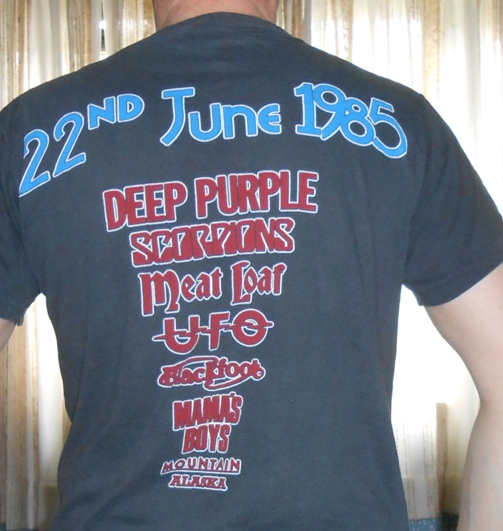
Today is the 30th anniversary of the 1985 Knebworth Fayre, headlined by Deep Purple. David Meadows shares his memories of the day.
It’s 1985. Thirty years ago today, as I write this. I’m a student in Sunderland and I’ve just passed my 20th birthday. And I have only recently been introduced to rock music by the people I’m living with. I grew up without much knowledge of contemporary music at all. I listened to my parents’ music. My sister bought all the pop records in the household, and I didn’t think much of most of them. I listened to classical music, some folk, some jazz, and mostly what these days they would call the “Great American Songbook”. So I’m only just starting to listen to rock music, and deciding that while a lot of it is rubbish, some of it might not be bad at all. The first rock LP I buy is something called Bat Out Of Hell, and I think it’s incredible. My friends go up to rock gigs in Newcastle every few weeks and come back telling me it was the best concert they’ve ever seen (which seems a silly thing to say; how can they always get better and better?) but I never want to go with them. It doesn’t seem like it would be my kind of thing.
So there’s suddenly this buzz about an old band called Deep Purple who have reformed and are going to be playing a big show in someplace I’ve never heard of called Knebworth. I’ve heard Deep Purple: a friend loaned me a compliation called Deepest Purple last summer, and some of it is not bad at all. More intriguingly, Meat Loaf, the Bat Out of Hell guy, will be on the bill.
The whole thing is well worth a read.
Almost every rock fan I know seems to have been at that gig. It was the hard rock equivalent of that much mythologised Sex Pistols gig in Manchester, except that everyone who claims to have been there actually was.
The thing we all remember the most is the rain. And Meatloaf being absolutely God-awful, And the rain. And Mountain missing out the good bit from “Nantucket Sleighridge”. And the sun coming out briefly during Blackfoot’s excellent set. And then the rain came back. And The Scorpions, at the peak of the powers, stealing the show from the headliners. But most of all, the rain.
The other thing that sticks in the memory is walking back from Kings Cross to Paddington, covered in mud, and having to cover two and three quarter miles in 45 minutes to catch the last train back to Slough at 1:40am. We made it with just seconds to spare.
I’ve seen Deep Purple a couple of times far more recently, but it’s still the only time I have ever seen Ritchie Blackmore live.
Mantra Vega, the new project from Heather Findlay and Dave Kerzner release the digital single “Island”, the lead track from the forthcoming album “The Illusion’s Reckoning“, available from Bandcamp, iTunes, Google Play and Amazon
The single release contains four tracls, including the songs “Mountain Spring” and “Every Corner”,and a radio edit of the lead track, and features guitars from Dave Kilminster & Chris Johnson and the rhythm section of Stuart Fletcher & Alex Cromarty.
There will also be a physical releasee of the single, which you can order from the Mantra Vega web site.

As part of the promotion for the single “‘Because of You”, Karnataka played a free showcase gig at 229 The Venue in central London. Though the purpose of the gig was really to gather media attention (I’m told there were a number of tastemakers from the BBC present), there was a good turnout of dedicated fans, and the small venue was well-filled.
Crowded onto a tiny stage, they played two sets, the first made up of six shorter numbers from “Secrets of Angels” culminating in the Nightwishesque new single. The second set featured the lengthy epic title track along with two older numbers, “Delicate Flame of Desire” and “Your World”.
Though they had to cut the set slightly short and skip the planned encore because Hayley’s voice was giving out by the end, it was still a highly enjoyable show, and the first half in particular had a lot of energy.
This is a band whose album has gone beyond giving many European symphonic metal bands a run for their money, and all comes over very powerfully live. Let’s hope they made as good an impression on any tastemakers present as they did with their dedicated fans, and we get to see them on far bigger stages.

As regular readers of this blog ought to know, I’m really more of a rock fan than a jazz expert. So this isn’t going to be an in-depth review, more a series of impressions.
The Swansea Jazz Festival takes place across multiple venues around the waterfront area area of the city, with the Dylan Thomas centre hosting the highest-profile events. Unlike a typical rock festival you buy tickets for individual events; headliners Monsters on a Leash and Hamish Stuart had already sold out well in advance, but there were still tickets available for many other bands.


As well as the high-profile ticketed acts, there was an extensive fringe of free gigs, mostly in bars and cafés. Here’s the gypsy jazz of Hot Club Gallois playing outside Garbo’s Cafe Bar at lunchtime on Sunday.
Saturday saw virtuoso acoustic guitarist Garry Potter leading a quartet that also included Riverdance’s Noreen Cullen on violin, who rather stole the show when it came to stagecraft. They kept throwing in musical quotes, I’m sure there were a few bars of “Smoke on the Water” at one point, and the Postman Pat theme was unmistakable.
Later in the day was was another guitar-led quartet, Radio Londra, featuring guitarists Jim Mullen and Luca Boscagin. This was either a gig that got better as it went on after a slow start, or it was a case of appreciating it more once you’d got into the headspace of what they were doing.
But perhaps the most enjoyable set on the Saturday was the Jean-Paul Gard Trio playing in The Pump House. Consisting of organ, sax and drums, they played with enormous energy for a trio. John-Paul Gard was fascinating to watch, doing four different things with four limbs; bassline on pedals with one foot and the swell pedal with the other, complicated jazz chords with the left hand and a melody line with the right.

One of the most interesting fringe acts was Duski, enigmatically billed as “an eccentric mix of original and popular music”. A quartet consisting of sax, keys, bass and drums, they were one of the new generation of bands exploring the blurred boundary between jazz and the more experimental end of progressive rock, with a greater emphasis on composition and atmospherics than on individual soloing. Though there was one remarkable bass solo played though an echoplex and sounding like Hawkwind. Peforming in the unusual venue of Swansea Museum, they played to a disappointingly small crowd, several of whom were small children. But they were still one of the highlights of the weekend.
 New Orleans-based The Session had to be the best of the ticketed gigs. A modern jazz quintet of trumpet, sax, piano, upright bass and drums, they played with a tremendous amount of energy. Unlike some other bands over the weekend, their numbers came over as compositions rather than vehicles for soloing, with good use of harmonies between the trumpet and sax lines.
When they did solo, the virtuosity could be jaw-dropping, and trumpeter Steven Land’s playing in particular was exceptional. His solo in the opening number made a very strong early impression, and one later solo showed just what could be done using just one note.
As well as a virtuoso frontline, they gained their energy from a very strong rhythm section, with bassist Jasen Weaver particularly impressive. This was a band for whom the whole was far more than the sum of the parts; they’ve played together for quite a few years, and it shows.

The old joke goes “.. and when the drumming stops, the bass solo“. The bass solo has been largely banished from the world of rock nowadays, but some jazz acts still have room for many, many bass solos. Here’s former Panic Room bassist Alun Vaughan playing as part of a quartet starring trumpeter Steve Waterman.
There was one a time when I found jazz almost unlistenable, because I couldn’t get past the scratchy recordings from the genre’s early years. More recently I’ve listened to more contemporary artists like Polar Bear, Gilad Atzmon and Troika, which is another thing altogether. But seeing jazz performed live is a very different experience. One thing I found was having spent years listening to many of the greats of rock guitar was that jazz guitar doesn’t do it for me; saxophone and trumpet (or indeed violin!) are more powerful in a jazz context.
As a rock fan, sometimes it’s good to get out of you comfort zone and explore something different, and a festival such as this makes a good opportunity to do just that. Jazz is every bit as broad a genre as rock, and for everything that might not be for you there may be something else that hits the spot.
Got to love the Sex Pistols credit cards. Thre is much schadenfreude at the congnitive dissonance it gives to those who still buy uncritically into the whole punk mythology. So much of “punk” was manufactured consumerist bullshit from the very beginning.

The flyer for the final show at Leamington Spa on November 21st with special guests Magenta and support from John Mitchell’s Lonely Robot. Be there.
A roundup of some recent metal releases that there hasn’t been time to review in full. We have both kinds of music here, heavy and metal.
Ecnephias
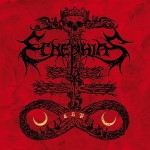 Italian occult metallers Ecnephias are a band with one foot in the metal camp and one foot in the gothic rock camp. Their self-titled album has echoes of The Sisters of Mercy as well as more metal sounds, the overall effect recalling mid-period Paradise Lost. Instrumentally it’s a great record, with strong dynamics, plenty of light and shade, and some impressively fluid guitar work. But it’s the vocals that let it down. They’re not good at judging when to use death-style growls and when to use clean vocals, frequently using growls on the parts which aren’t especially heavy, which doesn’t quite work. You’re left with a feeling that this would have been a stronger record had they used clean vocals more extensively. Still, when it all comes together, it can be excellent, as evidenced by the spiralling gothic “Nyctophilia” and “Vipra Negra” towards the end of the album.
Secrets of the Sky – Pathway
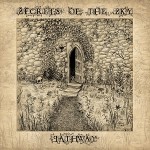 California’s Secrets of the Sky brew up a monstrous wall of sound with the album “Pathway”. The eleven-track album contains six actual songs interspersed with brief snippets of sound effects that go from crashing waves and thunderstorms to ominous footsteps. With no choruses or solos the songs instead take the form of dense soundscapes of layered guitars, doom-laden drums and washes of keys. Unlike Ecnephias they get the vocals dead right, evil-sounding growls for the heavy parts and clean vocals for the reflective, atmospheric moments. The end result is an intense and in places very heavy record where even the lighter parts can sound truly menacing.
Crest of Darkness – Evil Messiah
 Norwegian black metallers Crest of Darkness pull absolutely no punches on this four track EP, consisting of three originals plus one cover. The three original numbers, “Evil Messiah”, “Armageddon” and “Abandoned by God” are all piledrivingly heavy; in-your-face screamed vocals married to monstrous old-school metal guitars, often more than one great riff in one song, and the cover of Alice Cooper’s “Sick Things” is splendidly demented.
Nekrogoblikon – Heavy Meta
 We’ve had Viking Metal and Pirate Metal, now Goblin Metal is a thing. With song titles like “Snax & Violence”, “We Need A Gimmick” and “Full Body Xplosion” and a guest appearance from Andrew WK this is a band who don’t take themselves too seriously. Although vocalist Scorpion’s goblin-style vocals do wear a bit thin after a while, the varied, inventive and sometimes off-the wall instrumentation suggests they’re something more than a one-joke band, and they clearly sound as though their having great fun.
Angra – Secret Garden
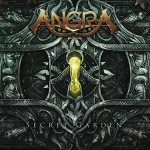 And finally, something for those who can’t abide contemporary cookie monsters and insist on proper singing. veteran Brazilian power-metallers are back with an album filled with galloping hard rockers and epic power ballads, with big riffs, soaring melodies, jaw-dropping guitar soloing and occasional prog atmospherics. Former Rhapsody of Fire frontman Fabio Lione is on fine form on vocals, and the album also features guest appearances from Doro Pesch and Epica’s Simone Simons. It’s all very old-school, but very well done, with a polished production and enough solid songwriting that there’s no room for any filler.
 Haidi Widdop and Martin Ledger of Cloud Atlas
Regular readers of this blog ought to know the answer, but that is still the question John Harris asks in The Guardian, in a piece on the male-dominated nature of mainstream rock, which turns into a paeon of praise for Fleetwood Mac as the only band headlining a major festival this year that isn’t all-male.
After 17 years as an on-off quartet, Fleetwood Mac have assembled all five members of their most successful line-up and come back to remind us that they are by far the most successful mixed-gender rock band in history, though surprisingly few people have ever thought to follow their example.
The fact that their internal romantic entanglements made their most successful period such an emotional hell might serve as a cautionary tale. Then again, the incredible, fantastically honest music that came out of it all speaks for itself. Rock and pop tend to scrape perfection when they deal with love and relationships; in Fleetwood Mac’s greatest work, you hear those subjects explored with such power precisely because both male and female views are on show.
Which is just as true for some of the best work of bands like Mostly Autumn and Karnataka in their various incarnations. Albums such as “Delicate Flame of Desire” and “The Last Bright Light” are not filled with songs about Hobbits.
Harris’ comments about the male-dominated mainstream festival scene makes a stark contast to the grassroots progressive rock scene that this blog gives extensive coverage to. Looking at the bill of this March’s HRH Prog, which featured Knifeworld, The Skys, Touchstone, Anne Phoebe, Mostly Autumn, Collibus, Jump, Magenta and Steeleye Span, half the bands contained at least one female member. Not only that , they were overwhelmingly the better half of the bill too.
What’s notable about the way progressive rock has become more female-friendly in recent years is that it’s all happened organically. Bands have formed with women in them, and they’ve built up audiences. They’ve become such an accepted part of the scene that anything that looks overwhelmingly male is regarded with suspicion.
We have seen no aggressive campaigns to stop people listening to all-male bands as if it’s all a zero-sum game. Likewise there have been no Gamergate-style backlash complaining that wimmin are ruining prog. You might get the occasional grumpy old git moaning about too many female-fronted bands on a given festival bill, but nobody pays such misanthropes much attention.
Perhaps this is what happens when you have a scene driven by shared love of music rather than by corporate bean-counters and demographics-driven focus groups.