Music Blog

All the music-related posts gathered together in one place.

Chantel McGregor, The Zephyr Lounge Leamington

Chantel McGregor at The Zephyr Lounge, Leamingon SpaBlues-rock guitarist and singer-songwriter bought her power trio to The Zephyr Lounge in Leamington Spa for the first date of her Autumn and Winter tour to promote her album “Lose Control”, to be released in October. I hadn’t caught one of her gigs since the tail end of last year, so this is the first time I’ve seen the band with new bassist Colin Sutton, who looks for all the world like a younger version of Opeth’s Mikael Akerfeldt.

The raw and dirty guitar sound on the opening number “Caught Out” set the tone for the evening. Most of the set came from the new album, interspersed with favourites from the début “Like No Other”. The reworked blues standards and Hendrix covers that filled out her set in earlier days are gone now, save for her version of Robin Trower’s “Daydream”, retained as excuse for the set’s one remaining extended guitar wig-out. Even the mid-set acoustic interlude is now originals rather than covers, with the delicately beautiful “Anaesthetize” a particular highlight.

The new material comes over very powerfully live, to the extent that some of them surpassed the more familiar songs in the set. Although they’re still plenty of soloing with the context of the songs, there’s definitely a greater emphasis on songwriting than on guitar pyrotechnics. It’s also more hard rock than blues; with a heavier, darker sound; Chantel has cited the likes of Soundgarden and The Stone Temple Pilots as influences for some of the songs. As is always the case with her gigs, there is a fire and passion to the performance. She ended the set with the prog-flavoured epic “Walk on Land” with its spectacular solo ,a song that gave the impression it will be an album highlight and live favourite for years to come. All of which makes the album more eagerly anticipated.

Chantel and her band will be on tour across Britain and continental Europe for much of the rest of the year. Catch them if you can, you will not regret it.
Posted in Live Reviews | Tagged , , | Comments Off

Radio Men and Motors

XFM, which always was Radio NME, has decided to dumb itself down, rebranding itself as “Radio X” recruiting former Radio One DJ Chris Moyles to become a “male-focussed entertainment brand“.

Alexis Petridis’ one-star review of also-rans The Pigeon Detectives famously described them as “Not so much ITV indie and Granada Men & Motors indie. With the talk of “New car smell” and “Great Britain needs great banter”, this is Men & Motors radio.

As for “fresh music”, with a playlist including Kasabian and Noel sodding Gallagher, who do you think are you kidding? This is the musical equivalent of stale socks, lowest common denominator landfill music for people who think Later With Jools Holland is far too edgy and alternative.

I know it’s unsporting to wish failure on any business endeavour, but this one needs to crash and burn for the sake of our nations’ culture. As my good friend HippyDave said on Twitter, Kill it! Kill it with fire!

Posted in Music Opinion | Tagged , | Comments Off

Prog, Still Misunderstood?

There’s a well-meaning but flawed piece in the Telegraph about Prog, probably inspired by The Chart Company’s launch of a new progressive music chart. It does namecheck a lot of the new generation of progressive artists such as Big Big Train and Steven Wilson, and make a number of positive points

But there are a few things that suggests he doesn’t know the subject and hasn’t really done his research. The fact that it appears not in the paper’s music section but in the “Mens pages” may be the root of the problem.

First he makes the bizarre claim that Prog originated with Frank Zappa’s 1968 album “Freak Out”, which is a new one on me. Now Zappa’s music in certainly progressive, but he was really a whole genre in his own right. To claim any American artist founded the prog-rock genre ignores the scene’s roots in late 1960s Britain as a generation of musicians wanted to move beyond the limitations of commercial pop music. Prog surely took recognisable form somewhere between The Beatle’s “Sergeant Pepper” and King Crimson’s “In the Court of the Crimson King”.

Then he claims that prog has been dismissed as “too white, male and uncool” for decades. Uncool, certainly, but it’s only in the past few years that anything whose appeal is disproportionately white and male has been regarded with suspicion. But it’s not as if prog has ever been a hotbed of white power anthems or awash with misogynistic imagery. The suggestion that women and non-white people aren’t interested in music you can’t dance to is itself a bit sexist and racist; I know plenty of dedicated female prog fans and musicians who would take great exception to that. And I can’t avoid another mention of the bill at this year’s HRH Prog, where half the bands on the bill had at least one woman in the band, and they were the better half of the bill.

And then there’s a commenter who claims Transatlantic aren’t prog. Where do these people come from?

Posted in Music Opinion | Tagged , | 5 Comments

Blackmore’s Night – All Our Yesterdays

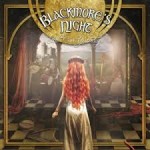
Blackmores Night All Our YesterdaysIt’s a sobering thought that Richie Blackmore has been a part of Blackmore’s Night for longer than he was with Deep Purple, and has recorded more studio albums with Candice Night than with any other singer.
Steeped in the strange world of American renaissance fayres, the semi-acoustic project actually had had about as much in common with actual renaissance music as Dungeons and Dragons has with medieval history. The first couple of albums did have their moments, with songs that displayed a sublime beauty, but there were others that badly failed a saving roll against cheese. After the first few records they reached the point of diminishing returns; making a vaguely folk-flavoured pop-rock that was neither quite one thing or the other.

“All Our Yesterdays” starts out as more of the same. A couple of early numbers come over as a poor man’s Mostly Autumn, the same mix of celtic folk and rock elements, but with none of their atmospherics or emotional depth. For example, the instrumental rocked-up Celtic jig “Allan yn n fan” resembles Mostly Autumn’s “Out of the Inn”, only nowhere near as good, while the ballad “Long Long Time” is a reminder that Candice Night isn’t in the same league as either Olivia Sparnenn or Heather Findlay as a singer.

The instrumental “Darker than Black” is rather better, especially when Ritchie Blackmore lets rip on the Stratocaster and demonstrates he’s still got it as a guitarist, recalling the instrumentals that graced late-period Rainbow albums. The other instrumental, “Queen’s Lament” isn’t as effective, Blackmore noodling about on acoustic guitar without ever going anywhere.

The album then goes completely off the rails with some ill-chosen covers. The version of Mike Oldfield’s “Moonlight Shadow” is completely unnecessary, and their take on Sonny and Cher’s “I Got You Babe” is utterly horrible.

But even worse is to come. “Where Are We Going From Here” reworks a number from their own back catalogue, and attempts to turn what had been a beautiful ballad into a uptempo rocker, but only succeeds in cruelly exposing Candice Night’s limitations as a vocalist, who ends up murdering her own song. Which is a shame, because Candice does have a decent voice when she stays within her comfort zone.

Things do pick up slightly with the spirited folk-rock of “Will ‘o the Wisp”, one of the few songs that actually comes to life, but that’s thin pickings for what is ultimately a very disappointing record. It’s hard to believe this tepid album is the work of the musician who created “Burn” and “Stargazer”.

Listening to this album it’s very difficult to escape the conclusion that after eighteen years and ten albums Blackmore’s Night has run its course. Perhaps the time is right for Ritchie to do something completely different; there have been suggestions of some rock-orientated gigs in the near future. One thing is for sure, if Blackmore isn’t a spent force and still has anything to say, the evidence here suggests he needs a new project in which to say it.

Posted in Record Reviews | Tagged , , | 1 Comment

Praying Mantis – Legacy

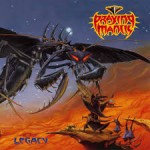
Praying Mantis - LegacySome may remember Praying Mantis from the New Wave of British Heavy Metal in the early 1980s. Led by the Troy brothers, Chris and Tino, they never managed the success of the likes of Iron Maiden or Saxon, and like many of their peers they faded away after a couple of years.
But that wasn’t the end of the story. A decade later they were to reform, and aside from a hiatus in the mid-noughties have been touring and recording ever since. In their original incarnation they were a quartet with Chris Troy handling the lead vocals himself, but he’s long stepped back to focus on lead guitar. They’re now a five-piece with John Cuijpers as the newest in a long line of lead vocalists, and “Legacy” is their tenth album.

Today’s Praying Mantis play polished twin-guitar hard rock, more AOR than metal. It’s a long way from NWOBHM, though they were always on the more melodic side of things from the beginning. It kicks off with the Uriah Heep-like opener “Fight For Your Honour”. Songs like “The One” and “All I See” recall the hard rock side of Journey; the solo on the latter is very Neil Schon. “Believable” is a highlight with its a huge anthemic chorus, while “Eyes of a Child” and “Better Man” are heavier and darker. But this album is remarkable in its consistency, there is no filler and every track has something to like about it. Just occasionally it skirts on the edge of cheese, but most of the time this is a classy piece of work.

Even if nothing they on this record is particularly original, they’ve very good at what they do, and songcraft, performance and production is superb, polished just enough to shine but without taking off the raw edge. John Cuijpers has a great hard rock voice, and the other new member, drummer Hans in’t Zandt, also makes his mark with his propulsive drumming. It’s a rather different Praying Mantis from the failed metal band of the early 1980s, but it’s actually a far better one.

Posted in Record Reviews | Tagged , | Comments Off

One of the big divides in music fandom is between those for whom the most imporant thing is the music itself, and those for whom the music takes second place to the lyrics. A good litmus test for which side of the divide anyone falls is who they prefer out of Bruce Springsteen and Led Zeppelin.

Posted on by Tim Hall | 4 Comments

Even the Gods are Mortal

Sad news. A week afrer Motörhead had to abandon a gig four songs into the set at Salt Lake City due to Lemmy feeling unwell, the same thing happens a week later in Austin Texas.

As reported in NOISEY.

Lemmy walked offstage mid-song; a fan-filmed video caught him saying it— ”I can’t do it”—before he shuffles off, slowly, painfully, with the help of the cane he’s recently started using. The crowd, stunned, quickly regained its composure and began cheering—not heckling, cheering—for him. A chant rippled through the venue—”We love you! We love you!”—in a display of solidarity and communal support that could bring even the most hardened metal veteran to tears. After a few moments, the 69-year-old frontman reappeared, and grabbed the mic. ”I would love to play for you, but I can’t. Please accept my apologies. Next time, alright?”

And of course they accepted. A friend who was there told me that the crowd was sad—he mentioned seing fans weeping afterwards—but “very understanding,” and I’m not surprised. No Motörhead fan—or metal fan in general—could have stood there and watched the great man falter like that, and then reacted any other way.

Lemmy is the embodiment of the spirif of rock’n'roll. If he was an In Nomine character, he’s be word-bound, and I’ll leave you to decide if he’s angel, demon or something else. But in the real world, even gods are mortal.

After releasing such a blistering new album, it’s sad so see Lemmy’s increasingly frail health catch up with him, and it’s time to hang up his Rickenbacker.  As the linked article says, it’s killing us to watch him die.

Posted in Music News | Tagged | Comments Off

Got to love this accidentally-hiliarious “Where are they now” feature on the NME’s indie darlings from ten years ago.  As for the first one, if being a software developer is really more creative and exciting than rock’n'roll, it does rather suggest your failed indie band were a bit rubbish.

Posted on by Tim Hall | 2 Comments

Video Killed The Radio Star

Reading yet another thinkpiece about a music video, I think I now understand exactly why the years 1955-1985 were a golden age of popular music. 1955, of course, was the birth of rock’n'roll. But what happened in 1985 to draw that golden age to a close? It was time when the music video eclipsed radio as the primary means of promoting mass-market music.

What’s happened since is we’ve regressed to the days of 1930s musicals, in which the music took second place to the choreography, and is little-remembered. Today all the talk in pop isn’t about new albums or singles, it’s about the videos and their content. The actual music seems to be an afterthought.

Posted in Music Opinion | 1 Comment

Riverside – Love, Fear and the Time Machine

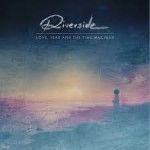
Riverside – Love, Fear and the Time MachineWith their blend of atmospherics, emotional depth and superb musicianship, Riverside are one of the best bands to have come out of Poland in recent years. Their last album, 2013′s “Shrine Of New Generation Slaves” was a major step forward for them, with a dense hard rock sound with strong echoes of 70s Deep Purple.

With their sixth album “Love, Fear and the Time Machine” they take something of a different direction. The opener, the strangely-titled “Lost (Why Should I Be Frightened By A Hat?)” begins gently, Mariusz Duda’s vocal backed by keyboard drones and chiming 1980s-style guitar, building into a groove-led rocker before ending with a superlative less-is-more solo from guitarist Piotr GrudziÅ„ski. The following “Under the Pillow” feels like mid-period Porcupine Tree crossed with Second Coming-era Stone Roses.

They set the mood for the album, a step back from the sound of the last album, with far more space in the mix. There are moments of hard rock with lead guitar recalling Alex Lifeson, but there are also moments with a post-punk feel, all dominant basslines and understated guitars. “Saturate Me” is a particular highlight with its masterful dynamics, alternately rocking out then dropping out to an impassioned vocal over rippling keyboard arpeggios. Another high point is the minimalist “Afloat” towards the middle of the record, Mariusz Duda fragile vocal melody backed by a repeating guitar figure and a simple but effective organ line.

One thing that stands out across this album is strength of the rhythm section; giving the band a sense of groove that so many of their peers lack. MichaÅ‚ Łapaj is less prominent on keys than on their last record, adding subtle colour rather than dominating the sound. Piotr GrudziÅ„ski’s guitar work is exemplary, weaving textures around the grooves, his solos eschewing unnecessary flash or showboating. Finally Mariusz Duda’s strengths as a vocalist can’t be ignored; he’s no chest-beating rawk frontman, but neither is he the muso who ends up fronting the band by default. There’s a lot of Steven Wilson in his understated style.

Riverside often get likened to Porcupine Tree, and while that’s a fair comparison, it doesn’t do them justice, for Riverside are far more than that, and have their own identity. Imagine, if you can, a Porcupine Tree with Jon Lord on keys, Alex Lifeson on guitar, and a rhythm section of Charlie Watts and Bill Wyman.

The result is not only the best album of Riverside’s career, but a strong contender for album of the year.

Posted in Record Reviews | Tagged , | 1 Comment