Music Blog

All the music-related posts gathered together in one place.

Extruded Music Product

Jack Garrett This article, Be prepared for a year of blandness  about Jack Garratt, the “Face of 2016″ makes we want to see all the “tastemakers” at the BBC and elsewhere lined up against the wall and shot.

The way all music that people who take their cues from TV and daytime radio will get to hear is decided by a tiny number of complete philistines in suits is profoundly depressing. This is “music” in much the same way as a McDonald’s hamburger is “food”.

It’s hard having to bite your lip when a friend starts gushing about how wonderful someone like Mumford and Sons are, and not come up with something dreadfully patronising in response. But it still breaks my heart when I see so much genuine talent playing beautiful life-changing music before audiences so small the gigs cannot possibly cover their costs. And meanwhile busker-level talents like Ed bloody Sheeran whose appeal is difficult to fathom are playing stadiums.

I’ve said this so many times before that I’m sounding like a stuck record. But it’s still true.

Posted in Music Opinion | Tagged , | 5 Comments

Mostly Autumn and The Windmill for CRF 2016

CRF 2016 Poster (25th Jan)

Mostly Autumn, The Windmill and Pearl Handled Revolver are the latest bands to added to the bill for the 2016 Cambridge Rock Festival, all of whom played the last festival in 2014.

Posted in Music News | Tagged , , | Comments Off

Mantra Vega – The Illusion’s Reckoning

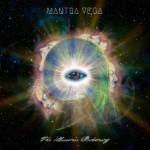
Mantra Vega The Illusions ReckoningMantra Vega is a collaboration between former Mostly Autumn vocalist Heather Findlay and Sound of Contract keys man Dave Kerzner, with a supporting cast made up largely from members Heather’s own band, including Roger Waters’ guitarist Dave Kilminster, one-time Seahorse Stuart Fletcher, and two members shared with the current incarnation of Mostly Autumn, drummer Alex Cromarty and guitarist Chris Johnson.

Although Heather Findlay has guested on a number of projects over the last few years, most notably Rob Cottingham’s Captain Blue, this is the first record promoted as one of her own projects since 2012′s acoustic “Songs from the Old Kitchen“, and her first new material since “The Phoenix Suite” a year before that. A single taken from the album, “Island” appeared in the middle of last year and did a lot to whet the appetite for the eagerly-awaited album, two years in the making,

As that earlier single had suggested, this is a record with a strong 70s vibe. There are nods to Stevie Nicks era Fleetwood Mac and the rootsier side of Led Zeppelin, as well as the folky feel of Heather Findlay’s work with Odin Dragonfly and early Mostly Autumn. In places it evokes a similar mood to “Songs from the Old Kitchen”, but the album as a whole feels closer to a logical progression from her work back in Mostly Autumn days than the more experimental direction of The Phoenix Suite. With the possible exception of the keyboard-led spoken word opener “Every Corner” and the epic title track, it’s perhaps more classic rock than progressive, but it’s an extremely varied record with feet in a lot of camps.

Heather herself is on superb form, and this record might just contain some of her best vocal performances to date, displaying all the warmth and emotional depth on which her reputation rests. Her lyrics are steeped in eastern spirituality, referencing Indian Yogiraj Gurunath Siddhanath, with the songs portraying a spiritual journey from darkness into light. Songs such as “Islands”, the ballad “Lake Sunday”, and the epic title track all feature gorgeous soaring melodies. The Zeppelinesque “Mountain Spring” is intense and passionate, while the dreamy acoustic “I’ve Seen Your Star” recalls the delicate beauty of Odin Dragonfly. “Veil of Ghosts” also features guest lead vocals from Angela Gordon, Nightwish’s Troy Donockley and Irene Jansen, younger sister of Floor.

Arrangements alternate between rich and layered, and pared-back simplicity. There’s more emphasis on guitars than on keys, and it’s only right at the very end that Dave Kerzner cuts loose with spiralling a synth wig-out; instrumental breaks more often take the form of swirling atmospherics than solos. Guitar virtuoso Dave Kilminster only actually appears on a few songs, though he makes his mark when he does, most notably his fluid melodic break on “Island”. Chris Johnson, though better known as a rhythm guitarist, ends up playing a fair bit of lead, with an understated but effective style, his lead flourishes on “Learning to be Light” are particularly impressive. Ayreon’s Arjen Lucassen also makes an appearance with some shredding guitar work on the title track.

The capable rhythm section shouldn’t forgotten; notable moments are Stu Fletcher’s hypnotic circular bass riff that forms the foundation of “Mountain Spring”, and Alex Cromarty going full John Bonham at the end of “Veil of Ghosts”. Last but definitely not least, a couple the acoustic numbers feature the evocative bansuri, the Indian bamboo flute played by Remko de Landmeter.

It’s been a long wait, but this album proves worth that wait. Dave Kerzner proves as excellent a co-writer and creative foil to Heather Findlay as she is at giving voice to his compositions. The result is a record that’s as good as anything either of them have done. For Heather in particular it embraces her musical legacy without being constrained by it.

The album is released on Monday 25th January, and is available from The Merch Desk.

Posted in Record Reviews | Tagged , , , | 1 Comment

RIP Jimmy Bain

We lost another one, with Metal Hammer reporting the death of Jimmy Bain. Best remembered as the bassist for Rainbow and later with Dio.  He played on what many consider to be Rainbow’s best album, “Rainbow Rising”, as well as the classic live album “On Stage”. He played on seven Dio album including the classic début “Holy Diver”. Between Dio and Rainbow he was also part of the short-lived Wild Horses with former Thin Lizzy guitarist Brian Robertson.

Posted in Music News | Tagged , , | Comments Off

The Rights and Wrongs of Negative Reviews

Oh dear. The Guardian’s Ian Gittins has written a one-star review of Ed Sheeran protégée Jamie Lawson, and all hell has broken loose in the comments. So much so that the reviewer, to his credit, has entered the fray and defended his review. Not that I’m completely buying his defence.

Since I mentioned his negative reviews of Steve Hackett and King Crimson as a reason not to take his word for it in the comments, he also responded directly to me:

Hello Kalyr. I think we have safely established now that we don’t see eye to eye on Steve Hackett and King Crimson! However, I thought Steven Wilson was great at the Albert Hall a year or so ago, and raved about it in the Guardian. Believe it or not, I am not pathologically anti-prog…

This was my response:

Ian,

First, you deserve a lot of credit for coming into the comments defending your review; most writers won’t do that.

About that Steve Hackett gig. I was reviewing that show for another publication. I had volunteered for that one not because I was a huge fan of Steve Hackett but because I was a friend of the support act, singer-songwriter Anne-Marie Helder. I knew it was going to be a nostalgia show, and thought Hackett’s newly-released Genesis Revisited album was a rather pointless record which added nothing to the original 70s recordings.

Because the publication I was writing for wasn’t high enough up the food chain to get more than one person on the guest list, I had to double up as a photographer, and there was no photo pit for that gig. Which meant I had to position myself along the side of the room about a dozen rows back and use a telephoto lens. So I had a very good view of the audience, and how they were reacting.

I have no idea what part of the room you were in, but from where I was the atmosphere was absolutely electric throughout his set. It’s true that there was little verbal interaction with the audience between songs, and Nad Sylvain is no Peter Gabriel, but that wasn’t the point, the music spoke for itself. For much of the audience it was music they’d grown up with but had not heard performed live for thirty years. There was a lot of passion in that performance, feeding off the energy from the audience, and it sure didn’t feel remotely like a bunch of has-beens going through the motions like a few other 70s bands I could mention.

My golden rule for reviewing is base everything on how you feel the moment you walk out of the venue; are you in a state of euphoria or is it a case of “thank God that’s over”? For me, and for almost everyone else I know who was there, that was at least a four star gig, not a two star one.

You are entitled to your opinion, of course. But I’m far from the only person who thought you misjudged that gig very, very badly.

I know we prog fans can get very defensive about critical reviews in the mainstream press. But that’s because no other genre seems to get misjudged so frequently.

What got me about his Jamie Lawson review was the mean-spirited nature. It might be true that the subject is a mediocre talent who’s been the undeserving recipient of media hype. It might be equally true that one irritatingly simplistic and sentimental song has become a massive hit with the sorts of people who are not normally music fans. But that’s no excuse for a spiteful review that reads more as a personal attack on the artist than a critique of his art. And like a lot of this kind of review, there’s an implied subtext of an extended sneer at his audience. Like the all-too-common ritual dismissals of progressive rock, it’s a sort of lazy faux-iconoclasm, going after targets who already fall into the writer’s outgroup for cheap applause.

We prog fans get very defensive about this sort of thing. In part it’s because we’re all sick and tired of the ritual dismissal that harks back to the days of punk. But it’s also a consequence of the incestuous nature of the current prog world where there’s a blurring of boundaries between artists, critics and fans. That sort of scathing review simply isn’t possible; as the saying goes, you can’t shit in your own bed. There needs to be a space for critical reviews, of course, but if you want to avoid being ostracised from the scene you either have to frame things constructively or carefully pick and choose what you review. There have been cases where I’ve been disappointed with records when I’ve known the artist, and have told editors that I wasn’t willing to review for that reason. As I’ve said in the past, criticism is as much about what you do and don’t write about as it is about what you actually say.

You only have to look over the wall at the toxic cesspool that Science Fiction fandom has become in the wake of Requires Hate and the Sad Puppies to recognise what happens when empathy-free criticism is actively encouraged.

Posted in Music Opinion | Tagged , , , | 5 Comments

Resurrection Kings

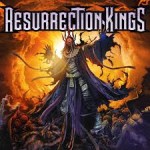
Resurrection KingsResurrection Kings are a band put together by Frontiers Records around one-time Dio guitarist Craig Goldie and vocalist Chas West, who had worked with Foreigner amongst others. They’re rounded out with the addition of fellow Dio alumnus Vinnie Appice on drums and former Dokken and Quiet Riot bassist Sean McNabb.

The self-titled album is described as Whitesnake’s “1987″ mixed with Dio’s “Dream Evil” with a touch of classic Zeppelin and Rainbow. The reality is that the record cobbled together from a collection of demos by Goldie and West, and filled out with material written by one of Frontiers Records’ in-house songwriters falls well short of those illustrious touchstones.

Much of it is as formulaic as song titles like “Livin’ Out Loud”, “Fallin’ For You”, “Never Say Goodbye” or “Had Enough” would suggest. It’s all immaculately played and produced, has riffs and choruses in all the right places along with plenty of solos that sound like a whinnying horse being strangled. There’s nothing here you’d describe as unlistenable. But there is very little that really stands out, and in the end it all sounds much like what you’d expect from a supergroup made up of bit players from the stories of other far bigger stars. This is the sort of band you can imagine playing a mid-afternoon slot at a festival while you’re waiting for the acts you’d really come to see to appear.

Which is a shame, because Chas West has a great old-school hard rock voice of the sort you don’t hear enough of nowadays, and sounds as though he’d excel given stronger material. The occasional song, most notably “Who Do You Run To”, hints at the potential for something greater, with its brooding verse, the best hook on the album, and an imaginatively melodic instrumental break. But most of the time this is workmanlike record that fails to rise beyond generic 1980s hard rock by numbers; solid musicianship rather wasted on decidedly second-rate material.

Posted in Record Reviews | Tagged , | Comments Off

RIP Glenn Frey

The world of rock has lost another, Glenn Frey of The Eagles. Those of us whose musical heroes hit their peak in the early 70s are going to have a rough next few years. Guardian writer Dorian Lynskey remarked a few days ago that he expected a disproportionate amount of his music writing over the next decade will be obituaries. He’s not wrong.

Much like with Bowie I was never a huge Eagles fan; not even their definitive album “Hotel California” managed to find a place in my notoriously doughnut-shaped record collection. But like Bowie their music has always been part of the cultural furniture. One memory of their music was a friend at university, someone I’ve sadly long lost touch with. His first love was soul and funk, but The Eagles were the one rock band he adored. Though even then he said they got too heavy after Joe Walsh joined the band.

Unlike Bowie, The Eagles were never popular with the fashionable critics during their heyday. Their polished and professional sound meant they were dismissed as less authentic than the less successful West Coast bands who preceded them. Their laid-back West Coast sound was the antithesis of rock’n'roll, and of course the punks and new wavers hated them as they represented everything they were supposed to be rebelling against. But time is the ultimate critic, and The Eagles’ music has stood the test of time in a way many of their supposedly more worthy rivals has not.

My choice of song to attach to this post gives away the fact that I’m not a hardcore fan. It’s not even a song Glenn Frey had a big hand in writing. But it is their definitive song; the American equivalent of Led Zeppelin’s Stairway to Heaven in the rock canon. It’s a song I’ve seen covered by, of all people, Stolen Earth, and they did a killer version too.

Posted in Music Opinion | Tagged | Comments Off

Jodie Marie – Trouble in Mind

Jodie Marie Trouble in MindAs any fan of the bands regularly covered on this site ought to know, there is a vast amount of excellent music that doesn’t have the benefit of major label publicity campaigns, and is the wrong genres to be covered by the fashionable media. Which means that many great records fly completely under the radar of everyone who doesn’t follow their particular scene.

Welsh singer-songwriter Jodie Marie is a typical example. I’ve already written about the bizarre way her début album appeared on the radar, but the album itself deserves a review, since it really is an excellent piece of work.

Trouble in Mind an immensely varied record, going from stripped-down intimate acoustic songs through guitar and organ led blues-rock to big band numbers featuring horn sections and gospel choirs. The sequencing is interesting, shifting between different moods across different parts of the album, beginning with several rootsy blues numbers, the middle of the album dominated by ballads, finishing with 70s-style rock numbers. It’s an unusual way of arranging an album, but the musical journey it takes you on actually works extremely well.

As a singer, Jodie Marie is a real talent, alternatively soulful and gutsy depending on the song. The album emphasises that; neither the horn arrangements nor Jimmy Brewer’s tastefully restrained lead guitar overwhelm the vocals.

With an LP-length running time of under forty minutes there’s no room for any filler, but there are plenty of highlights. There’s the funky lead single “Only One I’m Thinking Of”. The solo piano ballad “Reason to Believe” is a thing of beauty, and shows she is an accomplished pianist as well as a singer. Another standout is “For Your Love”, a slow-burning blues number featuring some excellent guitar from Daniel John Montagu Smith. The ballad “Everyone Makes Mistakes” and the rockier album closer “Later Than You Think”, both driven by Jodie’s electric piano, recall something of the feel of David Coverdale’s mid-70s album “Northwinds”, though of course the vocal style is quite different.

Trouble in Mind is precixely the sort of record which really deserves a far wider audience. It’s highly recommended for anyone who is more interested in great music by great musicians than contemporary fads and fashions.

Posted in Record Reviews | Tagged , , | Comments Off

Aghast Afterglow – Imaging

Aghast Afterglow ImagingThe genre of symphonic goth-metal featuring classically-trained female vocalists is getting increasingly crowded these days. The latest addition to the scene is Italy’s Aghast Afterglow, who started as a duo comprising multi-instrumentalist Denny Di Motta and vocalist Lisa Lee, but have now expanded to become a full band.

The opening few numbers set the tone; first the musical box chimes leading into the brief power-metal instrumental “Fearless”, then the swirling kaleidoscopic “You’re Killing Me From Inside” and the full-on Goth of “Angels Can’t Love”. Like others without access to major label budgets for recording they manage without the massed choirs, orchestras and kitchen sinks, instead relying on layers of keys and a bigger role for the lead guitar. Lisa Lee’s lower-register vocals are reminiscent of Winter in Eden’s Vicky Johnson, and Denny Di Motta neo-classical guitar flourishes sound like a version of Yngwie Malmsteen with a sense of taste and restraint.

This is an album where the emphasis is on straightforward songwriting rather than overblown arrangements, and they stick to four or five minute songs rather than attempting any longer epics. “When Will Winter Come Back” is one standout that sounds like a potential single, the chorus of “There Is No Time” gets stuck in the head after a few plays. The soaring ballad “Stream of Awareness” is another highlight. There is the odd moment that doesn’t quite work, most notably the irruption of a few bars of Bach’s double violin concerto as the instrumental break of “Muto Inconscio” in a manner parodied by Spinal Tap way back in 1982. But most of the time it’s solid piece of work.

The album ends with a wonderful piece of silliness, a rocked-up cover of Donna Summer’s “Hot Stuff”, which is yet another example of how well 70s disco standards work when re-inagined as guitar-shredding metal numbers.

While Aghast Afterglow do wear their influences on their sleeves, most notably Nightwish, there is a lot to like about this record, and they sound more than capable of giving some higher profile acts a good run for their money.

Posted in Record Reviews | Tagged , , | Comments Off

David Bowie

All day my social media feeds have been pretty much nothing but tributes to David Bowie, who died just four days after releasing his final album.

You know you have a seriously doughnut-shaped record collection when one of the giants of 20th and 21st century music passes on and you realised don’t own a single one of their records. But his biggest hits were still stuck in my head this morning, “Life on Mars”, “Space Oddity”, “Starman”, “Heroes”. His standards are part of the air we breathe. And his artistic legacy is woven into the DNA of just about every genre of popular music that came after him. To quote Matt Stevens, he’s in the same league as Miles Davis and The Beatles.

Like Lemmy, David Bowie was a one-off who did it his way without following trends. One thing that made him unique was they way he stood outside and above narrow musical tribes; he simultaneously belonged to nobody and to everybody. He combined both ground-breaking style and genuine musical substance in a way unmatched by anyone else. He left whole genres in his wake; artists who based their entire sound around just one period in his ever-changing output after Bowie himself had moved on to something else. He also had great taste in musicians to act as a foil. Just look at the guitarists he worked with over the years; Mick Ronson, Robert Fripp, Stevie Ray Vaughan, Nile Rogers, Earl Slick.

Even though I’ve never been a hardcore fan, it’s difficult to imagine popular music without him. So enough of those who would police other people’s grief, whether it’s a snobbish disdain or some elitist claim of exclusive ownership as a “true fan”. It’s one of those times when if you have nothing positive to say, it’s better saying nothing. Music clearly never touched some people’s souls, even if when some of them started their writing careers supposedly as a music critics. Can’t they even sit on their self-righteous thinkpieces for a couple of days?

David Bowie was one of the true greats, whose work had a huge impact on music and on wider culture. Let us celebrate and remember that.

Posted in Music Opinion | Tagged , | 6 Comments