Music Blog

All the music-related posts gathered together in one place.

Viola Beach

Viola Beach weren’t remotely my kind of music. But it’s still heartbreaking to see their Twitter feed still showing automated tweets advertising gigs this week that will never happen. Like the Bataclan massacre hack in November, their tragic deaths in a road accident struck close to home.

There are many, many musicians I know who’s routine includes driving long distances back from gigs at the opposite end of the country and arriving home at four in the morning because their budget won’t stretch to staying in the cheapest of B&Bs. Many of them must be thinking “That could easily have been us”.

Rest in Peace, Viola Beach. You weren’t part of my particular musical tribe. But music is bigger than the any one tribe, and the loss of lives so young is a terrible tragedy.

Posted in Music News | Tagged | Comments Off

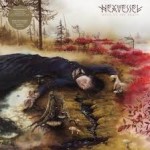
Hexvessel – Now We Are Death

Hexvessel Now We Are DeathAlong with the likes of Knifeworld, Purson and fellow Finns Jess and the Ancient Ones, Finland’s Hexvessel bring the weird and wonderful world of late 60s psychedelia into the 21st century. Song titles like “Transparent Eyeball” and “Cosmic Dreams” make it clear where they’ve coming from, even if calling a song “Mushroom Spirit Doors” does sound as though they’re taking the piss.

The illicit substance inspired song titles would mean little if the music wasn’t up to snuff, but Hexvessel more than deliver on that front. “When We Are Death” goes from space-rock to psychedelic folk, with swirling organ, fuzzy stoner-rock grooves, gothic atmospherics, and the occasional Motorik beats and garage-rock riff.

Some bands mining this musical seam have ended up with albums sounding rather one-paced, but Hexvessel avoid this trap by keeping it varied. After the hypnotic grooves of “Transparent Eyeball” and “Earth Over Us” with its evocative Doors-sryle electric piano, the pace changes completely with the melancholy ballad “Cosmic Dreams”, a strong highlight of the album. The sinister psychic drama of “Mirror Boy” is another gem, and isn’t the only song that recalls the gothic atmospheres of the short-lived 1990s goth-proggers Ordinary Psycho, if anyone remembers them.

Other standouts include the “Drugged Up On The Universe” with a combination of fuzz-toned guitar and Hammond organ that comes over as a cross between Black Sabbath and Uriah Heep, and the doom-laden slow blues of “Teeth of the Mountain”. Perhaps the only song that doesn’t quite work is the aforementioned “Mushroom Spirit Doors” where awkward time changes mean it fails to achieve lift-off. But that’s the one weak song on an otherwise strong record.

British-born singer Mat McNerney impresses a lot; there’s a touch of Jim Morrison, Nick Cave and Ordinary Psycho’s Tony Gulvin in his style. On the instrumental side it’s Kimmo Helén’s keyboard textures that stand out, adding an extra dimension to every song.

Hexvessel have done a great job at invoking sixties psychedelia with a touch of nineties goth, with influences all over the place fused into a coherent whole.

Posted in Record Reviews | Tagged , | Comments Off

Is there a word for an earworm that’s a combination of two different songs? I’ve got one with the verse of Suede’s “I don’t know how to reach you” flips into the chorus of Karnataka’s “Tide to Fall”,

Posted on by Tim Hall | Comments Off

The Song Bar

Song-BarThe situation with The Guardian’s Readers Recommend has got unpleasantly messy, and we’ve ended up with in a position where the vibrant music-loving community risks being split into two rival camps.

After weeks of prevarication, the Guardian have relaunched Readers Recommend in cut-down form, run by the community section rather than anyone from Guardian Music. The launch appears to have been handled very clumsily, so it’s got off to a rather poor start.

Meanwhile, an enigmatic figure known only as “The Landlord” has launched a new music blog The Song Bar as a Readers Recommend in exile, with “Songs about moving on” as the first topic.

I am sure I’m not the only person who doesn’t know which way to jump. Is it better to keep a foot in both camps and see how things pan out, or is best to throw our lot in with The Song Bar on the grounds that Guardian Communities have demonstrated that they can’t really be trusted? My gut instinct is to go for the latter, provided the site can draw in a critical mass of people.

Anyway, for Songs about moving on, I’ve nominated the superb title track of Karnataka’s “The Gathering Light“. It’s a song about moving on from a broken relationship, but it’s also by the band who appear to have been cheated out of appearing in The Guardian’s end-of-year reader’s poll for reasons that have never has a satisfactorily explanation.

Posted in Music Opinion | Tagged , , , | 1 Comment

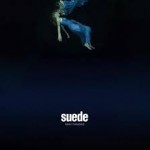
Suede – Night Thoughts

Suede - Night ThoughtsSuede were always one of the more interesting bands from the Britpop era. Their dark lyrical themes and sometimes florid music meant they little in common with the likes of Oasis or Blur.

They had an unusual career trajectory; guitarist Bernard Butler, whose playing defined their early sound, left the band after the recording of their second album “Dog Man Star”. Though they replaced him and carried on, much of the magic was lost. After three more disappointing albums, they split, making them one of the few bands for whom their second album was the best. A decade later they were to reform, older and wiser, and appeared to pick up not from where they left off, but from where they perhaps should have gone after “Dog Man Star”.

“Night thoughts” is their second album since they reformed, following on for 2013′s “Bloodsports”. It’s a concept album with a storyline of the drowning man’s life flashing past his eyes, which is admittedly a bit old hat; Spock’s Beard and Mostly Autumn are just two bands to have covered similar themes. But in theme and mood Night Thoughts is closest to Marillion’s 1994 classic “Brave”.

The guitar drones heralding opener “When You Are Young” so closely recalls Brave’s “The Bridge” it’s hard to imagine it’s not a deliberate quote, and the same song’s cinematic string section strengthens the prog flavour. What follows is a mix of anthemic guitar-pop numbers with big choruses interspersed with darker and more atmospheric numbers that sometimes evoke the bleakness of the middle parts of Pink Floyd’s “The Wall”.

The pairing of “Pale Snow” and “I Don’t Know How To Reach You” are early highlights, the spiralling guitar on the latter sees Richard Oakes channelling the late Mick Ronson. But every song has something to recommend about it, and like the best concept albums it’s more than the sum of its parts. The mid-70s Bowie vibe that’s been present throughout their career is still prominent, but there are also moments that would not have sounded out of place on a mid-90s Marillion album.

For a band who so often wore the influence of David Bowie on their sleeves, it was ironic that Bowie’s death rather overshadowed this album’s release. While it doesn’t quite reach the florid grandeur of “Dog Man Star”, this record is still streets ahead of the weaker albums that followed it. It’s a rich and dense record that gets stronger on repeated listens, and while it’s not really a progressive rock album as such, it does share some of the same strengths.

Posted in Record Reviews | Tagged , | 5 Comments

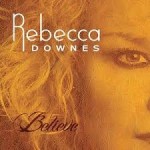
Rebecca Downes – Believe

Bebecca Downes BelieveAlong with the likes of Chantel McGregor and Jodie Marie, Rebecca Downes is a female blues-rock artist revitalising a traditional form for the 21st century, in her case turning down offers from X-Factor producers because she’d rather make real music of her own than someone else’s formulaic product.

Her second album “Believe” shows she means business, and demonstrates a vocal talent that would indeed have been wasted on sausage-factory pop. With a tight six-piece band including co-writer Steve Birkett on rhythm and slide guitars and Rik Sandford on lead guitar, she plays the blues through a prism of classic rock with nods to soul and funk. Rebecca has a great voice, with range and power as well as emotional depth, equally at home with soulful ballads as belting out hard rockers.

What impresses is not only the strength of the material but the variety; this is not one of those albums where nearly every song is a variation on the same basic template. Highlights include the impassioned funk-rock of “Night Train”, the guitar-shredding ballad “Sailing on a Pool of Tears” and the seductive smoky jazz of “Could Not Say No”. Just occasionally the quality dips, with the middle-of-the-road “Come With Me Baby” and one or two rather ordinary boogie numbers on the second half of the record, but the album ends in rousing form with the hard rock workout of the title track.

In some respects this is an old-fashioned record with little or no concession towards the contemporary commercial mainstream. But a record this good deserves to be heard well beyond niche audiences of ageing classic rock and blues fans. The performance and production manages to combine a rich and sophisticated sound with a crackling energy, which leaves the impression the music is built to be performed live.

The album is released on March 4th, with a pre-released launch party at the 100 Club in London on February 23rd.

Posted in Record Reviews | Tagged , | Comments Off

“The Big Snub Dept” on Genji Press is well worth a read. Can someone really be an artist unless their art manages to resonate with an audience?

Posted on by Tim Hall | Comments Off

Of Genres and Canons

If you divide music into “Classical” and “Pop”, but don’t make any distinction between “Pop” from “Rock”, a record like King Crimson’s “Red” gives a divide-by-zero error.

It’s one of the high points  of the progressive rock movement, an ambitious and powerful collection of music far removed from simple top-40 pop songs. Yet it’s performed by a rock band with electric guitar as the main instrument rather than a symphony orchestra.

If you’re reading this blog, you almost certainly know all that. But this post isn’t really about Red, but about the wider divide between “high” and “low” art, and whether such a divide is still meaningful, or even if it ever was.

It reminds me a bit of my old school music teacher, Mr Macey. He was an old-school traditionalist for whom only orchestral music in the Western classical tradition qualified as real music. Anything played on electric instruments was ephemeral nonsense. I suspect he genuinely believed rock’n'roll was a passing fad and none of it would pass the test of time.

He was wrong, of course, but back in the mid-1970s it was still possible for someone to hold that position without looking like a ridiculous old reactionary. Much of what we now consider as the rock canon was either less than a decade old, or had yet to be written. The fact we’re still listening to some of that music forty years on shows that it has stood the test of time rather better than the so-called “squeaky hinge” work that some classical composers were writing at the same time. But it’s also notable that the way rock fans dismiss music made from samples and computer-generated rhythms sounds a lot like the arguments used against rock by my old music teacher.

The whole high art vs. low art thing is really about social class. In past centuries, “classical” was the music of the rich, and “folk” was the music of the poor, and the former was put on a pedestal at the expense of the latter because the people with the money wrote the histories. The rise of the middle classes and the development of amplified electric music disrupted that hierarchy, but old prejudices die hard.

I wonder how the music of the past fifty years will be regarded in a hundred years time? What will pass the test of time, and will today’s genres of classical, folk, jazz or rock still make any sense to listeners who encounter the music in a completely different cultural context?

Posted in Music Opinion | Tagged | 3 Comments

John Mitchell releases The Nostalgia Factory

The Nostalgia FactoryJohn Michell of Lonely Robot, It Bites, Arena, Frost* and The Heather Findlay Band fame has somehow found the time to record a four track EP of covers, “The Nostalgia Factory”.

The title track is a very early Porcupine Tree song. The EP also includes Justin Hayward’s ‘It Won’t Be Easy’ and Phil Collins ‘Take Me Home’, the latter of which featured as the encore at the Lonely Robot showcase show at The Scala last December. The final song is ELP’s ‘C’Est La Vie’, which shares the same origins as Panic Room’s “Bitches Crystal”, recorded for the ill-fated Prog Magazine cover disk of ELP covers.

The EP< which also features Kim Seviour on backing vocals is released on 26th February, but can be pre-ordered now from White Star Records.

Posted in Music News | Tagged , | Comments Off

Why It’s a Critic’s Duty to Be Wrong

Interesting post on Criticwire; A.O. Scott and Why It’s a Critic’s Duty to Be Wrong. It’s really about film criticism, but it’s the sort of thing that’s more widely applicable, including music criticism.

Criticism isn’t meant to be the final word but an opening statement, or, increasingly, a volley in the potentially unending ping-pong match between writers and readers — to the extent that distinction is even meaningful anymore. Critics should try to be right, of course, whatever that means in the context of a largely subjective medium. (My definition: Passionate but controlled; true to the aesthetic and moral principles you’ve articulated and evolved over the course of your critical career. Also, try to spell the names right.) But there’s nothing more dangerous to a critic than the ironclad belief in their own rightness.

A couple of things resonate quite strongly here. The first is that anyone who’s too afraid of being wrong will be less effective as a critic. We’ve all seen reviews where the reviewer won’t commit to saying whether the record is good, bad or indifferent, and instead dances around the subject with a load of anodyne waffle. Worst still is groupthink, when the reviewer is afraid to be the one who’s out of step with everyone else. It’s the reason I  never read other reviews of a record before I’ve written my own.

The second is that reviews are ephemeral compared to their subjects. For new releases a review is only relevent during a record’s release window. Once a critical mass of people have had the chance to hear it for themselves, anything you write is old news. In the case of a high-profile major act that window is measured in days. For a small independent release that relies on word-of-mouth for promotion it’s more like months, and reviews are an important part of that word-of-mouth process. In many cases the most significant thing is the fact that you’ve chosen to review it at all.

Eventually the record will either become part of the canon, for some given value of canon, or it will sink into obscurity. Either way, subsequent writing about them will read in a very different context, even if the writer or reader is discovering the actual music for the first time.

To give an example, Pink Floyd’s “The Wall” now has an assured status in the rock canon, with Dave Gilmour’s “Comfortably Numb” recognised as a rock standard. Few remember or care about Sounds’ Dave McCulloch’s one-star review that complained that there were too many guitar solos.

I’ve just written a strongly negative review of a record by one of the biggest names in progressive rock. Judging by subsequent conversations a lot of others share my opinion. But there are some strongly positive reviews out there of the same record that declare it a masterpiece. And here’s the important thing; none of these reviews are wrong. They’re all part of the conversation. Eventually a consensus will emerge, even if that consensus is that it’s a Marmite record that divides opinion.

And yes, sometimes you will look back at a record you praised or damned, and realise you were completely wrong about it.

Posted in Music Opinion | Comments Off