Music Blog

All the music-related posts gathered together in one place.

Music Survey of the Week

This survey has been propagating round the Blogosphere recently. Via Blogcritics.

First Record Bought: Pink Floyd, The Wall
First Concert: Hawkwind, supported by Vardis
Favourite Music Movie: This is Spinal Tap
Favourite Music Book: The Real Frank Zappa Book
Favourite Songwriter: Donald “Buck Dharma” Roeser
Favourite Record Label: Harvest
Favourite Magazine: Modern Railways (Hey, you didn’t say it had to be music magazine!)
Favourite Bassist: Geddy Lee
Favourite Album Cover: Some Enchanted Evening, Blue Öyster Cult
Least Favourite Album Cover: Lovehunter, Whitesnake.
Favourite Teen Idol: If I was an American I’d take the fifth amendment on this one.
Artist Who Broke Your Heart: Phil Collins, by selling out.
Artist You Will Always Believe In: Marillion
Singer Who Makes Your Skin Crawl: Elvis Costello. Don’t know why, but his voice just grates badly with me.
Singer Who Makes You Swoon: Anja Orthodox (Closterkeller), Rannveig Sif Sigurdardottir (The Icelandic soprano guesting on two albums by Luca Turilli), Jon Anderson.
Favourite Sound: Mellotron or Hammond organ
Album You Will Always Defend: Drama by Yes
Album You Own That No One Else Does: Just about everything really obscure I can name, I can think of someone else who’s got it – even albums by Polish goth-metal bands or Hungarian prog-rock acts! I do have some LPs of train noises; do they count?
Classic Album You Own but Don’t Like: Layla by Derek and the Dominoes
Artist You’re Supposed to Like but Don’t: The Smiths
Song You Can’t Stand by an Artist You Like: Goin’ Through the Motions, Blue Öyster Cult
Band That Should Break Up: Oasis
Band That Should Re-form: Genesis with Peter Gabriel and Steve Hackett
Guilty Pleasure: Rhapsody. Although why should I really feel guilty for listening to operatic pomp-metal with Dungeons and Dragons lyrics?
Favourite Music DVD: Don’t have a DVD player
Concert You Wish You’d Seen: Rainbow with Ronnie Dio
Dream Collaboration: Ronnie Dio and Yngwie Malmsteen
Posted in Music | 2 Comments

Karnataka Split

This is a bit of a bummer.

Karnataka were a six-piece British female-fronted band that combined atmospheric progressive rock with celtic sounds. They had steadily been building up a reputation on the live circuit, spread largely by word-of-mouth. After listening their very impressive recent live album “Strange Behaviour”, I was very much looking forward to seeing them on their planned tour this Autumn.

Sadly, it’s not going to be: this is the message posted to the band’s website, www.karnataka.org.uk.

Karnataka regret to announce that for personal reasons the band is no longer able to continue. We would like to thank all of you who supported us from our early gigs in 1998 up to the present, it is largely you who have made this journey so worthwhile for all of us and we hope that the music we have made together has been something that will continue to live on after the band.

So far, they’ve given no reason for the split.

Posted in Music | Comments Off

More Worst Guitar Solos

A followup to my earlier worst guitar solos of all time, here are another five:

Child in Time by Deep Purple, solo by Ritchie Blackmore. No, not the well-known live version from Made in Japan, or the equally good original studio version. The one I’m talking about is the dire solo from the Man in Black’s very last album with Purple, the thoroughly mediocre live set Come Hell or High Water. By this time it was clear Blackmore’s heart just wasn’t in it any more; there’s none of the fireworks from axe-shredding 70s classics like California Jamming or Rainbow On Stage. Instead we get a couple of minutes of directionless tuneless strumming, until keyboard player Jon Lord puts it out of it’s misery by taking over on the Mighty Hammond. At this stage in his career, Blackmore’s tantrums were much more interesting than his guitar playing.

Sting of the Bumblebee by Manowar, solo by Joey Di Maio. The token bass solo in the list. The Flight of the Bumblebee played on a bass guitar. Is there really anything else you need to know?

Soldier of the Line by Magnum, solo by Tony Clarkin. OK, Tony Clarkin isn’t the world’s greatest guitar player; most of his solos are repetitive and clumsily structured. But what makes the guitar break section of the song so dire is the the way it exposes Magnum’s rhythm section of the time as complete waste of space. During the rest of the song Clarkin’s powerchords drive the music. But the moment he plays a solo, the bottom completely drops out of the song. Any when the solo isn’t up to much in the first place, the end result is just embarrassing.

Smells Like Teen Spirit by Nirvana, solo by Kurt Cobain. For some inexplicable reason the late Kurt Cobain often appears on lists of great guitarists. While he undoubtedly was skilled at writing memorable songs and expressing White Wolf Games levels of angst, a great guitarist he was not. Not for nothing are Nirvana credited with killing off the guitar solo. While there is a ‘solo’ of sorts here, it’s just a few bars of tuneless nothing. I’d much rather listen to Neil Schon.

Burning Rope by Genesis, solo my Mike Rutherford. From the album that marked the beginning of their descent from sublime progressive rock to bland corporate pabulum. Rutherford might be a decent melodic bass player, but his lead guitar never rises above the banal. Steve Hackett he ain’t.

Posted in Music | 1 Comment

Worst guitar solos of all time

Pitchfork Media have compilied a list of the 50 Worst Guitar Solos. A few of them are on target, many more are not. (Blue Öyster Cult ‘Awful musicians’? You must be joking). But they have the guts to put an overrated icon at number one. (Link from Dodgeblogium)

Anyway, here are my list of bad solos. There’s only five of them, but I’m probably treading on sacred cows too…

Sabbath Bloody Sabbath by Black Sabbath, solo by Tony Iommi. This song contains three of Iommi’s monster riffs, but the solo is the weak spot in what’s otherwise a classic song. It’s a thin, weedy thing. Although Iommi is known for his riffs rather than his solos, he’s still capable of doing far better than this.

Everything by Vardis, solos by Steve Zodiac. I’m not naming any individual songs, because I can’t remember any titles. But Vardis were one of those bands that only really had one song, and played it over and over again. I remember a review of a live album of theirs, that described it as sounding like “A thirty second excerpt of Dave Edmund’s ‘Sabre Dance’ in a continuous loop for forty minutes”. And that’s exactly what they sounded like.

Paranoid Android by Radiohead, solo by Johnny Greenwood. This is an album which would have really benefitted from some proper solos. But all we get is one note strummed really fast going “EeEeEeEeEeEeEeEeEeEe”. Was that supposed to be a solo, Johnny?

Champagne Supernova by Oasis, solos by Noel Gallagher and Paul Weller. Noel seems to think that Paul Weller is a great guitarist. He’s not. And Noel himself is an order of magnitude worse. Anyone who thinks Noel Gallagher is a good guitar player simply does not have a record collection that goes into double figures.

The live solo spot by Nigel Tufnel of Spïnal Tap. I’m old enough to remember the New Wave of British Heavy Metal in the early 80s. Every band gave their guitarist a solo spot where the rest of the band walked off stage leaving the axeman to go Weeeeeeeee widdlywiddly widdlywiddly widdlywiddly eeeeeeeeeeeeeeeeee ngngngngngngngngngngngngng for a few minutes. And the audiences went wild! Well except for the people who hadn’t already gone to the loo during the drum solo.

Posted in Music | 16 Comments

The rise of the HIF

Covering some similar ground to The Test of Time, this post by Paul De Angelis on Blogcritics has some interesting thoughts on why the divide between ‘high’ and ‘popular’ culture is slowly breaking down.

Craig Seligman once remarked on “…the weakening force of critical opinion in the face of ever-expanding mass interests and tastes”. But this change was more than the result of an expanding middle class or more prevalent media. It was spurred on by the rise of the HIFs — Hardcore Intelligent Fans — who accomplished two important things:

1) They championed traditionally disparaged genres (like science fiction) and media (like comic books), claiming them as worthy of analysis and serious critique. Academia had failed badly in this respect. For years these things were shunned, and now the universities, instead of being in the vanguard, are trying to play catch-up. But courses on pop culture are like listening to senior citizens use contemporary slang: it sounds clumsy, forced, and slightly embarrassing.

2) HIFs also managed to find alternative ways of getting their ideas out there, sidestepping professional venues by producing fanzines and holding conventions. Though fanzines had problems with distribution, that’s been alleviated by their replacement, the internet.

Not that the litsnobs and classical music snobs will concede defeat easily. There are still people that insist that “composed music in the European classical tradition” is inherently superior to all other forms of music, just as there are those that insist that any work of fiction that does not conform to the narrow tropes of the genre known as “serious literature” is worthless trash.

I’m not arguing that worthless trash doesn’t exist; nobody has yet repealed Sturgeon’s Law. But I’m sure for every SF novel or thriller that’s formulaic drivel, there’s also a “seriously literary novel” that’s pretentious drivel. (or even formulaic pretentious drivel). And for every vacuous pop song that’s forgotten in six months, there’s an equal proportion of unlistenable classical compositions that have been performed precisely once.

Posted in Music, Science Fiction | Comments Off

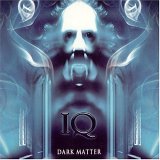
IQ – Dark Matter

Unlike their contemporaries Marillion, IQ have never moved their sound very far away from the 80s British neo-prog template of Gabriel-era Genesis crossed with mid-70s Pink Floyd. What makes them worth a listen is Peter Nicholls’ distinctive melodies, and the fact that while what they do isn’t terribly original, they do it very well indeed.

Dark Matter, the band’s eighth studio album, doesn’t really break any new ground, merely honing their sound to near perfection. On first listening, it has the feel of their early albums, a sound dominated by layers of swirling keyboards and guitar topped by Nicholl’s vaguely menacing vocals and darkly obscure lyrics. What’s improved from their early work is far better arrangements that leave some of their older material sounding vaguely half-formed by comparison.

Keyboardist Martin Orford shines on this album right from the very beginning, the synthesised orchestral intro that heralds the 11 minute opener “Sacred Sound”, and the dramatic church organ in the middle section. If that wasn’t enough it follows straight into swirling mellotron backing the guitar solo. Then there’s the wonderful organ work on the ballad “Red Dust Shadow”.

Meanwhile, the more aggressive “You Never Will” is Peter Nicholls at his darkest.

Now as the shadows fall on Allhallows Eve
We spin our tangled web, learn to deceive
I keep on hoping that you’ll do something real
Give in to influence but you never will

“Born Brilliant” instrumentation recalls Pink Floyd’s “Welcome to the Machine”, but the lyrics are something else. It’s a matter of opinion who they’re supposed to be about.

My catalogue of failures
Is etched upon my lips
The baggage that I carry
Would sink a thousand ships
My motives are uncertain
Intentions not altogether pure
So don’t you want me beside you
Just like it was before

The album closes with the 24 minute epic “Harvest of Souls”. Even though some of the instrumentation sounds just a little too like “Foxtrot” era Genesis for their own good, it’s still is the standout song of the album, a perfectly structured six-part epic. Each section flows seamlessly into the next, and contains some of Nicholl’s best melodies. There’s one short instrumental passage that’s is such a direct lift from the “Apocalypse 9/8″ section of “Supper’s Ready” I’m sure it’s a deliberate quotation.

This is an album that gets better and better with each listen. On the first couple of listens it was clearly a vast improvement on the slightly disappointing predecessor “Seventh House”. After a few more spins I’m beginning to think this might just be the best album IQ have ever made.

Posted in Music, Record Reviews | Tagged , | 2 Comments

Fish says “Keep the TPOs!”

In this interview with Fish with a Dutch prog website, he’s clearly in favour of trains of windowless red coaches hauled by class 67s

And there are people depending on the mail, and the mail is not cheap…And with the prices, the service is absolutely [rude word deleted]despicable. So we are now taking legal advice and we’re also going to the BBC on a Watchdog program, because we got fans who complain to us about how long it takes for their [rude word deleted] CD to arrive in the mail.

We’ve sent test packages out to places and seeing just how long it would take to get there.

And the thing is, the Royal Mail, they are now going to take the night train off. We used to have the famous night train. And it was this train from London, and it was this train that goes down with all the packages and the post and stuff. And they take it off because we don’t need it anymore.
THEY [Another Rude Word deleted] NEED IT NOW MORE THAN [the same word deleted again] ANY OTHER TIME – [Insulting sexual reference]!!

The whole interview is well worth reading. The piscine one is not happy with the current state of the music business.

Posted in Music, Railways | Comments Off

The Test of Time

Ah, the eternal popular culture vs. High Art argument. To this ridiculous piece of fogeyish drivel, Uncertain Principles has this response:

The only distinction I really see between most “high culture” music and the pop that people sneer at is what you might call the “Agyar Criterion,” after the narrator in Steven Brust’s Agyar, who responds to questions about the quality of art by saying “ask me again in fifty years.” The main thing distinguishing pop music from classical music is age, and the filtering that comes with age.

I’m not going to attempt to claim that all pop music is the equal of Mozart– the occasional channel-surf past MTV would make clear that that’s a foolish idea. Sturgeon’s Law (“90% of Everything is Crud”) applies to music as well as literature. 90% of what people listen to these days is total garbage, but 90% of what people listened to in Mozart’s day was also total garbage. It’s just that nobody remembers the garbage from back

The thing about taste in music is that it’s very personal and quite subjective; I think your appreciation of a particular piece of music is strongly influence by whatever other music you’ve heard. If you only ever listen to opera, or heavy metal, or jazz, or top 40 pop or whatever, it’s going to be more difficult to appreciate something from a quite different musical genre. But that doesn’t mean that any one musical genre is inherently superior. I take exception to those people, either classical snobs or pseudo-intellectual rock journalists, who insist that their tastes in music are not subjective opinions, but objective truth, and anyone who disagrees with them is an idiot.

As an aside, and at the possible risk of contradicting myself, I wonder if some of the classical-is-good, popular-is-bad attitude comes from the apparent fact that the first half of the 20th century seemed to be lean times for popular music. Judging by the relatively few popular songs from that era that have passed the test of time compared with those from the 50s and 60s (which is still long enough ago for the test of time factor to come into play).

I wonder. In the year 2100, which of the following is most likely to be revered as a great composer of the late 20th century?

  • Harrison Birtwhisle
  • Andrew Lloyd-Weber
  • Roger Waters
  • Pete Waterman

At the moment, I think we have no way of knowing.

Posted in Music | 1 Comment

Its Midsummer’s Day

Where all the hippies go to…

Stonehenge!
Where the demons dwell
Where the banshees live and they do live well

Stonehenge!
Where a man is a man
And the children dance to the pipes of pan

Stonehenge!
Tis a magic place
Where the moon doth rise with a dragon’s face

Stonehenge!
Where the virgins lie
And the prayer of devils fill the midnight sky

And you my love, won’t you take my hand
We’ll go back in time to that mystic land
Where the dew drops cry and the cats meow
I will take you there
I will show you how

It could have been worse; I might have posted the lyrics of Big Bottom

Posted in Music | 2 Comments

Yes, Manchester MEN Arena, 19-Jun-2004

The announcement the Pink Floyd have finally called it a day leaves Yes as just about the last ones standing of the big prog-rock bands from the 1970s. They’ve gone through so many lineup changes over the years that they’ve become something of a soap opera; I’ve lost count of how many times Rick Wakeman has left and rejoined. Fortunately he’s back with them for this tour.

The sound was superb; I’ve never been to show at the MEN Arena before; but I’ve suffered bad sound in enormodomes; Wembley Arena in London was particularly horrible. But this time they got the sound balance just about right, and the twiddly bits (of which there were a great many) weren’t lost in the echoes.

The band were on top form musically; especially Steve Howe. As I overheard on the tram on the way home “A bunch of granddads can show younger bands something”.

The set predictably drew heavily from the band’s 70s heyday, although later material wasn’t neglected entirely. With such an extensive back catalogue they can’t play everyone’s favourites, but most of the standards were there. I won’t give you a song-by-song account; the setlist seemed identical to Scott’s account, except there was only time for one encore, so unfortunately we didn’t get “Soon”.

“Mind Drive”, from 1996′s “Keys to Ascension II” was just awesome. It always was the standout song from their patchy 90s’ and 00s’ albums; Live, this epic is close to being the high point of the show.

“South Side of the Sky” always reminds me somehow of Lovecraft’s “The Mountains of Madness”, and this was reinforced by the inflatable Roger Dean scenery. The thing suspended above the band looked more than bit like the plush shoggoths I’ve seen on sale. In fact, the whole stage set looked disturbingly cthulhoid.

The acoustic set immediately after the interval showed some interesting reworkings of older songs, and Rick Wakeman on the grand piano was especially good in this section of the show. “Roundabout” works surprising well as a Chicago blues number. Likewise “Owner of a Lonely Heart”, with a wonderful piano solo replacing the original guitar solo, and dramatic piano chords replacing those cheesy 80s synths.

While I’ve never been a great fan of “Tales from Topographic Oceans”, the percussion section of set closer “Ritual” was pretty spectacular, with Chris Squire and Jon Anderson joining Alan White on percussion accompanied by synthesised swooshes from Wakeman.

“Starship Trooper” is the only possible encore, and it didn’t disappoint. Overall, a superb show, and proof that, even if recent albums have been patchy, they’re very far from being a spent force live.

Posted in Live Reviews, Music | Tagged | 3 Comments