Music Blog

All the music-related posts gathered together in one place.

The Internet: Doom for the Music MSM?

Guardian music hack Alexis Petridis looks at the world of Internet promotion. As expected, he can’t help but fall into hipper-than-thou elitism and lazy clichés.

The Internet has been touted as the future of the music business ever since file-sharing became big news: bands, it was mooted, would cut record companies out of the equation by posting their music on their websites and building up a virtual fanbase. But nothing of the sort happened. Selling music via a website became the province not of hip new bands, but old stagers considered defunct by their labels: Simply Red, Level 42, legions of wizened prog rockers. They were making a living, but the whole business still carried a slight taint, the modern equivalent of flogging your records from a car boot.

Of course, as The Ministry of Information reminds us, he makes no mention of Marillion, who started the whole the whole Internet self-promotion thing off. Except, of course, to sneer at ‘wizened prog rockers’. I would hardly call Mostly Autumn wizened old-stagers. Even if they play a style of music a cloth-eared idiot like Alexis Petridis considered deeply unfashionable.

The real danger to the likes of Alexis Petridis is that Internet promotion bypasses people like himself. It gives the opportunity for genres of music not endorsed by the cynical London-based clique of music journalists to find an audience and thrive. Thanks to the power of the Internet, there will be room for music genres other than the currently fashionable four chord poseurs whose simplistic and banal music is touted as “deeply symbolic of mans struggle against his socio-political environment”. Everything will no longer sound like Coldplay now.

As “wizened prog rocker” Steven Wilson of Porcupine Tree said in the song “Four Chords That Made a Million”

You belong there on the cover
You are the Emperor in new clothes
A man who thinks he owns the future
Will sell your vacuum with his prose

Alexis Petridis makes a living selling vacuum with his prose. Anything which reduces the malign influence of the likes of him will be a good thing.
Posted in Music | 1 Comment

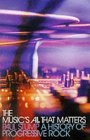
Book Review: Paul Stump, The Music’s All That Matters: History of Progressive Rock

I’m re-reading this book, originally published back in 1996. Paul Stump tries to strip away the official punk-obsessed revisionist history of 70s rock, and tell us how it really was. Starting with a chapter entitled “Duffle Coats from Outer Space” he traces the rise and fall of progressive rock from it’s origins in sixties psychadelica through it’s marginalisation in the face of punk and new wave a decade later, eventually reaching the second generation neo-progressive bands of the 80s and 90s.

Stump tries to establish progressive rock in the context of the era, such as explaining how the tax-exile status of many big bands in the mid 70s was a contributing factor to the genre’s decline as they lost touch with UK audiences. He also suggests that the New Wave of British Heavy Metal in the late 70s and early 80s worked against progressive rock in that it competed against it for up and coming musicians. I’m not sure I buy this thesis, since the first of the 80s Neo Prog bands followed swiftly in the wake of NWOBHM, and I remember a big overlap in the fan bases.

The book covers most of the significant artists and albums, not just the megastars like Pink Floyd, Yes and Genesis, but the lesser known ones like Hatfield and the North, or Henry Cow. He doesn’t shirk from naming some of the more risible excesses of the late 70s, although he does make a brave attempt to defend Yes’ overambitious failure “Tales from Topographic Oceans”. In contrast, he’s very harsh on ELP, to an extent which will probably not endear him to any remaining fans of the band.

Overall, it’s a good overview of a much maligned genre which is long overdue for critical reassessment. Unfortunately, being published nine years ago, it doesn’t cover the more recent ‘third generation’ of bands who have sprung up in the last few years, playing progressive music with the underground DIY ethos of punk, while the musical heirs of punk and new wave dominate the record companies and airwaves.

Posted in Music | Comments Off

Nightwish sack Tarja

Just when a proper rock band were on the verge of a major breakthrough in indie-dominated Britain, this happens. It appears that Finnish symphonic goth-metal band Nightwish have parted company with singer Tarja Turunen. In this Open letter posted on the band’s website, keyboard player and main songwriter Tuomas Holopainens speaks in no uncertain terms

Equally certain is the fact that we cannot go on with you and Marcelo any longer. During the last year something sad happened, which I’ve been going over in my head every single day, morning and night. Your attitude and behavior don`t go with Nightwish anymore. There are characteristics I would never have believed to see in my old dear friend.

People who don’t talk with each other for a year do not belong in the same band.

I’m hoping this doesn’t mean it’s the end of the road for the band. I never got to see them in their UK tour earlier in the year, because it sold out three months in advance. It’s been suggested on their website’s message boards that they’ve already found a replacement singer. Let’s hope this is correct, and Nightwish continue.

Posted in Music | 1 Comment

Playlist 7/9/05

What’s been OMS for the past week or so.

Leaves Eyes – Vinland Saga
I picked up this album after seeing them supporting Paradise Lost. It’s an excellent example of symphonic Euro metal, even if Liv Kristine Espenæs Krull’s operatic soprano vocals are possibly an acquired taste. It’s a concept album about Vikings, and the lyrics and music certainly evoke images of longships and horned helmets. There’s an equal mix of power metal and keyboard-driven ballads, including some atmospheric material sung in Norwegian. I can definitely recommend this album.

Octavia Sperati – Winter Enclosure
Norwegian six-piece Octavia were Paradise Lost’s other support band. Unfortunately this album is a bit of a dud. The overall sound is a mix of melodic goth rock and metal, vaguely reminiscent of Poland’s Closterkeller, but it suffers from a serious lack of memorable songs. Silge’s vocals are too often buried in the mix, and the instrumentation rarely rises above the mediocre. If you like this kind of music, there’s a lot of better stuff in this style around.

Paradise Lost – Believe in Nothing
This is not Paradise Lost’s best album, marking the point were it seems they couldn’t make up their mind whether they wanted to be Depeche Mode or Black Sabbath. Suffers from a lack of good songs as well as a lack of direction, and was weaker than it’s predecessors. I’m told their two more recent albums are better, but I have yet to hear them.

Porcupine Tree – In Absentia
This is one of my favourite PT albums, in that it includes just about every element of PT’s diverse sound on one disk. There’s the Led Zeppelin riffs of “Blackest Eyes”, the melodic atmospherics of “Trains” and “The Sound Of Muzak”, and the haunting melancholy of “Heatattack In A Layby”. This is a good place to start if you want to check the band out.

Blackmore’s Night – Shadow of the Moon
A while since I’d spun this disk, and I’d forgotten how good it was; far stronger than later releases. BN’s renaissance/new age/soft rock melange can be cheesy and twee in places, ‘a high Camembert factor’ as HippyDave has said. But on this first album the good material outweighs the bad. Blackmore’s guitar work is a reminder of why I liked his music in the first place.

Uriah Heep – Salisbury
The Mighty Heep’s second album, recorded all of 35 years ago. Naturally the production and some of the arrangements sound a little dated, but the singles Bird of Prey (with the famous ‘Norwegian Fjord vocals’) and the acoustic chant ‘Lady in Black’ still feature in the live set. Highlight has to be the 17 minute neo-classical title track, with Ken Hensley’s Hammond organ duelling with brass and woodwind sections.

Posted in Music | 6 Comments

Paradise Lost, Manchester, 28-Sep-2005

Last Wednesday I went to Manchester Academy 3 to see Paradise Lost, one of the major influnces for my ficticious Ümläüt. Perhaps buying several albums and going to see the band live is a bit OTT for research for an RPG character, but I do quite their music…

There were two support bands. First up, Leaves Eyes, another of the currently fashionable subgenre of female-fronted metal bands following in the wake of the likes of Finland’s Nightwish and Italy’s Lacuna Coil. They play what I would describe as Viking-flavoured Euro-metal. Liv Kristine Espenæs Krull’s soprano vocals give them a distinctive sound, and she’s very much the visual focus of the band on stage. The twin guitars of Thorsten Bauer and Dr Who lookalike Mathias Röderer gave them a heavy sound in places, although some of their songs relied on programmed orchestral keyboards from Alexander Krull, who spent most of the set in the wings, and only appears to sing vocals on a couple of guitar-driven songs. They played an enthusiastic and entertaining short set. I think we’ll hear more of this band.

Second support, the Norwegian (almost) all-girl band Octavia weren’t quite as good. Technical problems delayed the start of their set. Darker and more gothy than Leaves Eyes, they didn’t seem quite as tight, and their songs weren’t as memorable. On the other hand, they appeared to be extremely young (one or two of them looked about seventeen), so maybe there will better music from them in the future.

I didn’t quite know what to expect from Paradise Lost. They’d established a reputations as leaders of the “Northern Doom” scene of goth-metal, culminating in the excellent “Draconian Times” album. Then they kept changing their sound, delving into electronica, and found their fan base began evaporating. More recently they’ve returned to their metal roots, although I had yet to hear their latest album.

Paradise Lost opened with “Like a Fever” from Draconian Times, a statement of intent. We were treated to a little over an hour of dark and atmospheric metal. They played a token song, So Much Is Lost from the Depeche Mode like “Host”, some excellent goth rock numbers from the “One Second” album, and some oldies like “As I Die”, which vocalist Nick Holmes sang ‘clean’ rather than in the cookie-monster style of the original recording. One of the high spots was “Hallowed Ground”, one of their heaviest songs, with Gregor Mackintosh’s simple but devastatingly effective solo (yes I know it’s just a series of rising arpeggios and a wah-wah pedal, but it works!). Interesting moment on the final encore, “Just Say Words”, where the opening piano figure got a bigger reaction from the audience than the Nick Holmes’ announcement of the songs. He reckoned the audience was slow on the uptake; but it proved that I wasn’t the only person who recognised the intro but couldn’t remember what the song was called.

Overall, a good show, well worth braving a wet Wednesday evening, even if they didn’t attempt to summon Great Cthulhu.

Posted in Live Reviews, Music | Tagged | Comments Off

OMS

What I’ve been listening to over the last couple of days. Unlike the iPod generation with their song-based playlists, I’m a still luddite who listens to albums all the way through

After Crying – De Profundis
Prog-rock sung entirely in Hungarian. There’s as much violin and brass as guitar, resulting in something closer to orchestral chamber music that to rock’n'roll. Hauntingly beautiful in places, and quite unlike anything else in my record collection.

Ayreon – The Human Equation
Multi-instrumentalist Arjen Lucassen’s most recent rock opera concept album, featuring (as usual) a whole host of guest performers. This one has Ken Hensley of Uriah Heep fame, and vocals by Mostly Autumn’s Heather Findlay, Dream Theater’s James Labrie, and Opeth’s Mikael Åkerfeldt, among others. Like a lot of Ayreon’s work, it’s a bit patchy, but best bits shine.

Renaissance – Novella
I picked up this album because I’ve heard it said that Mostly Autumn sounded like them. I have no idea whether or not it’s one of their best or not, it was the only album of theirs I could find. I’m afraid I have never really been able to get into this one. I’d be interested to hear from Renaissance fans who might either confirm that Renaissance are not for me, or point me towards other more accessible albums of theirs.

King Crimson – The Power to Believe
KC’s most recent work, a good listen even if parts of it are a something of a retread of parts of Larks Tongues in Aspic and Starless and Bible Black given a modern production job.

Savatage – Dead Winter Dead
Savatage are another band into pomp-metal rock operas. The plot is about a love story during the Bosnian war. The music is pretty good power metal with classical flourishes, especially the multi-part counterpoint harmonies in the middle section of ‘One Child’, something I’ve never heard any other metal band attempt.

Rainbow – Long Live Rock and Roll
Third and (possibly) weakest of the three Rainbow albums with Ronnie Dio. By now Blackmore was moving in the more commercial direction that ultimately let to Dio’s replacement by pop singer Graham Bonnet. This album suffers from a couple of filler tracks, and too much lazy and lacklustre guitar playing. Still, the dark epic Gates of Babylon makes up for it. The medieval style “Rainbow Eyes” gives an early foretaste of what Blackmore would be doing a decade and a half later.

Posted in Music | 7 Comments

The return of Ümläüt

After too long a hiatus, everyone’s favourite goth-metal band are back on stage

Karl gives Steve the “You are going to announce this song to the audience and tell them what the hell it’s supposed be about” look. Not that any explaination has ever made sense, with all those Martian words…

The audience has been slow tonight. People seemed to want to dance rather than listen, which means they did get to play the acoustic ballad “When the Madness Came to Stay”, as well one or two songs in strange time signatures that it’s impossible to dance to.

The song begins with a long instrumental intro, with Karl playing an orchestral wash of keyboards while Ravila plays some very spooky electric violin. Then they switch instruments as the rhythm section cuts in, with Ravila taking over the keyboards and Karl playing that dark and menacing guitar riff, evoking primordial Things Man Was Not Meant To Know.

After two minutes, the band reach the point where the vocals come in. Steve starts singing, building up intensity bit by bit, at first what he is saying not audible, and then becoming moreso.

All the while, the master of the stretched-skin percussion let his sticks do the talking, providing the rhythm for Karl and Steve to wield their musical magic…

Karl puts the nightmares about squid to the back of his mind, and concentrates on the music. His instrumental break turned out to be one of those solos, unrecognisably different from the solo he played in this song the night before, or the version on the album.

He played, possibly literally, like a man possessed.

Karl didn’t so much play the guitar, as form a living conduit for the music to flow, seemingly from somewhere else. The notes and phrases sounded unlike any other guitar player on earth. Not quite the blues-based scales of Eric Clapton. Not quite the neo-classical shredding on Yngwie Malmsteen. Not quite the abrasive style of Robert Fripp. Bits of all of them, perhaps. But there was more.

Is sounded like it came from another dimension. Was it from Heaven or from Hell?

Or from somewhere else entirely?

He winds down to a hypnotically repetitive figure behind Steve’s vocals for the call and response chanting section.

Steve grins as he moves forward. This part… was fun.

Very much fun.

His voice sounds like it belongs to something out of a nightmare, the words as if they were being ripped from an unwilling throat. .

Ph’nglui Mglw’nfah Cthulhu R’lyeh Wgah’nagl Fhtagn
Iä! Iä! Cthulhu Fthagn!

This time Karl doesn’t break into the old Black Sabbath riff he started playing the night before. Instead turns the reverb all the way up to Eleven as he repeats the previous four-note figure again and again. With Ravila playing a subtly different four-note figure equally reverbed electric violin, there’s a hypnotic wall of sound behind Steve’s unholy and alien chanting.

Sometimes it creeps the audience out, and they don’t respond.

Ph’nglui Mglw’nfah Cthulhu R’lyeh Wgah’nagl Fhtagn
Iä! Iä! Cthulhu Fthagn!

Sometimes they pick up and repeat the chant. Then it creeps Karl out.

Ph’nglui Mglw’nfah Cthulhu R’lyeh Wgah’nagl Fhtagn
Iä! Iä! Cthulhu Fthagn!

What will happen next? Follow the thread in Dreamlyrics to find out.

The above quote is an edited compilation of postings from Art in the Blood, AJ and myself.

Posted in Games, Music | Comments Off

Upcoming gigs

If you live outside London, decent rock gigs are like buses. Nothing for ages, and then a whole load turn up at once. So it’s looking like a truly progtastic late November/early November in Manchester.

I’d already got my ticket for Marillion, but now I’ve got myself tickets for The Mars Volta and Van der Graaf Generator. There’s also Mostly Autumn in Crewe in December. And coming up this week is the goth-metal of Paradise Lost.

I’m wondering about the Asia/Uriah Heep double bill, and also Porcupine Tree, both shows around the same time. But I’ve seen all three bands in the past year, and I’m not sure that I could cope with five gigs in two weeks! (And none of them on Friday or Saturday nights either!)

The Warley model railway exhibition at the NEC falls in the middle of that lot as well.

Posted in Music | 2 Comments

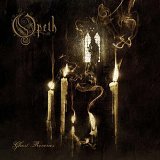
Opeth – Ghost Reveries

Sweden’s Opeth are a band of contrasts. Half their music is extreme death metal, all piledriver riffs and growling ‘Cookie Monster’ vocals. But the other half is mellow progressive rock influenced by the likes of Pink Floyd and Camel.

The band’s two previous albums, “Deliverance” and “Damnation” sounded like the work of two completely different bands. Actually recorded together, though released several months apart, “Deliverance” was uncompromisingly heavy, while “Damnation” showed the band’s lighter side, all ‘clean’ vocals, plenty of Mellotron, and not a powerchord in sight.

“Ghost Reveries” takes the approach of the earlier “Blackwater Park” and mixes the contrasting styles on one album, and in many cases even combines them within individual songs. It actually works quite well; one moment there will be mountainous riffs or complex heavy guitar passages topped with growling death vocals, then it will drop away to a quiet acoustic section with clean vocals or a bluesy solo.

They’ve expanded to a five-piece with the addition of keyboard player Per Wiberg, who plays a lot of Mellotron, as well as electric piano and organ. No cheesy synths here! His playing is mainly adding atmospheres and textures rather than widdly soloing, but he certainly adds a new dimension to their sound.

Overall, a good album, though I would have preferred a bit less of the Cookie Monster. In one or two places Mikael Akerfeldt sings clean vocals on heavier sections; those work well, and I wish he’s done more of the vocals like that.

Posted in Music, Record Reviews | Tagged | 5 Comments

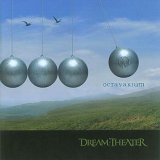
Dream Theater – Octavarium

Octovarium is the New Jersey progressive metal band’s eighth release. Although I’d been a fan since hearing 1994′s “Awake”, I’ve had trouble getting into the last couple of releases. I’ve come to the reluctant conclusion that the band had peaked with 1999′s magnificent concept album “Scenes From a Memory”, and it was all downhill from there.

Octovarium, though, is a significant improvement on it’s rather mediocre predecessor, 2003′s “Train of Though”. The complex, widdly, and sometimes self-indulgent instrumental sections are still very much present, but this time it appears in the context of some actual songs.

They’ve been accused of ripping off Muse in one or two places; I can’t hear that much of a resemblance myself. Saying that, the piano-led ballad “The Answer Lies Within” skirts the edge of Coldplay territory, and “I Walk Beside You” sounds more like U2 than U2, with James Labrie doing an uncanny impersonation of Bono. The rest of the album is much better; songs like “These Walls” and “Sacrificed Sons” typify the sort of epic progressive rock that made the band’s name in the first place, while opener “Root of All Evil” and “Panic Attack” show the darker and more metallic side of their music. The awesome musicianship is evident all the way through; although DT might not be the best progressive rock band in the world, they’re certainly the band with the best chops.

The album closes with the sort of 24 minute monster that only a prog band would attempt. The quiet opening section does sound a little too much like “Shine on You Crazy Diamond” for it’s own good, but it develops into a well-structured epic. There’s a frenetic instrumental passage, not so much a solo as all four instrumentalists going at it hammer-and-tongs with intertwining guitar, bass and keyboard lines. Finally the song ends with a majestic orchestral climax.

Overall verdict; not their best, but far from their worst. They may have peaked, but there’s plenty of music left in them, though it’s one of those albums you need to spin many times before you can fully appreciate it.

Posted in Music, Record Reviews | Tagged | 3 Comments