Music Opinion Blog

Opinions and occasional rants about the state of the music scene. The views expressed are entirely my own, and do not represent those of any artists or publications with whom I may be connected.

Are There Too Many Prog Festivals Now?

Knifeworld, headlining the Stabbing a Dead Horse tour.

Are there just too many Prog festivals now? The collapse of the Y-Prog Festival that was supposed to have taken place of the weekend just gone, and August’s Cambridge Rock Festival reducing prog on the main stage to a mere token presence this year are bad news for prog fans. It may be a case of extrapolating too much from limited data points, but I wonder if there are now more specialist prog festivals than the market can realistically support.

If the prog scene is to continue to grow and prosper, what part should festivals play in this? Are festivals aimed squarely at hardcore prog fandom counterproductive? Do they promote a ghetto mentality when it’s better to get the music out there in front of a wider audience? Should we instead be encouraging more prog bands with crossover appeal to play more “mainstream” rock, indie or folk festivals, and also encourage some of those festivals to add a critical mass of progressively-inclined bands to their lineup?

Ironically that’s precisely what the Cambridge Rock Festival had been doing over the past few years.

Posted in Music Opinion | Tagged , | 6 Comments

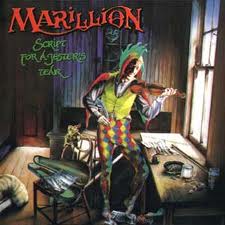
Script for a Jester’s Tear – 30 Years On

Today is the 30th anniversary of the release of Marillion’s debut album “Script for a Jester’s Tear”.

I first got in to rock at the end of the 1970s through listening to Nicky Horne and Tommy Vance on late night radio, and the very first album I bought was Pink Floyd’s “The Wall” in 1979. It was a time when the “mainstream” was all punk and new-wave, and I found much of that simplistic and rather unsatisfying.

At the time I got the feeling that I was late to the party and had just missed out on a golden age of music. It seemed as though many the great 70s bands whose back catalogues I was catching up with had either split or had passed their prime. At any rate they were always dismissed as relics of the past, and I kept being told I should be listening to The Clash and The Jam instead. Not that it was really true; around that time Rush were producing what many now consider their finest work, and the New Wave of British Heavy Metal was just gearing up. Rock’s second generation was happening.

Into this came Marillion. I first heard their early sessions on Tommy Vance’s Friday Rock Show, and they sounded quite unlike anything else around at the time. I first saw them live halfway up the bill at the 1982 Reading Festival. I bought the first record, the 12″ single “Market Square Heroes” with “Grendel” on the b-side. A few months later I bought their first album on the day of release. Unlike Pink Floyd, Deep Purple or Genesis, here was a great band that I got in to right at the beginning of their career, and belonged to me in a way the older bands didn’t.

“Script for a Jester’s Tear” remains a remarkable record that I think still stands the test of time, and was certainly a stronger and more forward-looking statement of intent than the early 70s Genesis retread of “Grendel”. Fish’s evocative lyrical style is something you either love or hate, but there’s no denying the power of some of his imagery. The closing anti-war epic “Forgotten Sons” with it’s Psalm 23/Lords Prayer spoken word section lost none of it’s power when he performed it live last year. And right from the beginning it was obvious that Steve Rothery was a quite exceptional guitarist.

I did not imagine back then that the band would still be going strong thirty years later, as is Fish’s solo career, and subsequent generations of musicians would be citing Marillion as a major influence. Both Marillion, now with Steve Hogarth and Fish as a solo artist have reinvented themselves multiple times and today produce music with sounds that has little in common with that very first release thirty years ago. Rock itself hadn’t been going for thirty years back in 1982.

And I certainly could not have imagined the circumstances in which I would first meet Fish in 2007, but that’s another story entirely.

Posted in Music Opinion | Tagged , | 1 Comment

Cambridge Rock Festival – Back to the 70s?

Touchstone at the 2012 Cambridge Rock FestivalTouchstone at CRF 2012, not exactly a 70s band

From reading various discussions online, I’m getting the impression I’m far from the being the only one who is more than a little underwhelmed by this year’s Cambridge Rock Festival lineup as announced so far. A good acid test of a festival bill for me is “How many bands would I travel 40 miles into London to see?”. While I know there are still bands to be announced,  currently the answer this year is “one”. Last year there were no fewer than five bands I travelled 200 miles to see in York.

Worse, I’m seeing people’s suggestions for the return of the likes of Stolen Earth, Panic Room, Chantel McGregor and Winter in Eden being shot down with patronising dismissals such as “You can’t have your own personal wishlists”, which makes it look increasingly clear that none of those bands are going to be on the bill. Maybe those of us who are big fans of those acts need to recognise we’ve been spoiled over the last couple of years, and this year it’s someone else’s turn. But I still think those of us who have expressed disappointment with the bill have some valid points, and the aggressive way the festival’s defenders try to shout down dissent feels like a subconscuous recognition of this.

For me, bands such as Panic Room, Winter in Eden and Kyrbgrinder were amongst the highlights of last year’s festival. What I love about them is that while they have nothing in common with mainstream indie-rock they all sound like something out of the 21st century rather than something from the 1970s, and having them play emphasised that the festival was about music with a future as well as celebrating music from the past. This was something I emphasised when I reviewed the festival for Trebuchet Magazine.

From what’s been announced so far the bill this year appears to have cut back significantly on both progressive rock and bands with female vocalists, leaving a festival with a far stronger emphasis on old-school four-chord 70s-style hard rock. It’s a lot more of a boy’s club, and it’s also far more backward-looking in musical style. It risks giving the impression the target audience is middle-aged rock fans who stopped listening to anything new somewhere around 1973, trying to re-live their youth.

I’ve attended the full weekend for four years now. It’s always been a great weekend with a fantastic atmosphere, great people and great beer. But a strong lineup has always been part of the deal as well. So for now I’m waiting until they announce the full bill before I’m willing to part with any of my money. It might be that the CRS stage on Friday comes up with a killer bill that transforms the festival.

Posted in Music Opinion | Tagged | 3 Comments

Perpetual Change

It’s always a bit of a shock when a band you follow loses a key member, or in the worst case splits entirely. It’s especially true when it’s a band you’ve spent a lot of time, energy and money in supporting. It’s natural for fans to be upset and find it difficult to look forward to the music new lineups and new collaborations might bring in the future.

No, they’re never quite the same, which is why always I try to make the most of great bands while they exist in their current forms. So many smaller bands struggle to juggle making music around commitments to day jobs, families and in some cases other bands that it’s amazing some bands hold together for as long as they do.

Sometimes it’s better than lineups change than ending with the situation where some hearts aren’t really in it any more. Much as we want to see our favourite bands continue as they were, do we really want to see people going through the motions? And sometimes it only becomes clear in retrospect when a musical partnership has run it’s course even though the individual members still have something to say.

We can all point to bands who lost something vital when a key member left. But there have also been plenty of occasions where a change in personnel has sent an established band in an interesting new direction, lifted them to another level, or where the disbanding of one project has opened the door for an exciting new one.

Look how Mostly Autumn have reinvented themselves over the past three years, for example. If Breathing Space had continued we would never have had Stolen Earth. And had the original version of Karnataka never fallen apart, then Panic Room would never have come to be.

Posted in Music Opinion | 5 Comments

Get a feeling there’s something wrong with the music world when tribute bands are playing arena tours.

Posted on by Tim Hall | 2 Comments

The Brits 2013 – Music for Bean-Counters

The Guardian’s Alexis Petridis has penned a splendidly snarky piece about the predictable nature of the Brit Awards.

In Wednesday’s Guardian, the outgoing chairman of the Brits, David Joseph, proudly announced that during his three-year tenure he had successfully rid the awards of their “chaotic” element and introduced “more gravitas”. There’s a compelling argument to suggest that gravitas isn’t necessarily the thing you’re looking for in an event that’s supposed to be celebrating a thrilling youth phenomenon, but what Joseph seemed to mean was that the Brit awards ceremony no longer has an interest in delivering surprises of any kind.

I’m assuming the “chaotic elements” include Iron Maiden winning Best Live Act a few years back, which immediately prompted that particular award to be dropped the following year, lest rock gatecrashed the party again.

“The lineup goes from pop to discovery to indie,” added Joseph, puffing the event’s supposed variety. Leaving aside the fact that he appears to have invented a hitherto-unheard-of genre called discovery, it’s perhaps worth noting that the winners aren’t really as eclectic as all that. What holds sway in the British musical mainstream in 2013 isn’t a genre so much as a certain earnestness: it’s perhaps the only thing that links Sandé’s pop-soul and Mumford & Sons’ tweedy take on acoustic folk rock.

Leaving aside the imaginary genre of “Discovery”, does anyone actually believe that manufactured pop and three-chord indie are the only forms of music that currently exist?

As Alexis Petridis makes clear, the Brits is all about celebrating commercial success. And anyone who actually knows a thing about music will recognise that mainstream success has far more to do with the amount of money thrown at promoting an act than the actual quality of the music. So anyone who accuses you of being a musical snob if you dare to suggest that the Brit Awards does not represent the best of British music is merely parading their ignorance.

The sad truth is that the majority of “mainstream” audience is now made up from people who are unaware of the existence of anything other than whatever music those who count the money want them to hear.

Unfortuately it’s still difficult to counter someone gushing about how wonderful Mumford and Sons are without sounding patronising. Or people saying Adele is one of the greatest singers because everything else they’ve heard is autotuned pop or tuneless indie. There is a whole world of great music out there, and they’re oblivious to it. Ultimately, I suppose, it’s their loss.

Posted in Music Opinion | Tagged , , , | 1 Comment

The Brit Awards are the musical equivalent of Tesco’s horse burgers – discuss.

Posted on by Tim Hall | 2 Comments

Understanding Bad Music Journalist Clichés

The Stool Pigeon Guide to Music Journalist Bullshit lists a lot of bad clichés that aspiring music writers really ought to avoid. Unfortunately there are one or two in there I have a horrible feeling I’ve used in the past. Oh dear.

Bastard lovechild — Is sex out of wedlock still considered edgy? So why would anyone still be writing that albums ‘sound like the bastard lovechild of X and Y musicians’? I mean, there’s a good chance your parents hadn’t gotten round to tying the knot by the time you were conceived. But so what? It doesn’t make you a latter-day Edmund from King Lear. Hell, it doesn’t even make you Jon Snow off Game Of Thrones.

Uh-oh. I’ve used that one. But not in a musical context; I think I described American conservatism as the bastard love-child of Cyrus Schofield and Ayn Rand. The wingnuts are probably still capable of being offended at being called bastard love children. So I’ll let that one stand.

Songstress — As opposed to what, ‘songster’? Reading between the lines, this faintly kinky usage is a subliminal reflection of male music hacks’ rampant castration fear. See also: chanteuse

If I dared used such a word, I can guarantee that the songstresses or chanteuses would lynch me.

Sophomore — Ridiculous, US collegiate term used as a stand-in for “second” when describing albums, e.g. “The Stone Roses’ second album The Sophomore Coming was a let-down for many”.

If there is one word guaranteed to set my teeth on edge in a review, it’s this one. It implies that either the reviewer’s frame of reference doesn’t extend beyond American student-indie, or they’re a semi-literate hack who doens’t even know the meaning of the clichés they parrot. Either way it’s strong indication not to take the writer’s opinions seriously.

So, if Anne-Marie Helder ever releases a follow-up to “The Contact”, I had better not write “The chanteuse’ sophomore album is the bastard love-child of…

There are lots of other bad ones in that list, and the whole thing is worth reading. What really bad music writing clichés do you think really need to die?

Posted in Music Opinion | Tagged | 1 Comment

Shut Up, The Band Is Playing

From The Guardian’s Michael Hann’s review of Kraftwerk at Tate Modern:

Three times I move around the front of the hall – one of the wonderful things about the arrangement of these shows is the ability to move without any hindrance to wherever you want – to escape groups of people not just exchanging the occasional word but having full and loud conversations. Hang on, you sold your mother’s soul to get a ticket for one of these events, and now you’re going to talk through it? It’s music-as-social-event writ large.

Seriously, what is it about some people? It does give the impression that there were far too many people at the Tate Modern that weren’t actually there for the music, but because it was the place to be seen. I’d like to say one advantage of like obsure progressive rock bands is that they don’t attract the poseurs, but sadly prog gigs aren’t immune to loud talking either.

Posted in Music Opinion | Tagged , | 5 Comments

Is Your Music Organic?

Fiona Brice asks Is Your Music Organic?.

Are you listening to an artist or a band performing a song that they wrote themselves (I’d call that organic), or are you listening to a pop tune co-written by a conglomerate of industrial co-writers and performed by some battery hens in heels, or a genetically modified beast (see ‘Jedward’)? What are your children listening to?

If you are one of the large percentage of people approaching middle age whose music taste stagnated after they got married and put the Ikea CD shelving up, and whose only exposure to music is now via the XFactor or a few minutes of BBC radio, then it might be time to think about exploring some alternative choices

When comparing fans of independent music with foodies, there are a lot of amusing parallels, and she does make some good points. Who of us doesn’t know a few of the Ikea shelving people she refers to? But taking the food analogy to it’s logical conclusion, if Simon Cowell is Burger King, a lot of awful indie bands are closer to that dodgy late night takeaway with a freezer full of alsatian carcasses than a reputable organic restaurant.

It is, of course, very tongue-in-cheek, a sort of parody of Nigella Lawson doing music writing, rather than a Samantha Brick style lack of self-awareness. But the humour was clearly lost on far too many of Twitter’s indie hipsters, who were so up themselves they didn’t realised they’ve been Poe’d.

There’s certainly no excuse for the level of vitriol we saw on Twitter, which went from arch sneering at Brice’s mention of Queen (that one actually came from an indie singer-songwriter too) to what looked like an actual death threat. Not surprising that the author shut down her Twitter account.

Now, where did I put that Muse album?

Posted in Music Opinion | Tagged | 3 Comments