Landfill Prog

I’ve been listening to “recommendations” on last.fm recently, for the first time in a while. As before, it tends to overplay the same small subset of bands too much, including rather too many very similar-sounding power-metal bands and NWOBHM also-rans with the word “Witch” in their title. One other act who keep coming up is a European prog band. Their last.fm Wiki description is a cut-and-paste from Prog Archives describing them as being in the style of classic neo-prog bands like Marillion, IQ and, er, Pendragon. Which is the sort of thing to make you fear the worst.

I won’t name the band, but I have to say I wasn’t impressed by what I heard.

The singer sounds as though he wants to be Fish, but without the charisma. The guitarist tries to be Steve Rothery, only without a fraction of the talent. It’s all there; the widdly solo on a 1980s synth, the portentous spoken-word section, even some sub-Pink Floyd FX. The lack of originality might not have mattered so much had the songwriting been great, but sadly, it’s very very ordinary. Bands like this are to prog-rock what The Kooks are to indie.

If bands like The Kooks are labelled as “landfill indie”, then this is surely landfill prog. The stuff that falls well, well below the Sturgeon threshold.

This isn’t a “prog” versus “progressive” thing by the way; that’s something that always degenerates into a “my music is better than your music” pissing contest. The real problem with bands like this is not that they’re “prog” rather than “progressive”, it’s simply that they’re not very good. Neo-prog, when done well, can be great. Bands like IQ or Magenta demonstrate this. They might still wear their influences on their sleeves sometimes, but they can write strong original material with enough of their own identity to be far more than a derivative pastiche.

Which is something the landfill indie bands conspicuously fail to do.

Posted in Music, Music Opinion | Tagged , | 4 Comments

Black Sabbath

I’m part-way through reading Iron Man, the autobiography of Black Sabbath’s Tony Iommi, which I had as a Christmas present. A fascinating read so far, with tales of rock and roll excess mixed with the stories behind some of the songs, beginning with Iommi growing up in a working-class part of Birmingham. The description of Iommi’s industrial accident, which is not for the squeamish, out to server as a reminder as to why all that health and safety legislation some people want to abolish is there for.

It’s prompted me to dig out a lot of old Ozzy-era Black Sabbath albums, many of which I’ve not played for years, and it’s reminded me just how consistently good they were. Also it’s remarkable just how well-mixed and mastered the albums are, especially when you consider how little time they took recording their earliest ones.

I’d say all the first six albums deserve to be in any self-respecting rock and metal fan’s record collection. It starts with their debut, when they were in transition from the blues band Earth, and blues-rock workouts sit alongside the doomladen distorted tritones with which they made their name, and the quality is consistent right the way through to the metal juggernaut of “Sabotage“, with the face-melting centrepiece “Symptom of the Universe

Black Sabbath, despite some of their Hammer Horror imagery, were never really the Satanic band portrayed in some sections of the media. When you know that main lyricist Geezer Butler was an Irish Catholic, a song like “After Forever“, with it’s infamous line “Do you want to see The Pope on the end of rope” is clearly all about sectarian bigotry.

As an aside, playing seventh album “Technical Ecstacy” and Led Zeppelin’s “Presence” back-to-back makes me think the often maligned and in my opinion somewhat underrated Sabbath album is the one of the pair that’s aged the best. Take away the obvious classics “Achilles Last Stand” and “Nobody’s Fault But Mine” from Presence, and you’re left with rather a lot of filler.

The best album of the lot has to be “Sabbath Bloody Sabbath“. The monumental title track has to be one of the best songs about being totally pissed-off with life, the universe and everything ever written; “Bog blast all of you” is a great line. But the whole of the rest of the album is pretty much flawless, and displays a far greater musical sophistication than anything they’d done before, whether it’s the keyboard-led “Who Are You”, or the ambitious multi-layered closing “Spiral Architect”.

Posted in Music, Music Opinion | Tagged | 5 Comments

Publishing a Game

Great post on Google+ by Graeme Walmsley on publishing your first game. Particularly about designing your first game around your budget, rather that trying to compete with the glossy production values from the bigger companies.

My own RPG is finally starting to come together after far too many false starts, and a lot of the advice makes a lot of sense. Not hiring an editor is one; enough people have been complementary about the quality of my writing to give me the feeling I can get away with competent proof-reading rather than go to the expense of getting it professionally edited. Layout, well, I’m not sure about that one.

At the moment, the biggest question is artwork. I don’t have the budget for any significant amounts of specially commissioned art, not convinced the game is ‘generic’ enough to be able to use cheaper stock art, and certainly not confident of my own artistic skills in that area. Suggestions gratefully received.

Posted in Games, SF and Gaming | 1 Comment

Panic Room and The Reasoning sign to Esoteric Recordings

Major and completely unexpected announcements from both Panic Room and The Reasoning. Both bands have signed record deals with Esoteric Recordings, and imprint of Cherry Red records.

Panic Room’s album, which they will be recording in January and February is slated for an early Summer release, while The Reasoning’s is due in November.

Both bands have put in a lot of hard word slogging round what is euphemistically known as “The toilet circuit”, steadily building a fanbase and honing their acts to the point where they’re capable of giving far higher profile bands a run for their money. They’ve probably got as far as they were going to get as independent artists, and signing with a label is what needed to happen if they were to get to the next level.

I’ve followed both bands from their very first gigs (The Uplands Tavern in Swansea, and The Town Hall in Lydney), and it’s exciting to see where they’re going to go next. While I don’t expect them to be headlining enormodomes just yet, being signed to a label will open a lot of doors, whether it be prestigious support slots or support for overseas tours.

While I’ve heard too many horror stories in the past of labels interfering in the creative process to the detriment of an artists long-term future, I’m confident this isn’t going to happen here. It’s not like either band is a bunch of fresh-faced innocents just out of The Brit School about to be chewed-up and spat out by the major label sausage machine. Given their artist roster (including prog veterans Hawkwind and Van der Graaf Generator), Esoteric Recordings don’t sound like that sort of label.

Does rather make a mockery of the ridiculous claim that Panic Room don’t want to “dirty their hands with commerce”, doesn’t it?

Posted in Music, Music News | Tagged , , | 20 Comments

Ryan Dancey, Still Wrong

This article on the future of the Role-Playing Games industry, specifically Dungeons and Dragons, contains a completely ridiculous quote from Ryan Dancey

Kids stopped playing with trains, and the businesses that remained dedicated to hobbyists who got more disposable income as they grew up, until the price of the hobby was out of reach of anyone except those older hobbyists. Eventually, it became a high-end hobby with very expensive products, sold to an ever-decreasing number of hobbyists. As those folks die, the hobby shrinks. That is what is happening to the tabletop RPG business.”

Ryan Dancey knows nothing about the model railway hobby.

He reminds me of the record label executives trying to defend a dying business model in the music industry – like Dancey, they’re marketing types who only care about selling “product”, and aren’t interested in actual creativity. Dancey was notorious a decade ago for a master plan to drive all games other than D&D out of business, spouting nonsense about “Network externalities”. If he’d been working for a model railway company he would have made his mission to destroy N gauge and 0 gauge in order to make 00 more popular.

It seems to me that there are a lot of parallels between the RPG industry and the cottage industry end of the music business. It’s all about creative types taking advantage of massively reduced barriers to entry to product things that can be sold direct to the customer, and using the Internet to build communities around those products. This is bad news if your career, like that of Ryan Dancey, is based on marketing things that others create – they don’t need you any more, and the viability of their businesses in a fragmented market often depend on them not having to share their revenue with you.

The irony is that one of the things fuelling the cottage industry is the Open Game Licence, which Ryan Dancey himself was responsible for…

Posted in Games, SF and Gaming | Tagged , , | Comments Off

Top Ten Songs of 2011

We’ve had my ten top albums of the year, here’s my top ten songs. Not being a fan of top-40 style singles, almost all of these are album tracks – in fact there’s only one single on the entire list.

As is usual for this sort of thing, it’s a completely personal and subjective list. But I’d much rather listen to any of these than any X-factor bollocks, and so should you. So there!

10: Yes – Fly From Here
The title track of Yes’ most recent album saw the “Drama” team of Geoff Downes and Trevor Horn return with a much-expanded version of what started life as an unrecorded Buggles song. I suppose calling a five-part prog-rock epic taking up half an album a “song” is cheating, but I’m setting the rules here, and this is certainly the best thing Yes have recorded for years.

9: Journey – Edge of the Moment
One of the standout songs from “Eclipse”, this classy hard rocker is a great example of the other side of Journey’s music from the radio-friendly ballads.

8: Blood Ceremony – Daughter of the Sun
The ten-minute epic that closes track of their second album “Living With the Ancients” is a great example of why I’ve described them as sounding like Black Sabbath fronted by Angela Gordon, with it’s combination of bewitching flute and doom-laden guitar.

7: Mostly Autumn – Questioning Eyes
It’s not a completely new song (It originally appeared on Breathing Space’s 2008 album “Below the Radar”), but the powerful live version on “Still Beautiful” rises to even greater heights. It shows the extent to which Olivia Sparnenn has grown as a vocalist in the past three years.

6: Mastodon – The Sparrow
The multi-layered ballad with it’s rich harmonies is my clear favourite from “The Hunter”. Probably because it’s the most prog thing on the album.

5: Liam Davison – Heading Home
Liam’s long-awaited solo album “A Treasure of Well-Set Jewels” was one of the surprises of 2011, a well-crafted album with a very capable supporting cast. This song is a standout with it’s wonderful interplay between Liam’s soaring lead guitar, Iain Jennings’ swirling Hammond organ and Paul Teasdale’s propulsive bass riff.

4: Panic Room – O Holy Night
A welcome and unexpected end-of-year surprise was this spine-tingling version of the traditional carol released as a free Christmas download from their website.

3: Heather Findlay – Seven
Heather’s solo EP “The Phoenix Suite” took quite a few listens to fully appreciate, and once the record finally clicked, this atmospheric and brooding number became the firm favourite.

2: Opeth – Folklore
The dramatic closing section on this song with the galloping bass riff has to be one of the most exciting pieces of music I’ve heard all year.

1: Steven Wilson – Raider II
Another lengthy prog epic is my “song” of the year. With its swirling Mellotron and spiralling sax and flute it sounds like a cross between 70s King Crimson and Canterbury-scene jazz-rock dragged into the 21st century, and the heaviest sections are the bits without guitars. Amazing piece of music.

Posted in Music | Tagged , , , , , , , , , | Comments Off

O Holy Night

A sublime spine-tingling version of the traditional carol, with a wonderful vocal from Anne-Marie Helder. Christmas started for me this year when they performed this live in the first weekend of December. Now they’re recorded it and made it available as a free MP3 download – go to the official Panic Room website for details.

Posted in Music, Music News | Tagged , | Comments Off

Morpheus Rising – Lord of the North

First official video from York’s Morpheus Rising, from their debut album “Let the Sleeper Awake”. Look out for the post-apocalyptic Gherkin!

Posted in Music, Music News | Tagged | 3 Comments

Top Ten Albums of 2011

2011 has been an incredible year for new music. In fact, I can’t remember another year when I bought so many new release, which makes the traditional end-of-year list especially hard this time round.

So, after much deliberation and consideration, here’s my completely personal and subjective list of ten best albums released in 2011.

10: Uriah Heep – Into the Wild
70s veterans Uriah Heep have undergone something of a renaissance in recent years. Even if this album doesn’t really break any radically new ground for them, with their trademark combination of searing guitar and Hammond organ they rock far harder than any band in their fifth decade of existence has any right to.

9: Steve Hackett – Beyond the Shrouded Horizon
Much like Uriah Heep, the former Genesis guitarist has hit something of a purple patch recently, with his third album in two years. It’s a rich, ambitious album that combines some heartfelt songwriting with his distinctive symphonic liquid guitar style that has rightfully made him the godfather of prog guitar.
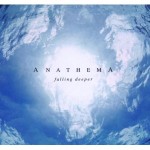
8: Anathema – Falling Deeper
A largely instrumental set by Liverpool’s Doom-metallers-turned-proggers, containing radical orchestral reworkings of material from their earlier metal years. It’s an album for which you should sit back and let the huge atmospheric soundscapes wash over you.


7: Touchstone – The City Sleeps
The rising stars of the British female-fronted progressive rock scene deliver a strong third album, with a highly melodic mix of prog, hard rock and metal than builds on the success of their previous album “Wintercoast”.
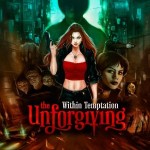
 

6: Within Temptation – The Unforgiving
In which the Dutch band opt out of the symphonic metal arms race in favour of a far more rock-orientated album that emphasises Sharon den Adel’s incredibly powerful vocals over overblown arrangements. More varied than previous albums, there’s an emphasis on big anthemic choruses that ought to have a lot of crossover potential.

5: Chantel McGregor – Like No Other
Chantel’s debut album proves she’s far more than just a virtuoso guitarist, and far more than just a blues artist. It’s a hugely varied album demonstrating her talents as a singer-songwriter who can do hard rock, folk and pure pop as well as she can do blues-rock guitar wig-outs.

4: Dream Theater – A Dramatic Turn of Events
The band which more or less invented prog-metal deliver their best album for years, proving that Mike Portnoy’s departure, far from finishing the band, has given them the kick up the backside they needed, with more emphasis on composition than instrumental showboating.

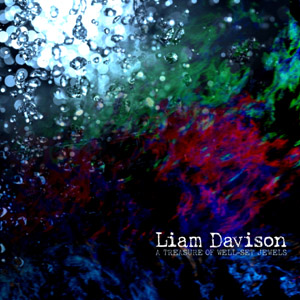
3: Liam Davison – A Treasure of Well-Set Jewels
The solo album from Mostly Autumn’s second guitarist was an unexpected surprise, with some great songwriting and big atmospheric arrangements reminiscent of the early years of Mostly Autumn. Great guest performances from supporting cast including Iain Jennings, Gavin Griffiths, Anne-Marie Helder and Heather Findlay, but none steal the spotlight from Liam’s own contributions.
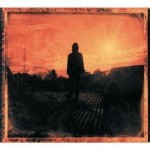
2: Steven Wilson – Grace for Drowning
With his second solo release, Steve Wilson has taken a step away from the metal stylings of recent Porcupine Tree albums in favour of swirling Mellotrons and spiralling saxophones. The resulting jazz-tinged album sounds like a cross between 70s King Crimson, Canterbury-scene prog, and the ghost of Porcupine Tree past.

1: Opeth – Heritage
Sweden’s finest drop the death metal growls and go all-out prog with perhaps the most musically ambitious album they’ve done to date. Far more varied than their earlier non-metal “Damnation”, it manages to sound both gloriously retro and absolutely contemporary at the same time.

With such a strong year, there are many more great albums that would have appeared in many years’ top tens, so honourable mentions for Also Eden’s progtastic “Think of the Children” Magenta’s excellent “Chameleon”, Matt Stevens unclassifiable instrumental “Relic”, very solid releases from veterans Yes, Journey and Megadeth, and Mastodon’s “The Hunter”.

I’ve also made the decision to exclude live albums, but I will mention Mostly Autumn’s powerful “Still Beautiful”, Heather Findlay and Chris Johnson’s beautiful “Live at the Café 68″, and The Reasoning’s hard rocking “The Bottle of Gettysburg”.

And there are a few albums I’ve yet to hear, and since it’s too close to Christmas to be buying albums for myself. So the reason for the absence of Nightwish’s “Imaginaerum”, Kate Bush’s “50 Words for Snow” and Morpheus Rising’s “Let The Sleeper Awake” is not that I don’t think they’re good enough, only that I haven’t heard them yet. Perhaps, for the purposes of end-of-year lists, the year should run December to November, so that late-year releases count as next year?

Posted in Music | Tagged , , , , , , , , , | 10 Comments

Incantations in High Elvish?

Great blog post about exploratory testing by James Marcus Bach, and why some people Just Don’t Get It.

It’s difficult for them because Factory School people, by the force of their creed, seek to minimize the role of humanness in any technical activity. They are radical mechanizers. They are looking for algorithms instead of heuristics. They want to focus on artifacts, not thoughts or feelings or activities. They need to deny the role and value of tacit knowledge and skill. Their theory of learning was state of the art in the 18th century: memorization and mimicry. Then, when they encounter ET, they look from something to memorize or mimic, and find nothing.

Those of us who study ET, when we try to share it, talk a lot about cognitive science, epistemology, and modern learning theory. We talk about the importance of practice. This sounds to the Factory Schoolers like incomprehensible new agey incantations in High Elvish. They suspect we are being deliberately obscure just to keep our clients confused and intimidated.

As I’ve explained in previous blog posts, I’ve always taken an exploratory approach to testing, even if what I did wasn’t formally identified as such. Trying to force testing into a purely mechanical script-based approach not only sucks all the fun out of testing, risking disillusionment and burnout, but makes the actual testing less effective.

And while we’re on the subject of old-school techniques, are these guys for real? “Unlike a traditional development process, ours establishes all the system’s requirements before a line of code is written“. Seriously, folks, does anyone still try to develop software that way in 2011? Sounds like a perfect way to implement what the client thought they wanted eighteen months ago.

Remember that old cartoon of the swing hanging from the branch of the tree?

Posted in Testing & Software | 9 Comments